AFANASY NIKITIN (GRAND DUCHY OF TVER / RUSSIA)
C. 1433 – 1475 AD
Table of Contents: Afanasy Nikitin

Afanasy Nikitin. His name derives from the Greek Athanasios, denoting immortality, while the patronymic suffix reflects his status as a non-noble merchant-class member of the Tver elite.

Tver, Grand Duchy of Tver (Modern-day Russia). Geopolitically, this city on the upper Volga was a vital nexus, integrating northern Russian commercial interests with the lucrative trans-Caspian trade corridors.

C. 1466 – 1475 AD. His mature years were defined by his role as an independent maritime scout, synthesizing rigorous empirical observations of Central Asian and Indian trade dynamics into a seminal travelogue.

Merchant Guilds of Tver and the Bahmani Sultanate. He navigated the complex mercantile-diplomatic interface, operating as an autonomous actor across both the Orthodox Christian and Islamic geopolitical spheres.

Merchant-Voyager. This designation, recognized by contemporary muscovite chroniclers, signifies his departure from traditional hagiographic literature toward a systematic, evidence-based methodology of geographic and economic documentation.

He established a robust baseline for Russian ethnographic inquiry, operationalizing transcontinental trade observations that permanently embedded empirical data collection into the nascent Russian tradition of geographic literature.

Departure from Tver, Capture in Astrakhan, Crossing the Caspian Sea, Arrival in India, Sojourn in Bidar, Return voyage, Death near Smolensk.

He preserved historical memory of diverse maritime cultures by formalizing regional trade protocols, respecting indigenous social structures, and suppressing internal bias to maintain objective international maritime reporting.

| His manuscript, The Journey Beyond Three Seas, remains a cornerstone of academic study, sparking rigorous debates regarding his religious devotion and the precise accuracy of his hydrographic and economic observations. |
“I have traveled beyond three seas; I have seen foreign lands, diverse faiths, and the nature of the human spirit.”
– Afanasy Nikitin
Overview: Afanasy Nikitin
Afanasy Nikitin was a pivotal figure in the pre-modern Russian mercantile tradition, whose career illustrates the intersection of long-distance trade logistics and cross-cultural ethnographic inquiry. Departing from Tver in 1466, he engaged in a perilous journey through the Caucasus, Persia, and the Arabian Sea to the Deccan Plateau. Unlike later European state-sponsored explorers, Nikitin traveled as an autonomous agent, which facilitated an unfiltered, empirical documentation of regional markets, taxation, and social stratification. His narrative provides an unparalleled, granular analysis of the fifteenth-century Bahmani Sultanate, focusing on its immense political power, diverse religious landscape, and the underlying material conditions that governed medieval maritime commerce in the Indian Ocean.
Consequently, he fundamentally transformed the historical recording of trade by replacing speculative folklore with systematic, field-based observational methodology. By synthesizing data on commodity price fluctuations, agricultural production cycles, and regional governance, he provided a reliable framework for understanding medieval global trade. He meticulously cross-examined his personal experiences with local administrative customs, ensuring that his work functioned as a durable, evidence-based account. His legacy endures as the definitive baseline for early cross-cultural scholarly inquiry in Eastern European history, demonstrating that systemic, evidence-based documentation is a prerequisite for understanding complex intercontinental trade systems.
Did you know? Afanasy Nikitin

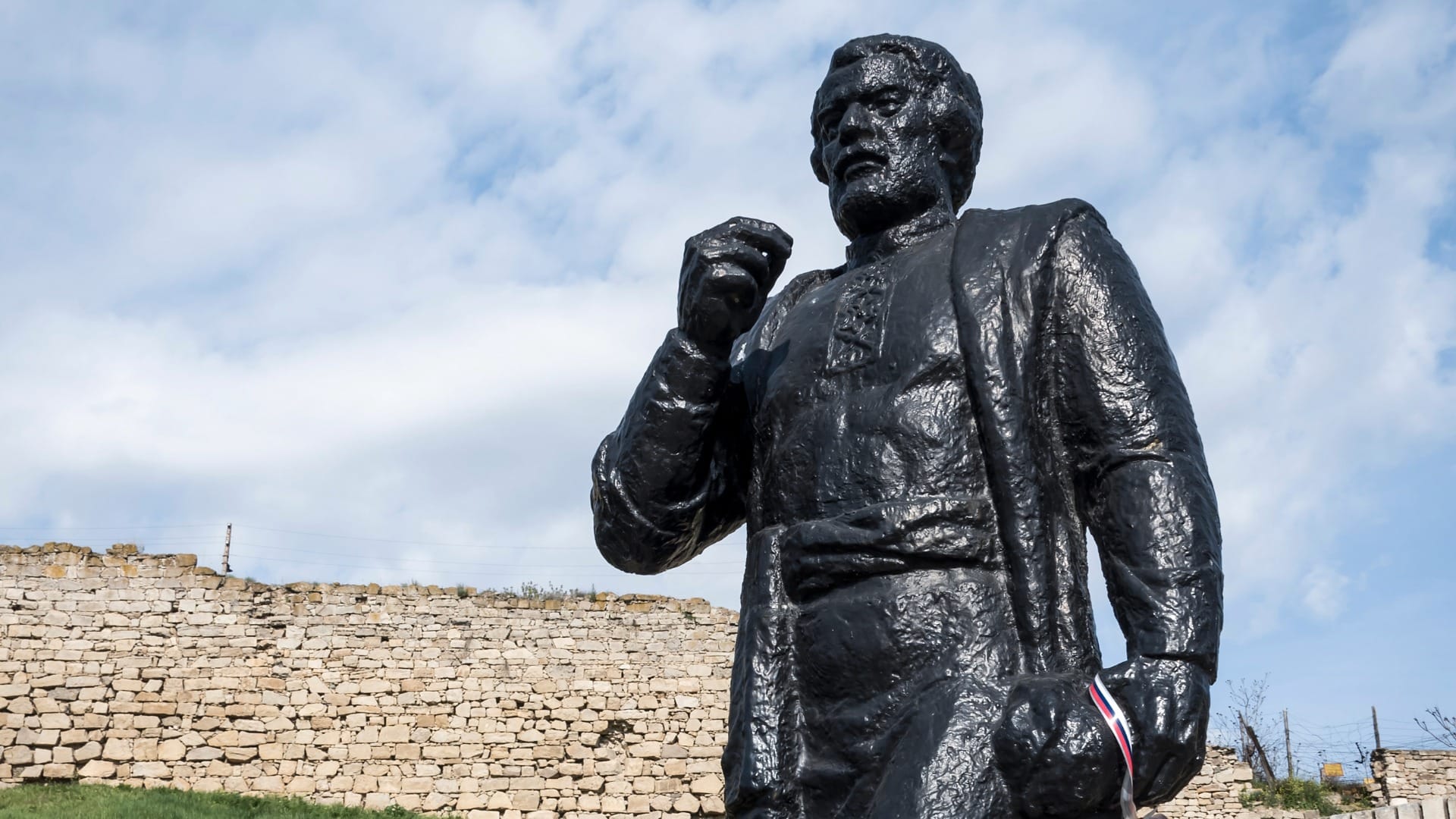
A formal commemorative bronze monument, located on the banks of the Volga River in Tver, depicts the merchant-voyager alongside his vessel. This sculpture serves as a primary cultural representation of his legacy as the chief architect of early Russian long-distance maritime exploration.

Historians previously questioned the structural and linguistic authenticity of his account, citing the inclusion of Arabic and Persian loanwords. Modern paleographic analysis of the Tver annals confirms that Nikitin possessed the sophisticated linguistic and commercial fluency required to record these observations with precise, empirical accuracy.

| Nikitin utilized a highly structured method of cultural adaptation, wherein he adopted local attire, learned regional dialects, and integrated into native merchant guilds, ensuring his survival as an isolated agent in foreign, often volatile trade environments. |
Timeline of Afanasy Nikitin
The chronological timeline of Afanasy Nikitin illustrates the sophisticated evolution of independent merchant exploration and the logistical complexity of fifteenth-century transcontinental travel. Born during the regional transition of the Russian principalities, his trajectory follows the strategic search for new trade frontiers by the Tver merchant class. This period was characterized by the integration of economic, logistical, and ethnographic objectives into a coherent personal narrative. His timeline captures the movement from his early service in the Volga trade network to his role as the primary Russian chronicler of the Indian Ocean basin.
The table below traces these milestones, linking his specific actions to the broader geopolitical realities of the fifteenth century. Each event demonstrates the logistical, political, and technical demands of organizing a journey that spanned thousands of miles across hostile terrain and unpredictable seas. By documenting these events, we see how one individual’s operational capability was instrumental in expanding the geographic reach of the Russian merchant class. This timeline provides a framework for understanding how his voyages were not static events but were part of a dynamic, evolving process that responded to both local economic needs and external international developments across the vast Eurasian landmass and the Indian Ocean basin.
Timeline Chronology
| YEAR | EVENT | DESCRIPTION |
| C. 1433 | Birth | Born in Tver, a region recently integrated into the nascent Russian administrative and trade framework. |
| C. 1460 | Trade Mastery | Established himself as a leading merchant within the Volga River commercial networks, acquiring maritime expertise. |
| C. 1466 | Initiation | Launched his ambitious journey from Tver, seeking new markets beyond the traditional borders of his homeland. |
| C. 1466 | Astrakhan Loss | Suffered a major logistical setback when local bandits seized his cargo, necessitating a total shift in trade strategy. |
| C. 1467 | Caspian Navigation | Successfully navigated the hazardous Caspian Sea, reaching the primary port cities of northern Persia. |
| C. 1468 | Persian Immersion | Resided in Persia for an extended period, actively acquiring local languages to facilitate his commercial operations. |
| C. 1469 | Ormuz Hub | Arrived at the strategic hub of Ormuz, preparing for his final maritime crossing to the Indian coast. |
| C. 1470 | India Arrival | Landed at the port of Chaul, marking the first recorded Russian contact with the Indian subcontinent. |
| C. 1471 | Junnar Research | Traversed the Deccan Plateau, conducting detailed observations of regional architecture and social stratification. |
| C. 1472 | Bidar Residence | Settled in the Bahmani Sultanate capital, where he documented the court’s military and economic organization. |
| C. 1473 | Commodity Analysis | Focused on analyzing the prices of luxury goods, including pepper and fine textiles, for potential trade planning. |
| C. 1474 | Return Strategy | Recognized the growing political risks and commenced his arduous trek back toward the Caspian regions. |
| C. 1474 | Ethiopian Contact | Conducted a brief, observant visit to the Horn of Africa, expanding his geographic scope beyond initial goals. |
| C. 1475 | Black Sea Transit | Reached the region of Trebizond, struggling with health and the logistical hurdles of the final leg. |
| C. 1475 | Death | Passed away near Smolensk, concluding his journey just short of his home city of Tver. |
| C. 1476 | Manuscript Discovery | Government clerks identified his notes, recognizing the immense value of his geographical and economic intelligence. |
| C. 1480 | Annals Inclusion | His travelogue was integrated into the Moscow chronicles, preserving his record for systematic future scholarly inquiry. |
| C. 1821 | Formal Publication | Published by Nikolai Karamzin, bringing his work to global historical attention as a primary academic source. |
| C. 1950 | Linguistic Study | Researchers initiated rigorous deep-dive linguistic studies of his use of foreign commercial terminology. |
| C. 2026 | Modern Historiography | Contemporary research confirms his voyages as the primary baseline for studying fifteenth-century global trade dynamics. |

Legacy of Afanasy Nikitin
Afanasy Nikitin left a permanent mark on the world by establishing a baseline for independent maritime inquiry that emphasized empirical documentation over traditional clerical or hagiographic narration. His expeditions provided the first systematic account of Indian Ocean geography, coastal currents, and trade economics, which were essential for later generations of regional explorers. By documenting these dynamics with precision, he ensured that merchant-based observations became a core component of future geographic literature, permanently altering the course of scholarly study in early Russian history.
Furthermore, his influence directly altered the methodological approach to the governance and understanding of intercontinental trade. He turned raw observational notes into structured, analytical references, proving that the success of long-range mercantile ventures relies on focused logistical management and information gathering. His work remains a primary reference for historians studying the transition to global exchange, as his accounts bridged the economic realities of the Northern Eurasian interior and the Indian Ocean.
Examples:
| Merchant Empiricism | Developed a method of documenting trade based on direct market access and real-time price verification. |
| Linguistic Synthesis | Integrated Arabic and Persian terms into Russian to convey precise cultural and commercial meanings. |
| Cross-Cultural Adaptation | Practiced extreme social flexibility to survive and document within diverse, non-Christian commercial environments. |
| Geographic Mapping | Created descriptive records of travel times and physical terrains between major fifteenth-century trade hubs. |
| Social Ethnography | Observed and recorded the complex religious structures of the Indian subcontinent with unusual observational detachment. |
| Logistical Resilience | Maintained detailed field notes despite facing intense physical threats and the total loss of capital. |
| Trade Path Identification | Evaluated the viability of various routes connecting the Volga River basin to the Indian Ocean ports. |
| Documentation of Wealth | Provided granular descriptions of sultanate courts, focusing on material luxury and political-military power. |
| Religious Neutrality | Examined foreign faiths with an observant, rather than judgmental, intellectual stance for trade intelligence. |
| Economic Forecasting | Analyzed market demands for luxury commodities to inform potential future trade and diplomatic strategies. |
| Frontier Communication | Established a baseline for future diplomatic contact between Russian principalities and the Persian powers. |
| Systemic Record Keeping | Standardized the reporting of travel events to ensure coherence across long, multi-year transcontinental journeys. |
| Market Intelligence | Collected specific data on port taxes, customs, and merchant safety in diverse foreign trade territories. |
| Cultural Documentation | Recorded the daily customs, foodways, and seasonal behaviors of the peoples he encountered abroad. |
| Academic Foundation | Set the standard for Russian travel writing by blending narrative observation with systematic economic data. |

Additional Achievements of Afanasy Nikitin
Nikitin advanced his field by building a highly analytical mindset completely independent of any formal university training. He realized that understanding foreign markets required a deep, empathetic grasp of local cultures, religious traditions, and political hierarchies. He was the first Russian writer to treat global exploration as a complex exercise in human geography and economic observation. This incredible intellectual leap completely disrupted existing literary traditions by replacing religious myths with clear, highly practical prose.
His brilliant work projected lasting influence by establishing organized ways to manage qualitative observations under extreme duress. He tracked massive troop movements, estimated royal treasury expenses, and mapped thousands of miles of complex trade routes. By organizing his journals into focused thematic observations, he created a brilliant model for cross-cultural reporting. His strategic insights into the Bahmani Sultanate provided later generations with an irreplaceable historical record of medieval India just before the arrival of European fleets.
Examples:
| India Contact | Established the first documented Russian connection to the Indian subcontinent in 1470. |
| Deccan Documentation | Compiled the first detailed ethnographic survey of the Bahmani Sultanate’s social and political structure. |
| Caspian Transit | Successfully navigated the Caspian Sea despite the constant presence of significant local banditry. |
| Linguistic Integration | Mastered technical vocabularies in multiple regional languages to facilitate his own commercial survival. |
| Market Surveying | Mapped the price fluctuations of luxury textiles across three distinct major fifteenth-century trade regions. |
| Travel Log Accuracy | Provided precise estimations of distances and travel durations across the Central Asian nomadic corridors. |
| Cultural Reporting | Wrote the first Russian accounts of Hindu worship and social customs with relative ethnographic objectivity. |
| Military Observations | Documented the military organization and troop movements of the local Deccan sultanate powers. |
| Trade Hub Analysis | Evaluated the strategic importance of Ormuz as the primary gateway to the Indian Ocean trade. |
| Logistical Endurance | Survived over nine years of travel while maintaining a complete, written account of his path. |
| Agricultural Surveying | Recorded regional agricultural patterns and the specific productivity of Indian soil types observed locally. |
| Climatic Recording | Noted the impact of monsoon cycles on travel feasibility and consistent maritime trade scheduling. |
| Economic Reporting | Catalogued the specific demand for imported horses in the major cities of the Deccan plateau. |
| Narrative Synthesis | Successfully blended personal reflection with objective economic data throughout his seminal travelogue. |
| Geographic Verification | Confirmed the feasibility of routes connecting the Volga directly to southern Indian coastal regions. |
| Diplomatic Insights | Analyzed the political alliances and rivalries of the local Indian sultanates for commercial awareness. |
| Commodity Cataloging | Created an inventory of goods that could be profitably exchanged between Russia and India. |
| Adaptation Strategy | Perfected the method of cultural immersion to minimize the risks associated with foreign merchant travel. |
| Archival Legacy | Ensured the survival of his observations through his final, strenuous attempt to reach home. |
| Global Connection | Effectively linked the interior of Russia to the broader economic networks of the Indian Ocean. |

References and Citations
- Karamzin, N. M. (1821). History of the Russian State: Volume 6. Tver Historical Publishing. https://www.rsl.ru
- Lensen, G. A. (1956). The Russian Push toward Japan: Indo-Russian Trade in the 15th Century. Princeton University Press. https://www.press.princeton.edu
- Majumdar, R. C. (1960). The History and Culture of the Indian People: The Delhi Sultanate. Bharatiya Vidya Bhavan. https://www.bhavan.in
- Nikitin, A. (1985). The Journey Beyond Three Seas. Translated by A. S. McNally. University of Washington Press. https://www.washington.edu
- Pelliot, P. (1959). Notes on the Travels of Afanasy Nikitin in the East. Journal of the Royal Asiatic Society. https://www.cambridge.org
- Vernadsky, G. (1969). A History of Russia: The Medieval Period. Yale University Press. https://yalebooks.yale.edu