Table of Contents: Definition – Achaemenid Empire
“Achaemenid Empire”
Pronunciation: /ˌækɪˈmiːnɪd ˈɛmpaɪər/ (AK-i-MEEN-id EM-pyre)
Part of Speech: Proper Noun
Achaemenid Empire Definition (Historical Context)
The Achaemenid Empire was the first and largest Persian Empire, existing from roughly 550 to 330 BCE. Cyrus the Great established the empire by uniting the Medes and Persians. It controlled territory spanning three continents: Asia, Africa, and Europe. This empire was famous for its efficient, centralized administration. The Achaemenid kings also maintained a policy of religious and cultural tolerance for their subject peoples.
Origin of the Word “Achaemenid Empire”
The name comes from the dynasty’s legendary founder, Achaemenes (Hakhamanish). Royal inscriptions often traced the lineage of kings like Darius I back to him. This use of a common ancestor helped legitimize the rulers’ authority. The word “Empire” simply denotes a large group of states controlled by a single sovereign power.
Examples:
General Use: “In addition, the history class focused on the rise and fall of the Achaemenid Empire.”
Archaeological Context: “Similarly, the massive ruins of Persepolis are the most famous preserved site of the Achaemenid Empire.”
Historical Context: “Consequently, the expansion of the Achaemenid Empire led to the famous series of conflicts known as the Greco-Persian Wars.”
Cultural Context: “Moreover, the cylinder of Cyrus the Great contains a decree from the Achaemenid Empire permitting displaced people to return home.”
Vocabulary and Language Resources
Terms Related to Achaemenid Empire
- Cyrus the Great: The founder of the Achaemenid Empire, for example.
- Darius I: A key ruler who organized the empire and managed its vast territory.
- Satrap: A provincial governor appointed to oversee a region of the empire.
- Persepolis: The ceremonial and religious capital of the Empire.
- Zoroastrianism: The predominant faith of the Persian nobility during this period.
- Royal Road: The infrastructure facilitating rapid communication across the large empire.
Etymology
Achaemenid: From the Old Persian Hakhāmanišya, meaning “of Achaemenes.”
Empire: From Latin imperium, meaning “command” or “sovereignty.”
Synonyms
First Persian Empire, Cyrus’s Empire, Old Persian Empire.
Antonyms:
Macedonian Empire (Alexander’s successor state), Seleucid Empire (a later Persian-based realm).
Thesaurus
Dominion, realm, imperial power, ancient state, kingdom, dynasty, hegemony.
Achaemenid Empire Historical & Cultural Context:
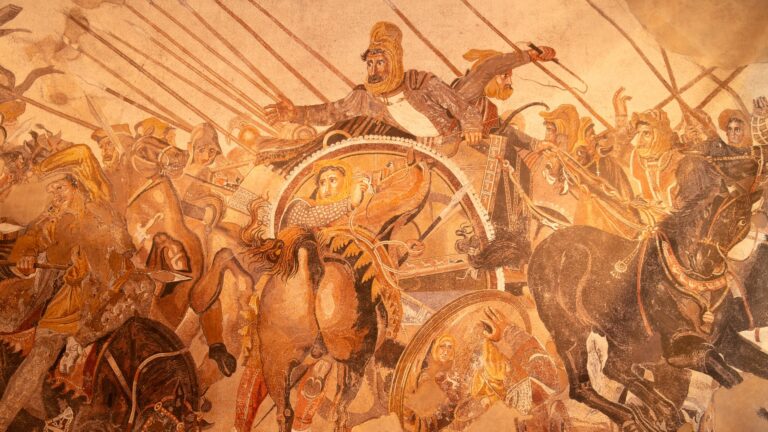
The empire began with Cyrus’s conquest of the Median Empire, Lydia, and Babylon. Smaller, regional kingdoms were the norm in the Near East before this time. The Achaemenid Empire unified all these territories under a single administration. They allowed subject nations to retain their laws, customs, and religious practices. The empire introduced a standardized currency and taxation system. Alexander the Great defeated the last Achaemenid king, Darius III, ending the empire in 330 BCE.
Principles or Key Aspects of Achaemenid Empire:
- Vast Territory: Controlled an estimated 44 percent of the world’s population at its height.
- Administrative Efficiency: Employed a standardized bureaucracy and road system.
- Tribute System: Provincial governors collected annual tribute, often depicted in reliefs.
- Religious Pluralism: Kings actively supported the different religions within their borders.
- Standing Army: Maintained the famous force known as the Ten Thousand Immortals.
Ethical Considerations for Achaemenid Empire:
- Historical Bias: Much of the empire’s written history comes from their Greek rivals.
- Propaganda: Imperial texts and art promote the king’s virtues and divine mandate.
- Legacy: Its reputation is often unfairly overshadowed by its defeat by Greek forces.
- Labor: Construction of massive capitals like Persepolis relied on a system of paid or directed labor.
Relevance to Ancient Worlds
The Achaemenid Empire is crucial for understanding ancient worlds because it:
- Pioneered Administration: Created a model for subsequent large empires, including Rome.
- Impacted Religion: Allowed the Jewish people to rebuild their temple after the Babylonian Exile.
- Facilitated Trade: Ensured peaceful, reliable trade routes from the Mediterranean to India.
- Drove Innovation: Standardized weights, measures, and coinage for vast territories.
- Defined Civilization: Represented the peak of centralized government and organization of its era.