Table of Contents: Definition – Acroterion
“Acroterion”
Pronunciation: /ˌækrəˈtɪəriən/ (ak-roh-TEER-ee-un)
Part of Speech: Noun
Acroterion Definition (Architectural Context)
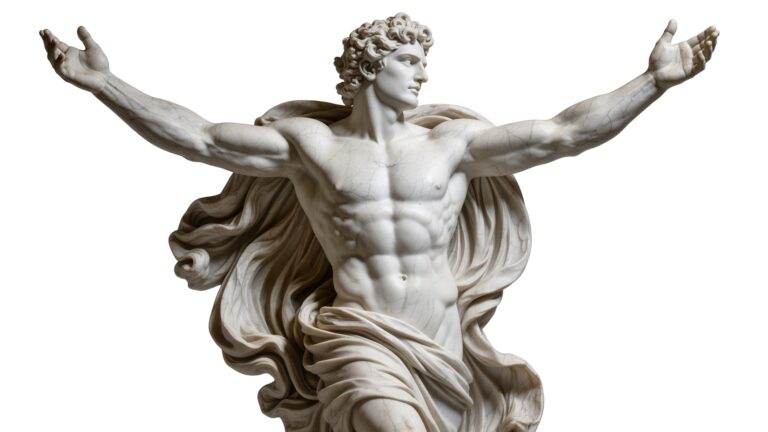
An Acroterion is an ornamental block or pedestal placed at the corners or apex of a pediment. The term applies both to the supporting base and the decoration it holds. This architectural element is typical of ancient Greek and Roman temple design. The corner acroteria are called acroteria angularia. The decoration atop the Acroterion was often a statue, palmette, or a griffin.
Origin of the Word “Acroterion”
The word comes directly from ancient Greek. Akroterion (ἀκρωτήριον) means “summit” or “extremity.” It is derived from akros (ἄκρος), meaning “highest” or “uppermost.” The term refers to the decoration’s placement at the highest, outermost points of the roofline.
Examples:
General Use: “In addition, the museum houses a beautifully preserved marble Acroterion shaped like Nike.”
Architectural Context: “Similarly, the cornice was restored with the placement of three new acroteria on the pediment.”
Historical Context: “Consequently, the earliest surviving examples of the Acroterion date back to the 7th century BCE.”
Conservation Context: “Moreover, stabilizing the large statue required reinforcing the structure beneath the central Acroterion.”
Vocabulary and Language Resources
Terms Related to Acroterion
- Pediment: The triangular space forming the gable of a two-pitched roof in classical style, for example.
- Apex: The highest point of the pediment, where the central acroterion sits.
- Cornice: The projecting decorative molding along the top of a building or wall.
- Palmette: A decorative motif resembling a fan shape, often used for acroteria.
- Antefix: A decorative block used along the side eaves of a roof, not the apex.
- Gryphon: A mythological creature, a common choice for an acroterion’s decoration.
Etymology
Acroterion: From Greek akros (highest) + -terion (place for).
Synonyms
Pediment ornament, roof decoration, finial (in later architecture), summit block.
Antonyms:
Metope (frieze decoration), Column capital (pillar top), Stylobate (temple platform).
Thesaurus
Ornamentation, embellishment, flourish, decoration, motif, peak, finial.
Acroterion Historical & Cultural Context:
The earliest Acroterion pieces were made of painted terracotta. Greek architects later began using marble for this element. The earliest function may have been to help conceal the ends of the roof beams. However, the pieces quickly evolved into purely decorative elements. Their elaborate design served to highlight the temple’s dedication to a deity. Statues of gods, heroes, or symbolic creatures like the Sphinx were popular motifs.
Principles or Key Aspects of Acroterion:
- Visibility: The placement ensures maximum visibility from the ground level below the temple.
- Ceremonial Focus: The central position often held the most important or largest sculpture.
- Material Evolution: Moved from painted clay in the archaic period to carved marble in the classical age.
- Protective Function: Terracotta acroteria in earlier periods may have helped protect the roof structure.
- Symmetry: The corner pieces were typically matched to maintain the building’s balance.
Ethical Considerations for Acroterion:
- Restoration: Fragments of the original acroteria must be carefully distinguished from modern replacements.
- Weathering: Due to their exposed position, they are highly susceptible to damage from the elements.
- Removal: Many famous examples were removed from their original sites and are now in museums.
- Authenticity: Reconstructed acroteria should rely on strong archaeological evidence for accuracy.
Relevance to Ancient Worlds
The Acroterion is crucial for understanding ancient worlds because it:
- Dates Buildings: Changes in material and style help date classical structures accurately.
- Reveals Patronage: The decorative motifs reveal information about the specific cult or dedication of the temple.
- Shows Craftsmanship: The surviving marble pieces demonstrate the height of classical sculptural art.
- Defines Classical Style: It is a recognizable and essential feature of Greek and Roman religious architecture.
- Illustrates Symbolism: The statues used on the apex often carried important religious or civic meaning.