“Amalgam”
Pronunciation: /əˈmælɡəm/ (uh-MAL-gum)
Part of Speech: Noun
Quick Definition: An alloy in which mercury is a principal component, typically characterized by a soft or liquid state before setting.
General Use: “The ancient craftsman prepared a mercury-gold Amalgam paste. Consequently, they applied it to the bronze statue before heating to create a durable, golden surface layer.”

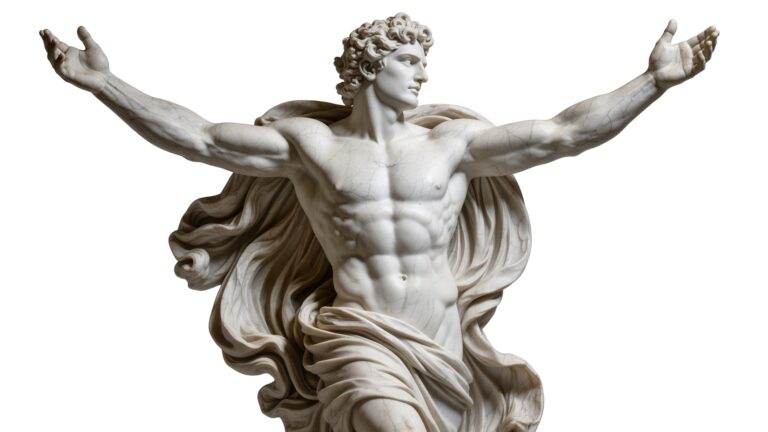
Fire-Gilding Process – The use of mercury-gold Amalgam was a monumental process in historical fire-gilding. The amalgam was painted onto a surface, then heated, vaporizing the mercury and leaving a thin, permanent layer of gold.
The Artisan Hazard – Ancient and medieval artisans who performed fire-gilding were unknowingly exposed to dangerous levels of mercury vapor. This hidden process caused long-term illness, yet the technique was prized for its monumental durability.
Earliest Dental Use – While famously Roman and Greek, the earliest documented use of silver Amalgam for filling teeth was actually in China during the Tang Dynasty (c. 659 CE), making its early dental application monumental.
Did you know?
Ancient alchemists and metallurgists were fascinated by mercury due to its liquid form and its ability to dissolve other noble metals without heat. This property allowed for the creation of soft, workable pastes, or Amalgams. Therefore, these pastes could be used for purification or coating objects before applying heat to finalize the chemical process.
Amalgam Definition (Primary Context)
In ancient metallurgy, an Amalgam was an intermediary substance central to two complex technological processes. It was utilized because mercury easily binds with metals like gold and silver at ambient temperatures. This binding creates a soft, putty-like material. For purification, the gold-mercury Amalgam separated the precious metal from unwanted rock or sediment. For gilding, the paste could be evenly spread over base metals before being heated to drive off the mercury, leaving the gold behind.

Greek: málagma (μάλαγμα), meaning “soft mass,” “emollient,” or “a soft mass.”

Mercury Alloy, Metallic Solution, Gold Paste, Mercury Compound.

Pure Metal, Homogeneous Alloy (lacking mercury), Ore.

Mixture, Compound, Composite, Mixture.
Historical Context of Amalgam
The use of mercury for gold purification dates back to at least the 5th century BCE in the Greek and Roman world, and possibly earlier in Egypt and Mesopotamia. The Romans, in particular, utilized mercury in conjunction with silver to improve the efficiency of their mining operations. By the medieval period in Europe and Asia, the technique of fire-gilding using a mercury Amalgam became the standard for creating high-quality, durable gold surfaces on bronze statues and artifacts. This process remained widely used until the 19th century.

Social Context of Amalgam
The technology of Amalgamation allowed ancient states and empires to access precious metals more efficiently. This bolstered their wealth and ability to fund large-scale projects. Consequently, control over mercury sources, such as the mines at Almadén in Spain, was strategically vital for the Roman Empire. The resulting gold-gilded objects were expensive displays of power and piety, reserved for temples, imperial portraits, and the highest-ranking elite.
| Area of Influence | Significance and Impact |
| Gilding Art | The Amalgam technique enabled artisans to apply a thin, incredibly adherent gold layer. This created masterpieces like the Bronze Horses of San Marco. |
| Mining Production | It increased the yield of gold and silver from lower-grade ores. This drastically improved the Roman and medieval economy. |
| Luxury Display | The resulting gilded artifacts, often religious statues or imperial armor, publicly demonstrated immense wealth and status. |
| Toxicology | The widespread use of the process inadvertently exposed workers to severe mercury poisoning. This represents an early occupational hazard. |
Terms Related to Amalgam
Understanding the function and composition of the Amalgam requires knowledge of related materials and historical processes. This provides essential context for both material science and chemical history. This provides a clearer view of the chemical framework surrounding ancient metallurgy.

| Term/Concept | Description and Relevance |
| Cinnabar | The primary mineral (mercury sulfide) from which liquid mercury was extracted for use in making an amalgam. |
| Fire-Gilding | The heat-intensive process used to vaporize the mercury from the paste, leaving a permanent layer of gold on the base metal. |
| Refining | The general process of purifying crude ore. The Amalgam technique was a method of refining gold and silver ore. |
| Distillation | The process used to separate liquid mercury from cinnabar or to recover mercury vapor after the gilding process. |
| Patina | The thin layer of tarnish or oxidation that forms on bronze or copper. Amalgam gilding protected objects from this natural process. |
| Cupellation | A separate ancient process that used lead to extract noble metals. This contrasted with the amalgamation technique. |
Sources & Credits
Sources
- Craddock, P. T. “Scientific Investigation of Copper Alloys in the Ancient World.” British Museum Technical Research Bulletin, 2007. [Historical source]
- Maxson, R. E., and T. S. K. Lim. “The History and Science of Amalgam.” Journal of Oral Science, 2003. [Historical source]
- “Amalgam.” Britannica Dictionary. [Definition site]
- Forbes, R. J. “Studies in Ancient Technology, Vol. VIII.” Brill, 1993. [Historical source]
- Minamata Convention on Mercury. “Official Text and Background.” United Nations Environment Programme. [Government institutional body/definition site]