Table of Contents: Definition – Annealing
“Annealing”
Pronunciation: /əˈniːlɪŋ/ (uh-NEEL-ing)
Part of Speech: Noun
Annealing Definition (Materials Science Context)
Annealing is a heat treatment process that alters the microstructure of a material. The process involves heating the material to a specific temperature and holding it there for a time. It is then cooled slowly. This treatment is used primarily to relieve internal stresses, increase ductility, and make the material softer. It improves workability and reduces hardness and brittleness, for example. The slow cooling allows the atoms to settle into a more regular crystalline lattice structure.
Origin of the Word “Annealing”
The word comes from the Old English term anǣlan. This word originally meant “to set on fire” or “to burn.” Over time, the meaning evolved to specifically describe the heat treatment process used on materials like glass and metal.
Examples:
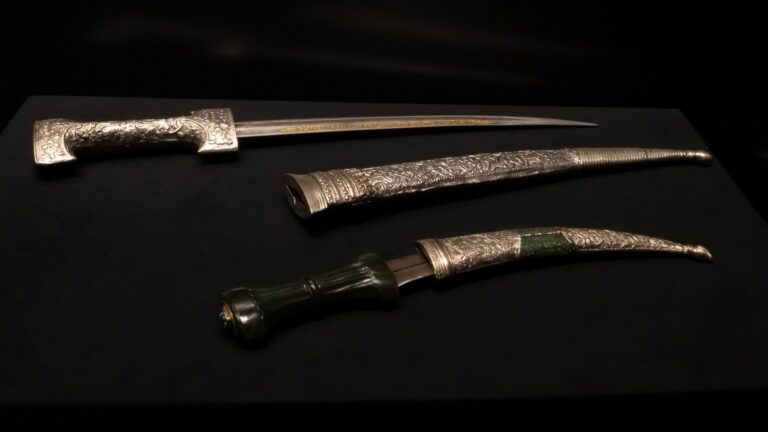
General Use: “In addition, the blacksmith used annealing to soften the steel before shaping it into a sword blade.”
Materials Science Context: “Similarly, the proper annealing cycle is essential to prevent glass from cracking due to internal stresses.”
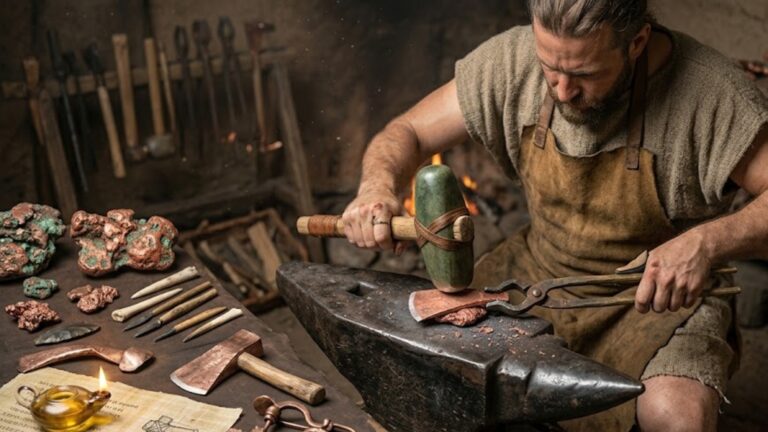
Historical Context: “Consequently, ancient coppersmiths used frequent annealing when hammering bronze and copper into intricate shapes.”
Technical Context: “Moreover, the metal was heated to above its recrystallization temperature during the annealing process.”
Vocabulary and Language Resources
Terms Related to Annealing
- Heat Treatment: The controlled heating and cooling of materials to change their physical properties, for example.
- Ductility: The material’s ability to undergo plastic deformation without fracturing.
- Brittleness: The tendency of a material to fracture when subjected to stress.
- Recrystallization: The process where strained crystal grains are replaced by new, stress-free grains.
- Quenching: The rapid cooling of a material, often done to increase hardness (opposite of annealing).
- Tempering: A heat treatment applied to hardened materials to reduce some brittleness.
Etymology
Annealing: From Old English anǣlan (to set on fire, to burn).
Synonyms
Softening, stress-relief heat treatment, heating and slow cooling, material refinement.
Antonyms:
Quenching (rapid cooling), Hardening (increasing hardness), Work-hardening (cold working).
Thesaurus
Treatment, process, refinement, heating, softening, tempering, preparation.
Annealing Historical & Cultural Context:
Ancient metalworkers discovered annealing empirically thousands of years ago. It was essential for working metals like gold, copper, and bronze, which quickly become brittle when hammered cold. The Roman glass industry regularly utilized the process to prevent cooling stresses from shattering objects. Today, the process is precisely controlled using industrial ovens and scientific measurements. Its use allowed early civilizations to create complex tools and beautiful jewelry that would otherwise be impossible.
Principles or Key Aspects of Annealing:
- Stress Relief: Internal stresses built up from cold-working or rapid cooling are minimized.
- Grain Growth: Crystal grains grow larger and more uniform, which improves ductility.
- Reduced Hardness: The material becomes easier to cut, bend, and shape without fracturing.
- Slow Cooling: The critical final step allows for the stable reformation of the internal structure.
- Recrystallization Temperature: Heating beyond this point is necessary for the process to be effective.
Ethical Considerations for Annealing:
- Artifact Integrity: Archaeologists must study evidence of annealing without destroying the artifact’s historical structure.
- Ancient Knowledge: The process demonstrates the sophisticated, non-theoretical metallurgical knowledge of ancient artisans.
- Replication: Modern craftspeople use the technique to accurately replicate historical artifacts and tools.
- Conservation: Understanding the heating processes helps conservators determine the original condition of metal objects.
Relevance to Ancient Worlds
Annealing is crucial for understanding ancient worlds because it:
- Enabled Metallurgy: Was necessary for producing most copper, bronze, and iron tools and weapons.
- Facilitated Art: Allowed artisans to create delicate and complex forms in gold and silver.
- Explains Glassware: Accounts for the integrity and survival of large ancient glass vessels and windows.
- Shows Skill: The quality of an ancient metal artifact often reflects the smith’s mastery of the heating process.
- Dates Technology: The evidence of controlled heating helps chart the development of early metallurgical technology.