“Armature”
Pronunciation: /ˈɑːrmətʃər/ (AR-muh-cher)
Part of Speech: Noun
Quick Definition: An internal skeleton or support structure used by sculptors to hold modeling material in place during creation.
General Use: “The sculptor embedded a sturdy wire Armature within the clay to provide the necessary support for the extended, outstretched limbs of the figure. Thus, the piece maintained its pose during firing.”

The Lost Wax Process – In this monumental technique, the ceramic shell surrounding the wax model is strengthened by an internal Armature made of fireproof material. This prevents the heavy shell from collapsing.

The Shrinkage Space – In ceramics, the Armature must be removed or carefully constructed of a material that burns out cleanly during firing. If not, the clay will shrink around the rigid internal support, causing it to crack and shatter.
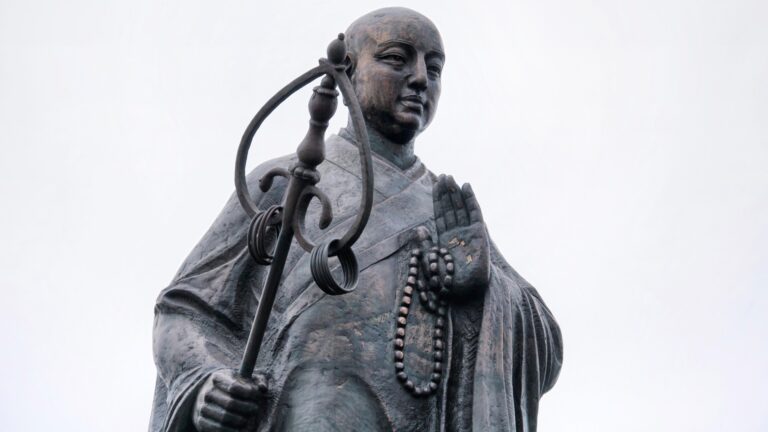
Evolution to Permanent Support – Modern synthetic materials and welding allow the creation of complex, permanent internal supports. These robust structures, sometimes called an Armature, can now support large outdoor public sculptures indefinitely, making the support monumental.
Did you know?
The earliest forms of the Armature were simple wooden dowels or bundles of reeds. These materials prevented the slumping of large clay figures. Consequently, the development of lightweight, flexible wire allowed sculptors to achieve much more dynamic and gravity-defying poses. This feature significantly expanded the possibilities of figurative sculpture.
Armature Definition (Primary Context)
The Armature in sculpture refers specifically to the skeleton or framework, often made of wire, wood, or piping. This internal structure supports the weight of a pliable material, such as clay, plaster, or papier-mâché, while the artist works on the form. It is necessary when the material cannot support its own weight, especially for pieces with thin sections or projections. In ceramics, the Armature is typically temporary. Conversely, in casting (like bronze casting), a support framework is sometimes used to position the core inside the mold cavity.

Latin: armātūra, meaning “armor” or “equipment.” The term was adopted for internal support as it “arms” or provides structure to the sculpture.

Internal Frame, Skeleton, Support Structure, Core Support, Wire Frame.

Surface, Exterior, Veneer, Skin.

Framework, Scaffolding, Base, Foundation.
Historical Context of Armature
The concept of internal support has existed since ancient times, particularly in large ceramic or terracotta figures. Ancient Greek and Roman sculptors used simple iron bars and wooden supports in their larger plaster and clay models before the final marble carving. In the Renaissance, artists like Leonardo da Vinci and Michelangelo used sophisticated internal Armatures to study complex human anatomy before executing final works. The development of cheap, malleable wire in the industrial age made the use of a simple wire Armature standard practice in art schools.

Social Context of Armature
The use of an Armature allows artists to produce works of greater scale and complexity. This capability has a direct impact on public art and monumental sculpture. The internal framework essentially frees the artist from the limitations of gravity and material stability. Furthermore, in the context of academic art training, the process of building a proper Armature is a fundamental skill taught to students. This training helps them understand balance and weight distribution, which is crucial for structural integrity.
| Area of Influence | Significance and Impact |
| Figurative Pose | The internal Armature is essential for creating dynamic, non-vertical poses, enabling the clay to be suspended against gravity. |
| Material Usage | It allows the use of large volumes of heavy, low-strength materials like plaster or unfired clay that would otherwise slump or fail. |
| Ceramic Firing | In clay, the temporary Armature must be removed before firing to prevent the piece from cracking due to differential shrinkage, a critical step. |
| Conservation | Improperly constructed or corroding metal Armatures in finished sculptures can lead to irreversible damage, posing a challenge for conservators. |
Terms Related to Armature
Understanding the structure and process of the Armature involves related techniques and components in sculpture. This provides essential context for the creation of complex three-dimensional forms. This provides a clearer view of the artistic framework surrounding sculptural techniques.

| Term/Concept | Description and Relevance |
| Core | The central mass or interior filler used in casting processes to reduce the amount of final material needed. |
| Plaster Bandage | Strips soaked in plaster used to quickly create an external supporting shell around the clay model during the molding process. |
| Maquette | A small preliminary sketch model of a sculpture. This model may be supported by a very simple internal structure. |
| Modeling | The additive technique of manipulating soft material, such as clay, which often requires the use of the structural framework. |
| Lost Wax Casting | A method where the internal core is held in place by metal pins while the melted wax flows out of the mold. |
| Rebar | Steel bars or mesh used as a permanent, rigid internal frame in large, modern concrete or monumental stone sculptures. |
Sources & Credits
Sources
- Britannica, T. Editors of Encyclopaedia. “Armature.” Encyclopedia Britannica. [Definition site]
- Rich, J. C. “The Materials and Methods of Sculpture.” Oxford University Press, 1988. [Historical source]
- V. & A. Museum, London. “Sculpting Materials and Techniques.” Conservation Department Notes. [Museum site]
- The Sculpture Center, New York. “Techniques of Clay Modeling.” Educational Resource. [Government institutional body/definition site]
- Penny, N. “The Materials of Sculpture.” Yale University Press, 1993. [Historical source]