“Bandiagara”
Pronunciation: /ˌbændiˈɑːɡərə/ (ban-dee-AH-guh-ruh)
Part of Speech: Proper Noun
Quick Definition: A sandstone escarpment in Mali, West Africa, known globally for the cliff-side habitations and rich cultural traditions of the Dogon people.
General Use: “The unique Bandiagara landscape combines towering cliffs, sandy plains, and dramatic Dogon architecture. Consequently, it presents a monumental challenge for conservation efforts due to erosion and climate change.”

Dogon Masks and Statues – The area is the home of the Dogon, whose monumental artistic output includes intricately carved wooden masks and ancestor statues. These artifacts are integral to their elaborate funeral rites and Sigi festival.

Tellem Precursors – The oldest dwellings built into the cliffs of Bandiagara were not originally constructed by the Dogon. The hidden truth is that they were built by the Tellem, a preceding culture that occupied the area until the 15th century CE. The Dogon adopted and expanded upon these ancient structures.

Sirius Star Knowledge – The Dogon people possess an ancient and highly complex astronomical tradition. This includes precise knowledge of the Sirius star system, making their indigenous knowledge system a monumental mystery.
Did you know?
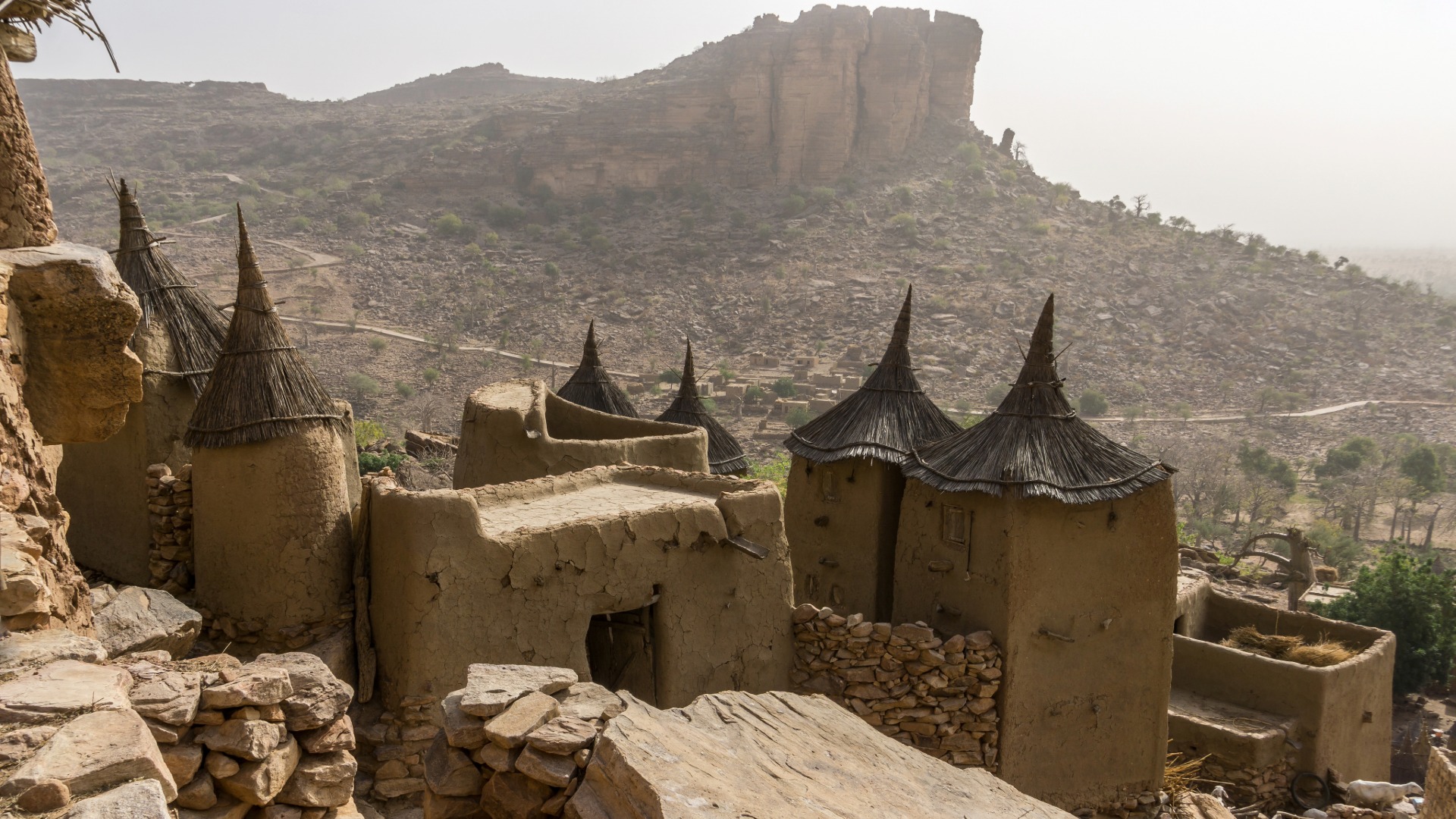
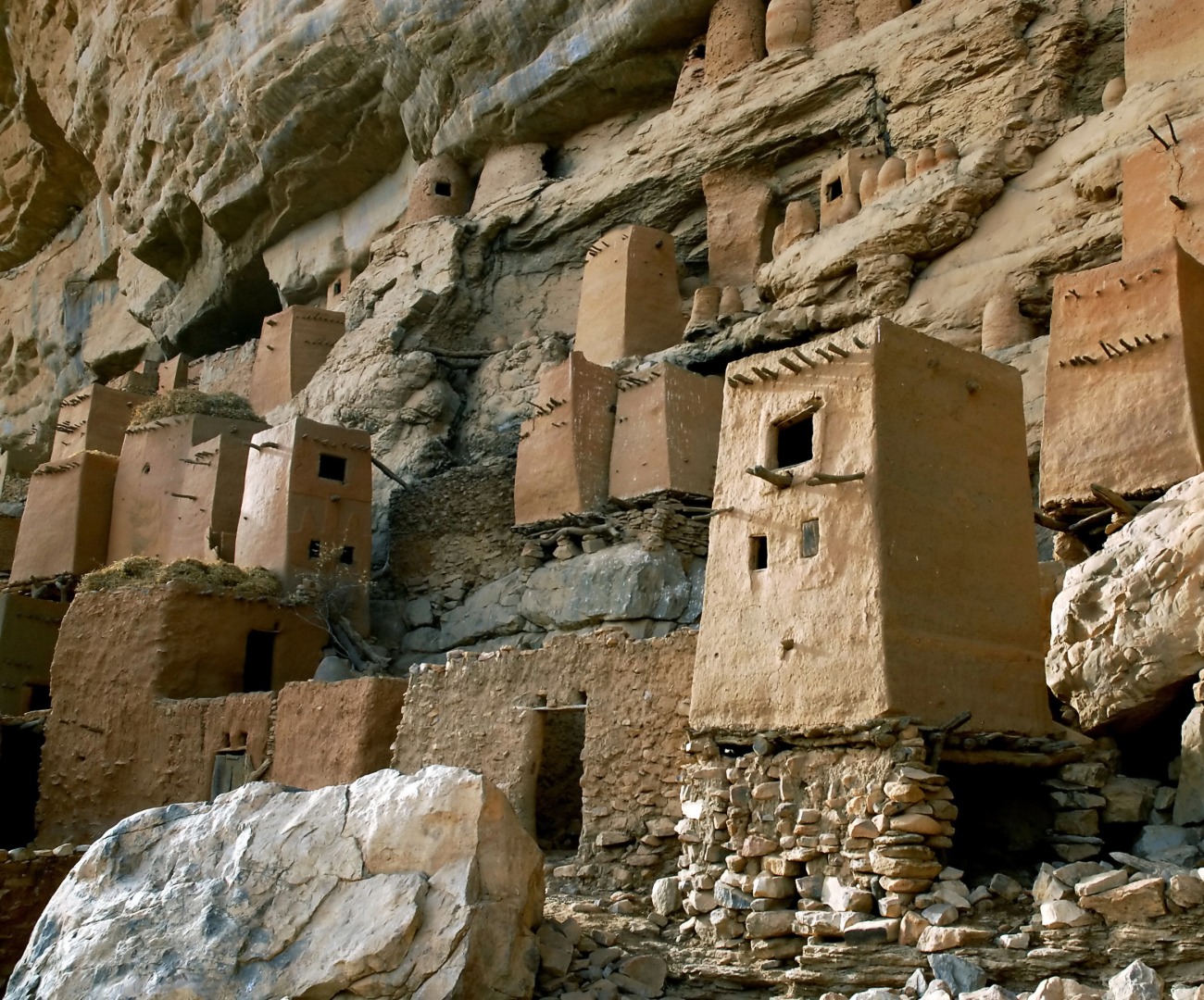
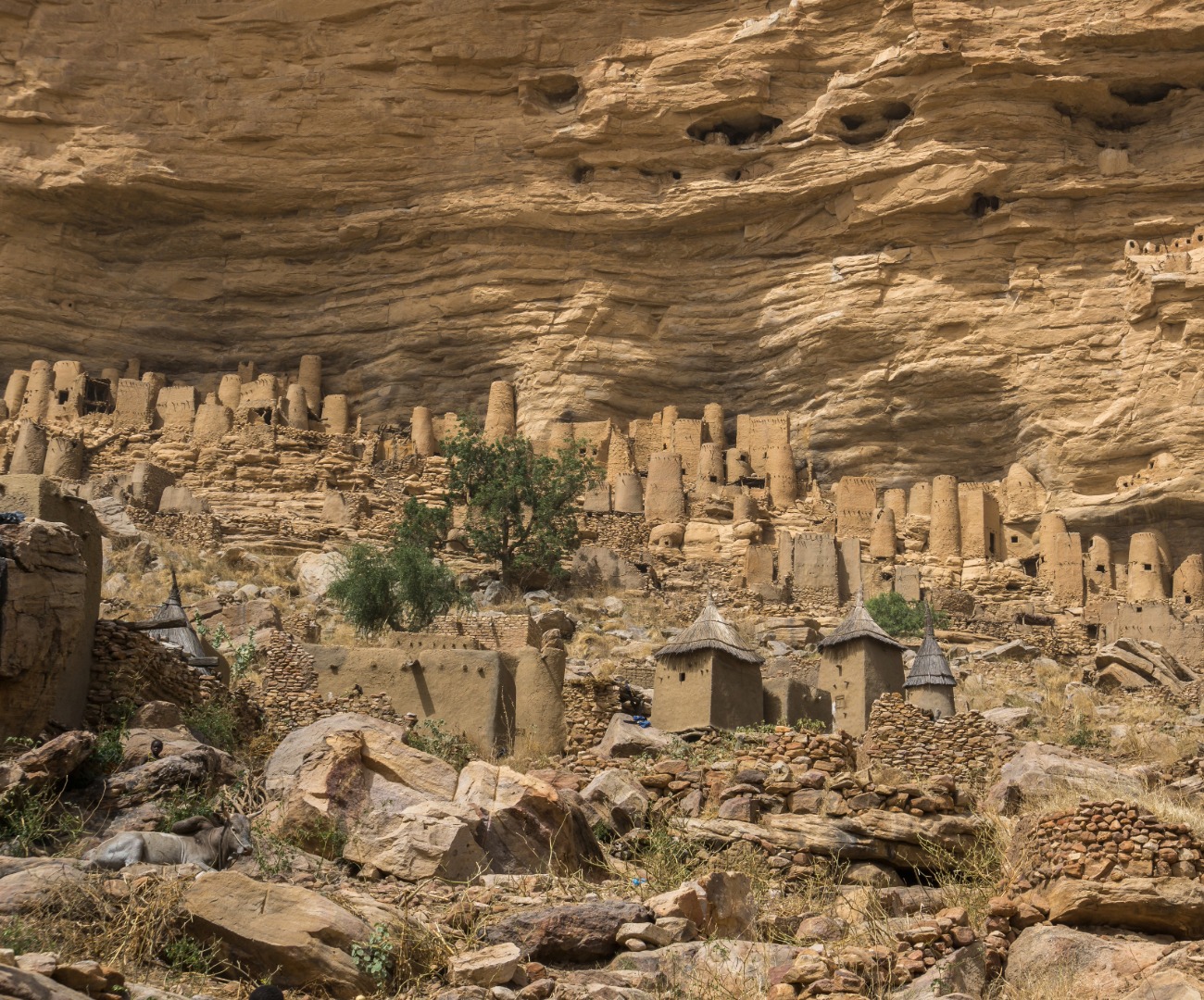
The Dogon people settled the Bandiagara Escarpment to maintain their traditional way of life and protect themselves from external pressures. The cliffs offered excellent natural defenses and provided shelter for their unique mud and straw granaries and homes. Therefore, the architectural ingenuity of the dwellings perfectly integrates with the monumental, challenging landscape.
Bandiagara Definition (Primary Context)
The Bandiagara Escarpment is a geological formation that runs northeast to southwest across central Mali. It comprises three distinct zones of habitation: the high plateau above the cliffs, the cliff face itself (the oldest settlement zone), and the Seno-Gondo plain below. The term Bandiagara refers not just to the rock face but to the entire cultural landscape, which includes hundreds of villages, ritual altars, sanctuaries, and the ancestral burial grounds built into the rock. The Dogon architecture uses local materials like mud, wood, and stone, skillfully adapted to the verticality of the cliffs.

Bambara/Dogon: The name likely derives from a local language, possibly referring to a type of shrub or a topographical feature of the area.

Dogon Country, Land of the Dogon, Dogon Escarpment, Falaises de Bandiagara (French).

The Sahel (broader savanna region), Niger River Delta (distant geographical contrast).

Cliff, Escarpment, Cultural Landscape, Heritage Site.
Historical Context of Bandiagara
The Bandiagara Escarpment has been continuously inhabited for thousands of years, with archaeological evidence pointing to early iron production. The Dogon, migrating from the west, settled the cliffs around the 15th century CE. They likely displaced or integrated with the Tellem people. The cliffs offered security from Islamic pressures and slave raids, allowing the Dogon to preserve their complex, non-Islamic cosmology and social structures. The site achieved global recognition after French ethnologists studied the Dogon culture in the mid-20th century.
Social Context of Bandiagara
The social structure of the Dogon is deeply tied to the Bandiagara landscape. Villages are organized hierarchically, with the Hogon (spiritual leader) presiding. The dwellings and granaries are symbolic representations of the human body and Dogon cosmology. The annual Sigi ceremony, held only once every 60 years, is a monumental festival that renews society and commemorates the dead. This deep integration of daily life, ritual, and architecture makes Bandiagara a rare example of a living cultural tradition preserved by its geography.
| Area of Influence | Significance and Impact |
| Cultural Refuge | The inaccessible cliffs provided a haven for the Dogon. This allowed them to preserve their indigenous religion against external influences. |
| Vernacular Architecture | The Dogon built unique granaries and homes using mud and straw. These are integrated seamlessly into the rock face. |
| Cosmology | The villages and structures are arranged symbolically. This reflects the Dogon’s complex creation myths and view of the universe. |
| Ancestor Worship | The cliff burial caves of the Tellem and Dogon are sacred sites. This emphasizes the continuing importance of the ancestors. |
Terms Related to Bandiagara
The study of Bandiagara involves terms related to its unique culture, geology, and settlement patterns. This provides essential context for cultural geography and ethnology. This provides a clearer view of the anthropological framework surrounding the Dogon people.
| Term/Concept | Description and Relevance |
| Dogon | The main ethnic group currently inhabiting the Bandiagara Escarpment and responsible for its continued cultural heritage. |
| Tellem | The preceding culture that inhabited the cliffs. Their ancient dwellings were later utilized by the Dogon. |
| Hogon | The spiritual and secular leader of a Dogon village. This person embodies the traditional authority. |
| Sigi | A central Dogon ceremonial cycle. This is held every sixty years to mark the renewal of life and the passage of generations. |
| Granary | A distinctive, small mud structure built into the cliffs. This is used for storing millet and other crops. |
| Seno-Gondo | The flat, sandy plain located at the foot of the Bandiagara Escarpment, where many Dogon villages are also located. |
Sources & Credits
Sources
- Griaule, M. “Conversations with Ogotemmêli: An Introduction to Dogon Religious Ideas.” Oxford University Press, 1965. [Historical source]
- UNESCO World Heritage Centre. “Cliff of Bandiagara (Land of the Dogons).” Official Documentation. [Government institutional body/definition site]
- Bedaux, R. M. A. “Tellem: The Archaeology of the Dogon in Mali.” Research Reports, Rijksmuseum voor Volkenkunde, 1988. [Historical source]
- Laude, J. “African Art of the Dogon: The Last Remnants.” Rizzoli, 1973. [Historical source]
- Smith, R. “Architecture and Symbolism in the Bandiagara Escarpment.” African Arts Journal, 2002. [Historical source]