“Bireme”
Pronunciation: /ˈbæklʌɪtɪŋ/ (BAK-lye-ting)
Part of Speech: Noun
Quick Definition: A galley warship driven by oars arranged in two distinct horizontal tiers on both the port and starboard sides.
General Use: “The Athenian fleet deployed the swift Bireme as a scouting vessel in the Aegean Sea. Consequently, its dual banks of oars allowed it to quickly outpace most enemy trading ships.”

Trieres Monument – While often depicting the larger trireme, monumental reliefs such as the Samothrace relief celebrated the power of Greek naval technology. The Bireme structure was an early, critical step toward this monumental naval power.

The Missing Deck – Contrary to later representations, the earliest Biremes may not have had a full deck for marines. This hidden design feature made the oarsmen highly vulnerable to enemy fire or rough seas.
Phoenician Origin – Although famously used by the Greeks, naval historians generally credit the Phoenicians with developing and using the initial design of the Bireme. This allowed them monumental naval dominance in the early Mediterranean.
Did you know?
The invention of the Bireme was a revolutionary step in naval warfare. By stacking the rows of oars, ship designers doubled the available power without significantly increasing the ship’s length. This was critical in the Mediterranean, where naval battles often relied on speed for ramming maneuvers. Therefore, the vessel quickly became the backbone of early naval fleets.
Bireme Definition (Primary Context)
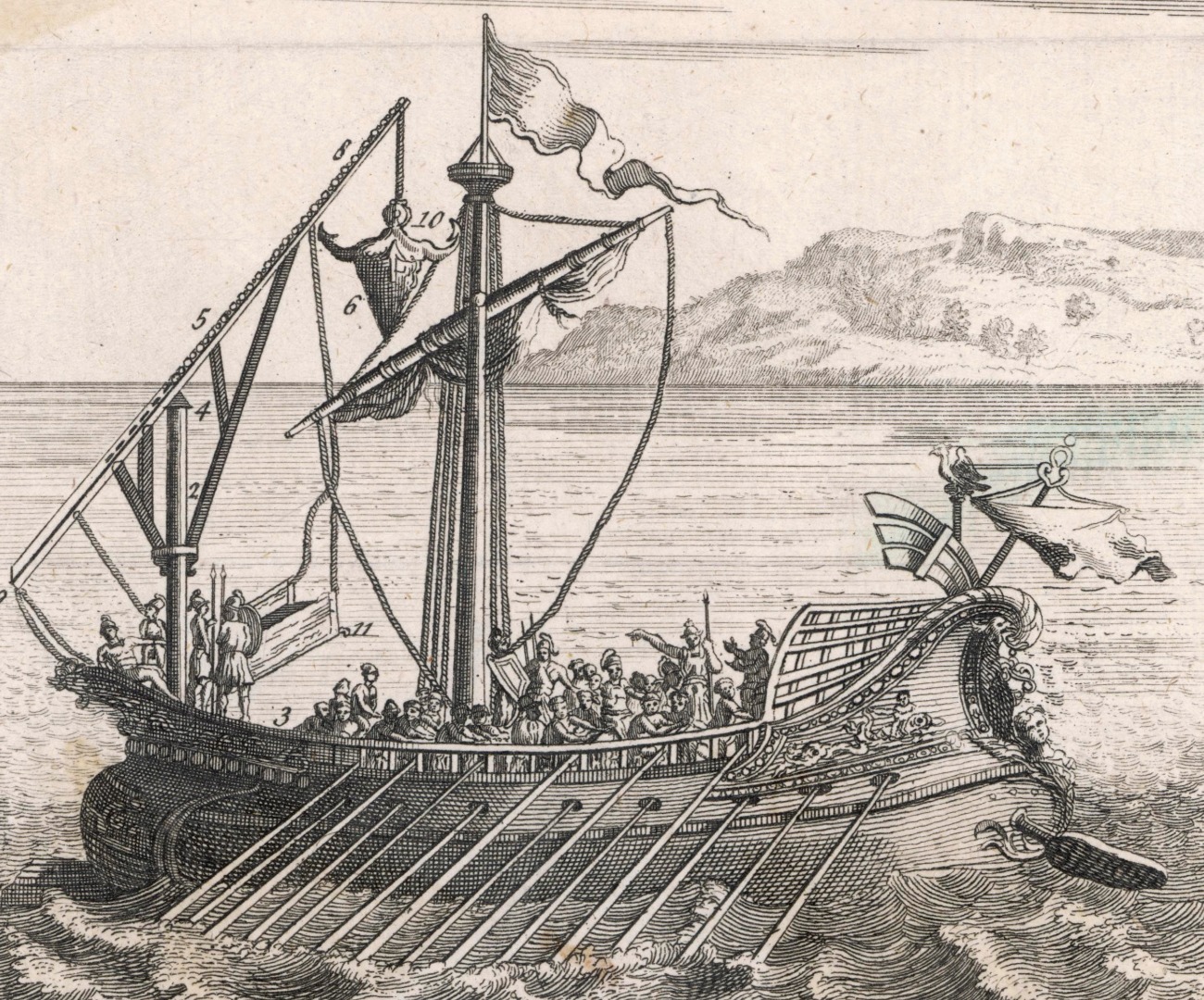
The Bireme (Dieres in Greek) was a galley, meaning it was primarily propelled by human muscle rather than sails. Its defining feature was the arrangement of two tiers of oarsmen. The upper row, or thranitai, had a better vantage point, while the lower row, or zygites, sat closer to the waterline. This configuration required precise coordination among the crew but offered exceptional speed and acceleration. Most models included a reinforced ram (embolon) at the bow for attacking enemy ships.

Latin: biremis, a compound of bi- (two) and -remis (oar), referring to the two banks of oars.

Diere, Galley, Warship, Dual-Banked Vessel.

Monoreme (single bank of oars), Trireme (three banks of oars), Merchant Ship (sail-powered vessel).

Naval Vessel, Boat, Ship, Transport.
Historical Context of Bireme
The Bireme design emerged during the 8th or 7th century BCE, driven by the need for faster, more effective warships during the Greek colonization period. It provided a significant advantage over the earlier monoreme (single-banked) penteconters. The design served as the technical precursor to the much larger and more complex trireme. Consequently, by the 5th century BCE, the Bireme was largely superseded in front-line combat by the trireme. However, it continued to serve as an effective patrol and utility vessel throughout the Hellenistic and Roman periods.
Social Context of Bireme
The development and crewing of the Bireme reflected increasing social organization and military specialization in the Mediterranean. Manning a Bireme required approximately 100 to 120 trained oarsmen. Therefore, maintaining a fleet meant a substantial financial and manpower commitment from the state. The coordination required for the dual-banked rowing led to the development of specialized naval training and signaled the rise of professional navies in the ancient world.
| Area of Influence | Significance and Impact |
| Naval Warfare | Its improved speed and ramming capability defined naval strategy for centuries. This made it a superior fighting vessel. |
| Logistics | The vessel allowed quick transport of troops and supplies. This supported the expansion of Greek and Phoenician colonial empires. |
| State Investment | The cost of building and crewing the ship necessitated state-level funding. This signaled a major commitment to maritime power. |
| Precursor Technology | The technical challenges of coordinating two banks of oars provided the experience. This later allowed for the successful creation of the trireme’s three banks. |
Terms Related to Bireme
Understanding the structure and evolution of the Bireme requires knowledge of related naval and technological terms. This provides essential context for ancient naval history. This provides a clearer view of the technological framework surrounding ancient sea power.
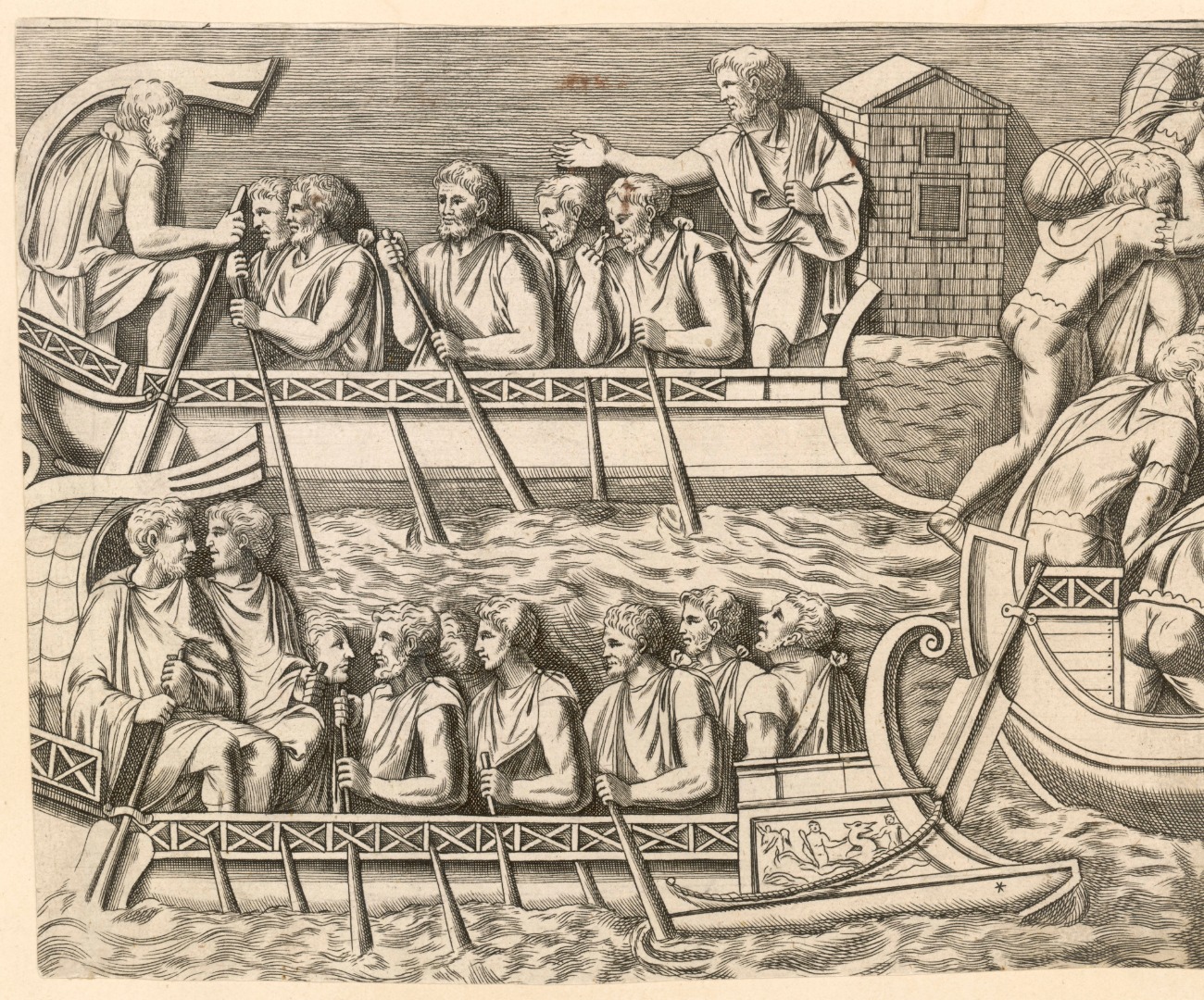
| Term/Concept | Description and Relevance |
| Trireme | A larger, later warship featuring three rows of oars. This vessel eventually replaced the Bireme in battle. |
| Monoreme | An earlier, smaller galley with only one row of oars per side. This was the vessel type before the Bireme. |
| Embolon | The bronze or reinforced wooden ram affixed to the bow. This was the primary offensive weapon of the Bireme. |
| Zygites | The oarsmen in the lower bank. These individuals sat on the zyga (cross-beams) of the ship. |
| Thranitai | The oarsmen in the upper bank. These individuals occupied the highest positions on the vessel. |
| Penteconter | A single-banked ship with fifty oarsmen. This large monoreme was influential before the advent of the Bireme. |
Sources & Credits
Sources
- Morrison, J. S., and J. F. Coates. “The Athenian Trireme: The History and Reconstruction of an Ancient Warship.” Cambridge University Press, 2000. [Historical source]
- Casson, L. “Ships and Seamanship in the Ancient World.” Johns Hopkins University Press, 1995. [Historical source]
- “Bireme.” Oxford Dictionary of Archaeology. [Definition site]
- The Hellenic Maritime Museum. “Ancient Greek Naval Vessels.” Permanent Exhibit Notes. [Museum site]
- Thucydides. “History of the Peloponnesian War.” [Historical source]