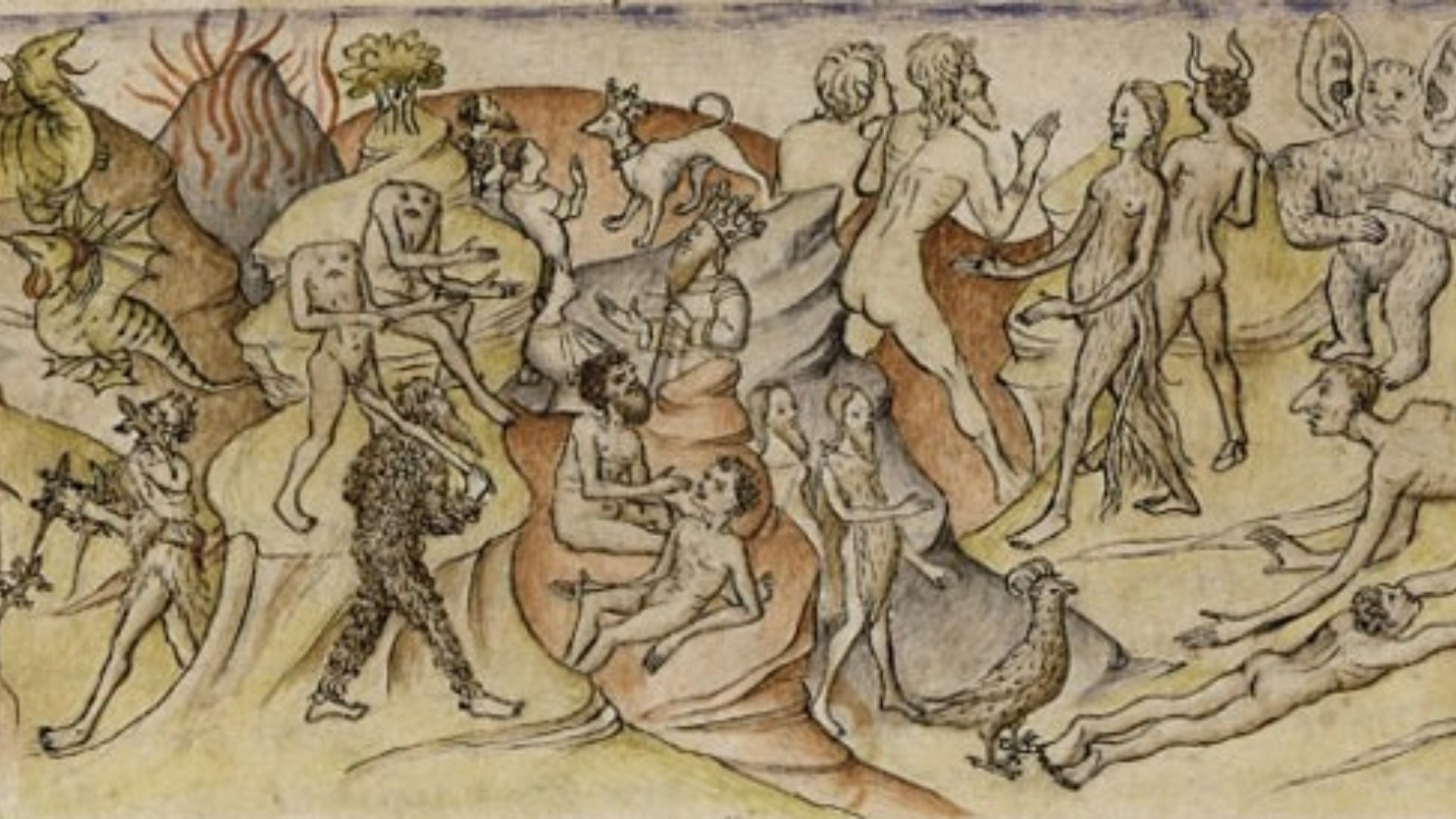
“Blemmyes”
Pronunciation: /ˈblɛmiaɪz/ (BLEM-ee-ize)
Part of Speech: Noun (Plural)
Quick Definition: A powerful nomadic people of the Eastern Desert of Nubia, noted for conflicts with the Roman and Byzantine Empires.
General Use: “The Roman Emperor Diocletian eventually ceded control of the Dodecaschoenus region to the Blemmyes. Consequently, this was an attempt to establish them as a buffer against other tribes further to the south.”

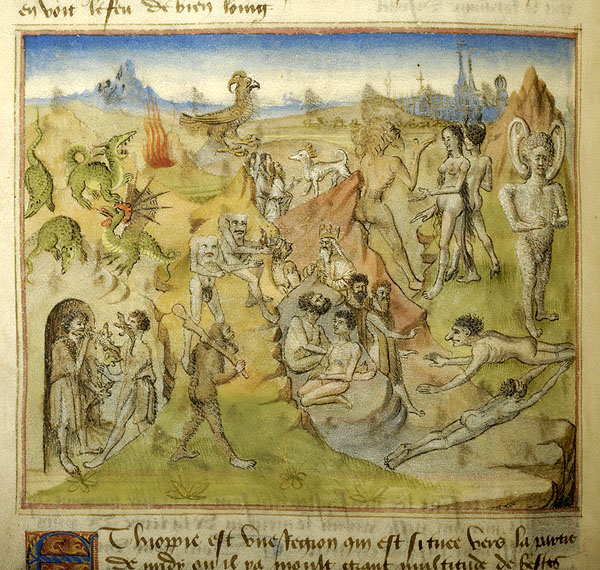
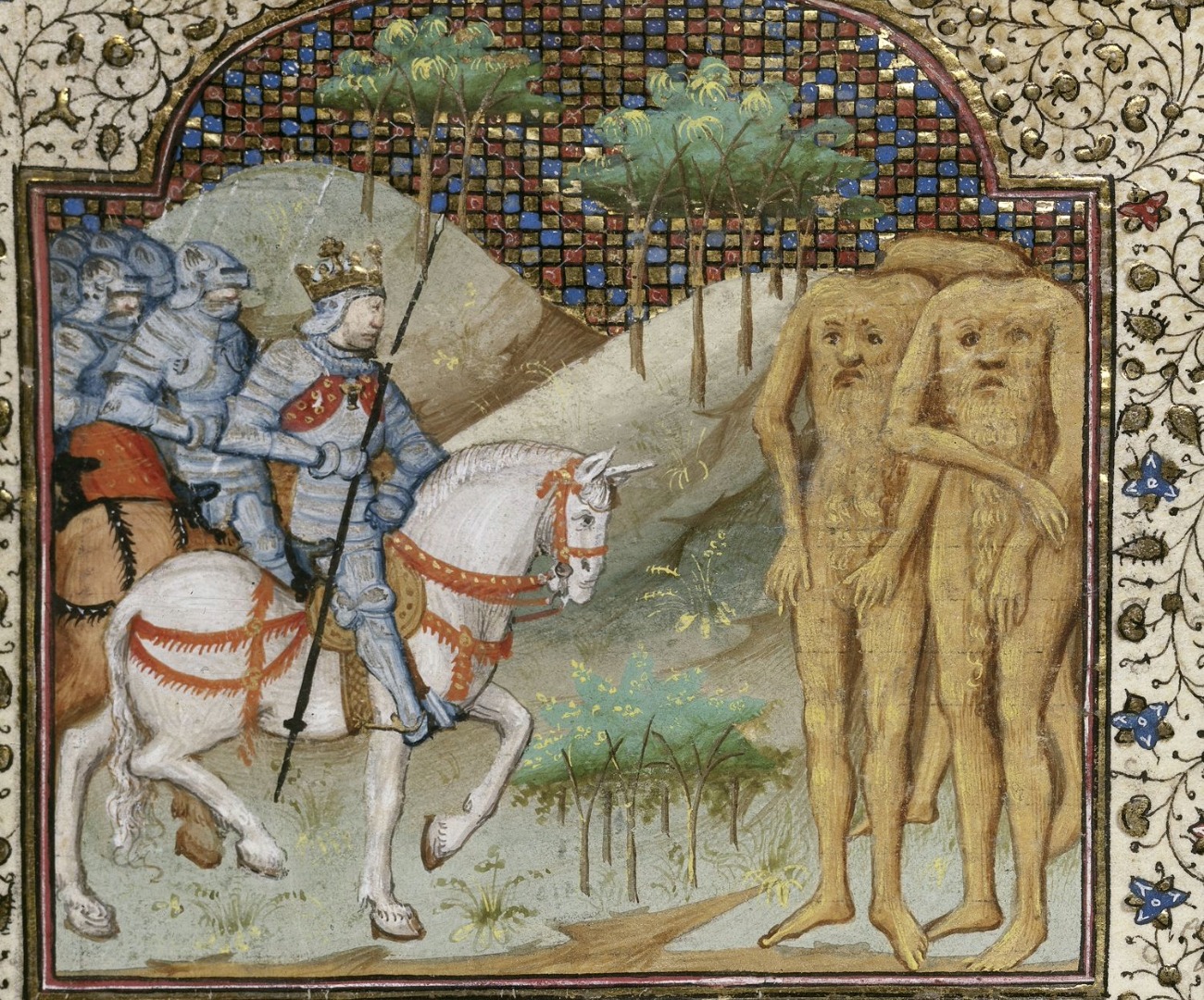
Fanciful Depictions – While historical Blemmyes were ordinary people, monumental Roman and medieval art often depicted them as fantastical, monstrous beings known as acephalous (headless) men with faces in their chests. These images fueled their fearsome reputation.

Cultural Exchange – Despite constant conflict with Rome, the Blemmyes were deeply involved in trade networks. This hidden exchange of gold, spices, and luxury goods occurred across the desert routes, providing vital economic links between the Nile Valley and the Red Sea trade.

Pagan Resistance – The Blemmyes were among the last major groups in the region to resist Christianization. They famously maintained the cult of Isis at Philae long after the Christian Roman Empire mandated the closure of all pagan temples, making their religious resistance monumental.
Did you know?
The Blemmyes likely spoke a language belonging to the Cushitic branch of the Afroasiatic language family. They were highly effective desert fighters who used camels and light cavalry, allowing them to rapidly deploy forces and evade Roman pursuit. Their sustained ability to challenge the Roman Empire’s frontier for centuries underscores their military and political significance.
Blemmyes Definition (Primary Context)
Historically, the Blemmyes were semi-nomadic warriors and traders whose territory spanned the vast desert between the Nile River and the Red Sea (Beja territory). They are archaeologically and linguistically related to the modern Beja people. The Romans considered them a perpetual threat, particularly after the 3rd century CE. They repeatedly raided Roman garrisons and temple complexes in Upper Egypt, specifically the region known as the Dodecaschoenus (the twelve-mile territory south of Aswan).

Greek: Blemmýes (Βλέμμυες). The exact meaning is unknown, though it may derive from an Egyptian or Nubian place name or tribal designation.

Beja (modern descendant group), Eastern Desert Tribe, Roman Frontier Raiders.

Nobatae (another Nubian tribe, sometimes allies, sometimes rivals of the Blemmyes), Romans (their primary military adversary).

Tribe, Nomads, Warriors, Frontier People.
Historical Context of Blemmyes
The Blemmyes first appear in records following the collapse of the Kingdom of Meroë (ancient Kush) around the 4th century CE, seizing control of key territories. Roman interactions were complex, oscillating between warfare and treaties. In the late 3rd century CE, Emperor Diocletian withdrew Roman forces to Aswan (Syene), paying both the Blemmyes and their northern neighbors, the Nobatae, to protect the new border. This arrangement failed, leading to centuries of intermittent conflict until the Blemmyes were finally defeated and politically assimilated by the Christian Nubian kingdoms around 540 CE.
Social Context of Blemmyes
The Blemmyes operated as a powerful confederation of smaller clans. Their nomadic lifestyle was well-adapted to the harsh Eastern Desert. This allowed them to control the trade routes that connected the Nile Valley to Red Sea ports like Berenike. Therefore, they played a crucial, dual role as both disruptive raiders and indispensable economic intermediaries. Their persistence in maintaining the worship of Isis at Philae, a major pilgrimage site, also highlights their deep commitment to ancient indigenous religious practices.
| Area of Influence | Significance and Impact |
| Military Frontier | Their raids forced the Roman Empire to cede territory and maintain expensive garrisons at the Egyptian border. |
| Religious Sanctuary | They defended the Temple of Isis on the island of Philae. This was one of the last functioning pagan sanctuaries in the Roman Empire. |
| Trade Routes | The Blemmyes controlled the vital desert routes between the Nile and the Red Sea. This made them key players in Oriental commerce. |
| Mythology | Their name and geographical location became associated with monstrous, acephalous people in Greek and Latin popular literature. |
Terms Related to Blemmyes
The study of the Blemmyes involves several terms related to the geography, religion, and military context of the Roman and Nubian frontier. This provides essential context for their role in the ancient world. This provides a clearer view of the historical framework surrounding the southern Egyptian frontier.
| Term/Concept | Description and Relevance |
| Nubia | The broad region south of Egypt. This is the larger territory inhabited by the Blemmyes. |
| Dodecaschoenus | The border territory between Egypt and Nubia. This region was repeatedly fought over by the Romans and Blemmyes. |
| Nobatae | A separate Nubian group that settled in the Nile Valley. They often served as Roman allies or rivals to the Blemmyes. |
| Philae | The island temple complex near Aswan. The Blemmyes held special religious rights here until the 6th century. |
| Meroë | The ancient capital of the Kingdom of Kush. The decline of Meroë allowed the Blemmyes to expand their power. |
| Beja | The modern group of people in Sudan and Eritrea. These people are considered the descendants of the Blemmyes. |
Sources & Credits
Sources
- Török, L. “The Kingdom of Kush: Handbook of the Napatan-Meroitic Civilization.” Brill, 1997. [Historical source]
- Bowersock, G. W. “The Last Pagans of Rome.” Harvard University Press, 2011. [Historical source]
- “Blemmyes.” Oxford Dictionary of Late Antiquity. [Definition site]
- Harden, D. B. “The Phoenicians.” Thames & Hudson, 1962. [Historical source]
- Procopius. “History of the Wars.” [Historical source]
Photo Credits
By Master of Lord Hoo’s Book of Hours – This file has been provided by the British Library from its digital collections. Links to the British Library’s website may be broken as the library recovers from a October 2023 cyber attack, and will be updated once material becomes accessible online. For more information on the attack see: https://www.bl.uk/about/cyber-attack It is also made available on a British Library website.Catalogue entry: Royal MS 15 E VI, Public Domain, https://commons.wikimedia.org/w/index.php?curid=50573647
By maître de Marguerite d’Orléans – Bibliothèque national ((Please provide a date))“Peuples fabuleux et faune d’Éthiopie”, in Exposition: Bestiaire du Moyen Âge[1] (Français 1377, fol. 27), Public Domain, https://commons.wikimedia.org/w/index.php?curid=50681090
By Jouvenel des Ursins Group (School: French, Anjou, Angers?) c. 1460 – Pierpont Morgan Library ((Please provide a date))“Manuscript. M.461, fol. 026v”, in CORSAIR catalog[1], Public Domain, https://commons.wikimedia.org/w/index.php?curid=50667229