“Conchoidal Fracture”
Pronunciation: /kɒŋˈkɔɪdəl ˈfræktʃər/ (kon-KOY-dul)
Part of Speech: Noun Phrase
Quick Definition: A smooth, curved break in a mineral or rock that lacks a crystalline cleavage plane.
General Use: The geologist identified the specimen as obsidian because it exhibited a perfect Conchoidal Fracture when struck with the hammer. Consequently, the sample provided excellent evidence of volcanic origin and provided a clear record of rapid cooling.
Overview
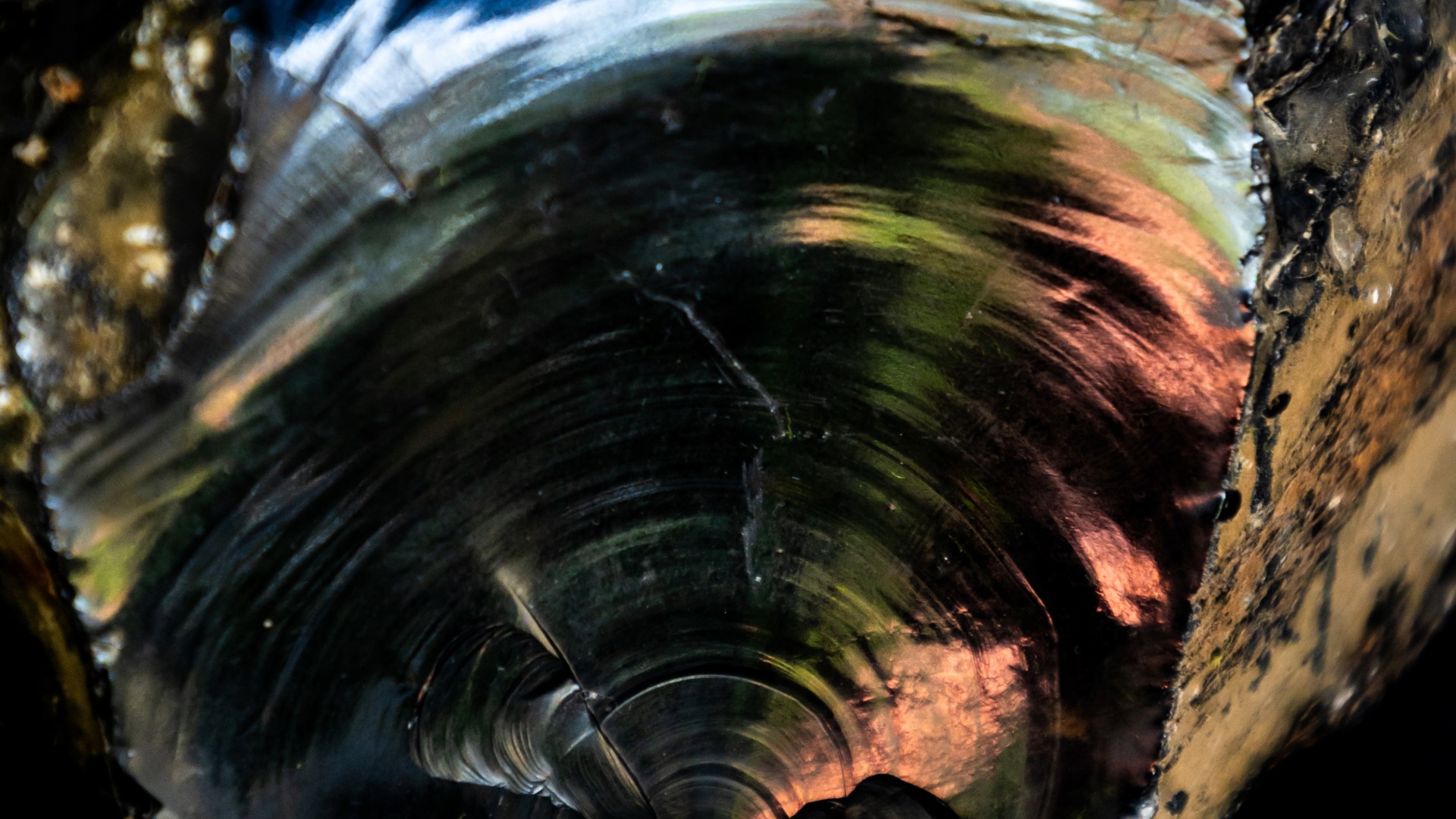
The Conchoidal Fracture is the defining characteristic of materials such as obsidian, flint, chert, and even modern glass. When struck, these materials do not split along straight lines; instead, they produce a concave or convex surface marked by concentric ripples known as “Wallner lines.” These ripples indicate the direction and intensity of the force applied to the stone. Moreover, the fracture creates a “bulb of percussion” at the point of impact, which serves as a primary diagnostic feature for identifying man-made tools. Consequently, the predictability of this fracture pattern allowed ancient toolmakers to shape stone with extraordinary precision.

ART — The Sculpted Ripple – The aesthetic quality of a Conchoidal Fracture exists in its organic, fluid appearance that mimics the interior of a seashell. Unlike the jagged breaks of common granite, a conchoidal break produces a surface that catches light in a series of shimmering, curved arcs. Furthermore, artists and flintknappers utilize these curves to “sculpt” stone by peeling away flakes in a controlled, rhythmic sequence. This interaction between the hardness of the stone and the fluidity of the fracture transforms a rigid mineral into a work of intentional, sharp-edged grace.

HIDDEN TRUTH — The Physics of the Wave – The technical secret behind the Conchoidal Fracture lies in the fact that the shockwave of a strike travels through the material in a “Hertzian Cone.” Because the material is amorphous (meaning its atoms are arranged randomly), the energy does not encounter internal “roads” or cleavage planes to redirect it. Therefore, the fracture follows the expanding front of the force-wave, much like a ripple in a pond. Moreover, the speed of this fracture can exceed 5,000 meters per second, meaning the tool is formed in a literal flash of mechanical energy.
FACT — The Sharpest Edge – The historical value of the Conchoidal Fracture is rooted in its ability to produce an edge that is only one molecule thick. While a high-quality steel scalpel appears jagged under an electron microscope, a fracture in obsidian remains perfectly smooth at the same magnification. Additionally, modern surgeons sometimes use obsidian blades for specialized procedures because they cause less tissue trauma and result in faster recovery. Consequently, this ancient geological phenomenon remains at the cutting edge of contemporary medical technology.
Quick Facts
| Material Types | Amorphous or Cryptocrystalline |
| Common Minerals | Obsidian, Flint, Chert, Quartz |
| Visual Pattern | Concentric ripples (Wallner Lines) |
| Key Anatomy | Bulb of Percussion |
| Edge Quality | Molecularly sharp |
| Mechanism | Hertzian Cone propagation |
| Cleavage | None (Lacks crystalline planes) |
| Prehistoric Use | Arrows, Knives, Scrapers, Spearheads |
| Hardness Range | Typically 6.5 to 7.0 on Mohs scale |
| Fracture Shape | Semicircular or shell-like |
| Modern Utility | Ophthalmic Surgery blades |
| Diagnostic Use | Distinguishing artifacts from natural “geofacts” |

Did you know?
The typical prehistoric hunter viewed the Conchoidal Fracture as the most reliable law of nature, allowing them to repair a broken spearhead in the middle of a hunt. Because the fracture follows a predictable path, the hunter could strike a stone at a specific 45-degree angle to produce a flake of a desired size. Furthermore, the “ring” or sound of a stone when struck can tell a knapper if there are internal flaws that might disrupt the fracture. Therefore, the mastery of this physics was not just a craft; it was a sensory integration of acoustics, geometry, and high-stakes survival.
Primary Context Definition
The Conchoidal Fracture is built almost entirely of the mechanical reaction between an external force and the internal atomic randomness of a silicate-rich material. Lithic analysts prepare these stones by identifying the “platform”—the flat area where a strike will be delivered—to control the path of the subsequent crack. The fracture is subsequently initiated by a strike from a hammerstone, which creates a “cone of force” that shears away a flake. Moreover, the presence of “eraillure scars” on the bulb of percussion can tell a researcher whether the blow was delivered by a hard stone or a soft antler billet.

Etymology: From the Greek konchoe (“shell”) and the suffix -oid (“resembling”).

Synonyms: Shell-like break, Vitreous fracture, Smooth fracture.

Antonyms: Crystalline cleavage, Fibrous fracture, Hackly fracture.

Thesaurus: Lithic, Vitreous, Amorphous, Conchoid.
The volcanic fields and flint-rich chalk beds of the world serve as the primary locus of activity for finding materials that exhibit this fracture. Beyond their use in tools, these fractures are utilized by geologists to determine the pressure and temperature history of certain rock formations. Today, the techniques for manipulating these fractures are continuously maintained by the global flintknapping community. Furthermore, the analysis of these breakage patterns remains a communal task for archeologists who use “refitting”—matching flakes back to their original core—to reconstruct ancient manufacturing sites.
Historical Context of Conchoidal Fracture
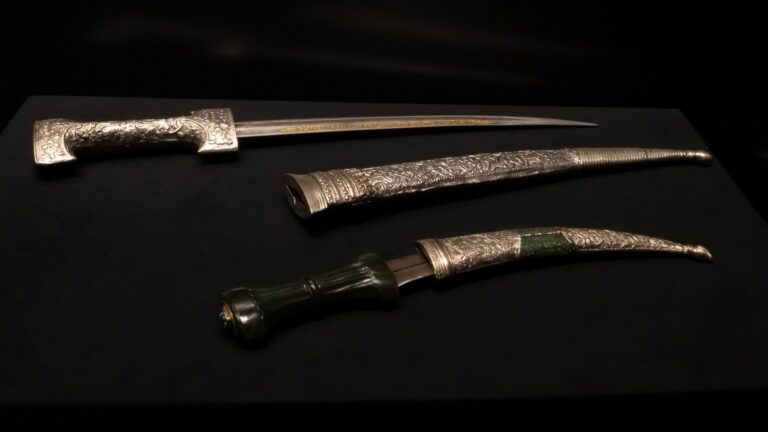
The development of human civilization is historically linked to the discovery and manipulation of the Conchoidal Fracture. Starting in the Lower Paleolithic, early hominids like Homo habilis recognized that certain river cobbles could be broken to produce sharp edges. As cognitive abilities evolved, the “Acheulean” hand-axe emerged, requiring hundreds of intentional fractures to achieve a symmetrical form. By the Neolithic, the mastery of these fractures reached its zenith with the production of “pressure-flaked” daggers that were as much art pieces as they were weapons. Additionally, the transition to the Bronze Age did not immediately end the use of these fractures, as stone tools remained cheaper and sharper than early metal alternatives.

Social Context of Conchoidal Fracture
The Conchoidal Fracture process perfectly encapsulates the social structure and hierarchy of ancient communities. The ability to control these fractures was often a specialized skill passed down through master-apprentice lineages, creating a class of “lithic specialists.” Within a tribe, the distribution of high-quality “conchoidal” stone like obsidian often followed complex trade networks that spanned thousands of miles. Furthermore, the act of knapping together served as a communal effort for storytelling and oral history, where the rhythmic sound of stone-striking-stone provided a background beat to social life. Maintaining the knowledge of these physical laws was the foundation of human dominance over the environment.
Terms Related to Conchoidal Fracture
| Bulb of Percussion | The swelling on a flake directly below the point of impact. |
| Wallner Lines | Concentric ripples on the fracture surface indicating force direction. |
| Flintknapping | The art of intentionally producing conchoidal fractures to make tools. |
| Core | The parent stone from which flakes are removed. |
| Flake | The piece of stone removed from a core by a fracture. |
| Platform | The specific surface struck to initiate a fracture. |
| Hertzian Cone | The 90-degree cone of force created by an impact on glass or stone. |
| Obsidian | A natural volcanic glass that exhibits the most perfect conchoidal fractures. |
| Eraillure Scar | A small secondary flake scar often found on the bulb of percussion. |
| Conchoidal | Resembling a shell; the primary descriptor of the fracture shape. |
| Cleavage | The tendency of a crystal to break along flat structural planes (absent here). |
| Amorphous | Lacking a defined crystalline structure, essential for conchoidal breaks. |
| Cryptocrystalline | Minerals made of microscopic crystals, like flint, that break conchoidally. |
| Compression | The type of force that initiates the initial crack. |
| Tension | The force that pulls the stone apart as the fracture propagates. |
| Billet | A tool made of antler or wood used for “soft” percussion fractures. |
| Hammerstone | A hard rock used for “hard” percussion fractures. |
| Debitage | The accumulation of waste flakes from the fracturing process. |
| Vitreous | Having a glass-like luster or texture. |
| Radial Lines | Faint lines that fan out from the point of impact. |
| Proximal | The end of the flake that contains the platform and bulb. |
| Distal | The end of the flake furthest from the point of impact. |
| Conchoid | The actual curved surface produced by the fracture. |
| Pressure Flaking | Using a tool to press off flakes rather than striking them. |
| Heat Treatment | The process of heating stone to improve its conchoidal properties. |
| Refitting | The archeological practice of piecing flakes back together. |
Sources & Credits
Sources
- Lithic Technology: Measures of Analysis – Andrefsky, W. Cambridge University Press, 2005. [Technical and physical source]
- Flintknapping: Making and Understanding Stone Tools – Whittaker, J. C. University of Texas Press, 1994. [Craftsmanship and mechanics source]
- Obsidian: Physics and Chemistry of Volcanic Glass – Goff, F. Springer-Verlag, 1988. [Geological and material science source]
- [suspicious link removed] – Shea, J. J. Oxford University Press, 2013. [Historical and social archive]
- The Hertzian Cone in Brittle Materials – Frank, F. C., and Lawn, B. R. Nature, 1967. [Physics and fracture propagation source]