Table of Contents: Definition – Kore
“Kore “
Term: Kore (plural: Korai)
Pronunciation: /ˈkɔːriː/ (KOR-ee)
Part of Speech: Noun
Kore Definition:
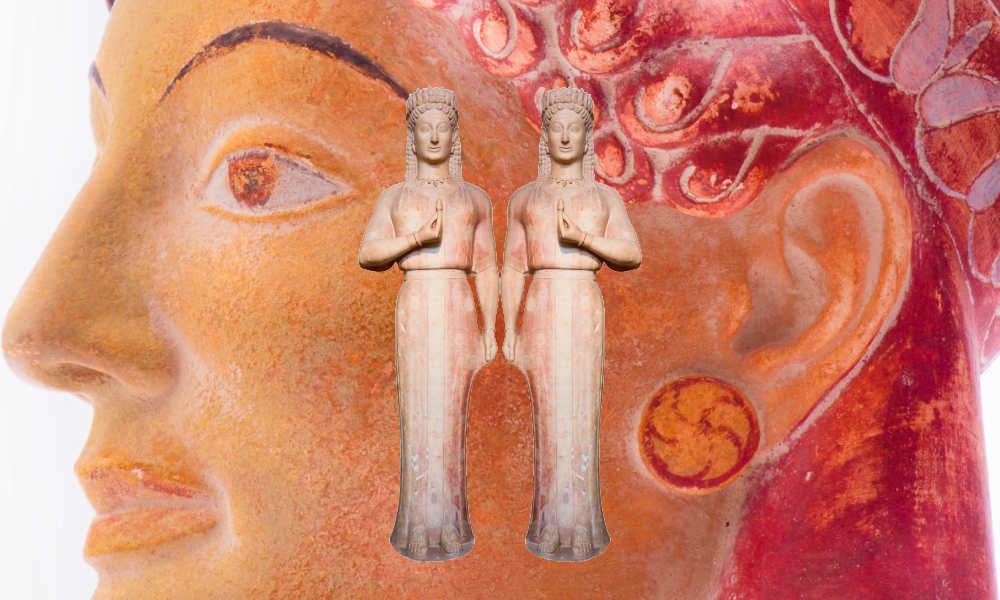
Kore is the modern term for a type of free-standing ancient Greek sculpture from the Archaic period (c. 7th to early 5th centuries BCE) depicting a draped female youth. Serving as the female counterpart to the kouros (nude male youth), korai are characterized by a frontal, upright stance, often with one arm extended holding an offering or gently pulling at their draped garment. These marble statues, frequently life-sized, functioned primarily as votive offerings in sanctuaries to goddesses or as grave markers, representing idealized young women.
Origin of the Word “Kore”:
The term “kore” is the ancient Greek word (κόρη) for “maiden” or “girl.” Like “kouros,” this term was adopted by modern scholars to classify this specific style of Archaic female sculpture, as the ancient Greeks did not have a singular term for these figures.
Examples:
General Use: “The museum’s collection includes several beautiful korai from the Acropolis.”
Archaeological Context: “Korai have been found in significant numbers at sanctuaries dedicated to Athena and Artemis.”
Art History Context: “The kore represents the Archaic Greek ideal of youthful female beauty and piety.”
Religious Context: “Many korai were dedicated as offerings to deities, symbolizing the devotion of the giver.”
Funerary Context: “Some korai served as grave monuments, perhaps portraying the deceased.”
Art2Fact Context: “The elegant drapery and serene expressions of korai can inspire contemporary designs exploring themes of grace and poise.”
Vocabulary and Language Resources
Related Terms
- Kouros (κοῦρος): The male equivalent of the kore, a standing nude youth.
- Archaic Smile: The characteristic gentle, often enigmatic smile found on many Archaic sculptures, including korai.
- Peplos: A simple, heavy woolen garment worn by some korai.
- Chiton: A lighter linen tunic often worn beneath or instead of the peplos.
- Himation: A cloak or mantle draped over the chiton or peplos.
Etymology
From ancient Greek κόρη (kórē), meaning “maiden,” “girl.”
Synonyms
Standing draped maiden (descriptive).
Antonyms
Kouros (standing nude youth).
Thesaurus
Similar concepts include: statue, sculpture, effigy, representation, maiden figure.

Kore Historical & Cultural Context:
Appearing around the same time as the kouros in the Archaic period, the kore reflects influences from Near Eastern and Egyptian art, particularly in the frontal pose and early stylistic conventions. However, the kore is always depicted clothed, reflecting Greek societal norms regarding female representation. The drapery of the kore is a key artistic feature, with sculptors elaborately detailing the folds and patterns of the garments, which varied over time from the heavier peplos to the lighter chiton and himation. Korai were often painted in vibrant colors, traces of which can still be found on some examples. They served as important votive offerings, demonstrating the wealth and piety of the dedicators, and sometimes as funerary markers, possibly representing the deceased. The evolution of the kore figure over the Archaic period shows a gradual shift towards more naturalistic forms and softer features, mirroring developments in kouros sculpture.
Principles or Key Aspects of the Word Kore:
- Frontal Stance: Standing upright with a direct gaze.
- Draped Figure: Always depicted wearing clothing.
- Varied Garments: Shown wearing the peplos, chiton, or a combination.
- Archaic Smile: A conventional facial expression suggesting liveliness.
- Offerings: Often depicted holding an object, signifying a votive purpose.
Ethical Considerations for Kore:
- Interpretation: Understanding the diverse potential meanings and functions of these statues.
- Display: Presenting these often-sacred objects respectfully.
- Provenance: Ensuring ethical sourcing and study of these artifacts.
Relevance to Ancient Worlds
The kore is essential for understanding:
- Archaic Greek Art: Representing a major sculptural type of the era.
- Religious Practices: Serving as significant dedications in sanctuaries.
- Social Values: Reflecting ideals of female youth, beauty, and social status.
- Textile and Fashion History: Providing visual evidence of ancient Greek clothing styles.
- The Development of Greek Sculpture: Illustrating the artistic trends and evolution of representing the female form.
Art2Fact Society Nuance
For the Art2Fact Society, the kore offers a compelling study in the representation of the female figure in the ancient world. The intricate drapery, serene expressions, and symbolic offerings found in these sculptures can inspire contemporary artists and designers to explore themes of femininity, grace, and ritual. By examining the stylistic evolution and diverse functions of the kore, the Society can gain a richer understanding of ancient Greek aesthetics and cultural values, informing modern creative interpretations within the “ancient revival project” that seek to connect with the enduring power of these iconic figures.