Table of Contents: Definition – Stater
“Stater “
Term: Stater (coin)
Pronunciation: /ˈsteɪtər/ or /stɑːˈtɛər/ (STAY-ter or STAH-tare)
Part of Speech: Noun
Stater Definition (Greek Context):
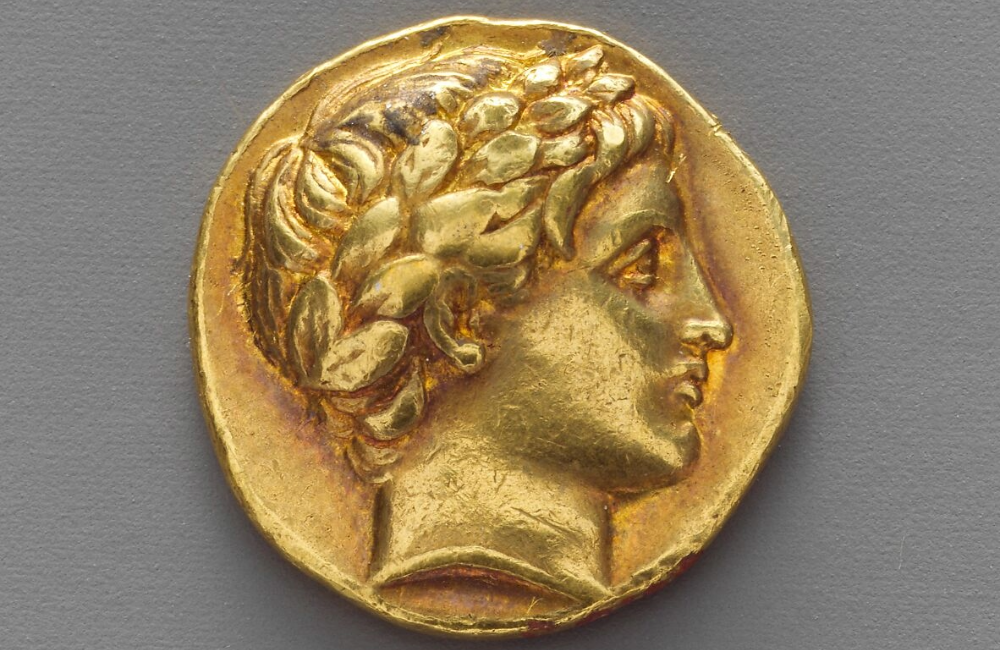
A stater was an ancient Greek coin used in various regions of Greece and beyond, from the 8th century BCE to around 50 CE. The term originally meant “weight” and referred to a primary denomination of coinage in different weight standards across various city-states. Its value varied; in Athens, a silver stater was often equivalent to a tetradrachm (four drachmae), while in other regions, it might equal a didrachm (two drachmae). Gold staters also existed, often as accounting units worth a multiple of silver drachmae.
Origin of the Word “Stater”:
The term “stater” (στατήρ) comes from the ancient Greek word meaning “weight,” indicating its original basis in a specific weight of precious metal.
Examples:
General Use: “The merchant paid for the goods with a silver stater.”
Archaeological Context: “Numerous staters, bearing the symbols of different Greek city-states, have been found in hoards.”
Historical Context: “The Aeginetan stater, featuring a sea turtle, was one of the earliest widely circulated Greek coins.”
Economic Context: “The value of a gold stater could fluctuate depending on the local gold-to-silver ratio.”
Vocabulary and Language Resources
Terms Related to Lekythos
- Drachma: A fundamental silver coin and a unit of weight in ancient Greece; multiple drachmae often constituted a stater.
- Tetradrachm: A “four drachma” coin, frequently considered the equivalent of an Athenian stater.
- Didrachm: A “two drachma” coin, which was the stater in some regions and weight standards.
- Obol: A smaller silver coin, with six obols typically equaling one drachma.
- Talent: A large unit of weight and currency, equivalent to 60 minas or 6,000 drachmae.
- Mina: A unit of weight and currency, equivalent to 100 drachmae.
Etymology
From ancient Greek στατήρ (statḗr), meaning “weight,” referring to the coin’s initial value being tied to a specific weight of precious metal.
Synonyms
Primary denomination (in the context of a specific weight standard).
Antonyms:
Smaller denominations (e.g., obol, hemidrachm), larger units of account (e.g., mina, talent).
Thesaurus
Coin, currency, denomination, money, specie, legal tender (in its time).

Stater (coin) Historical & Cultural Context:
The stater arose as vital currency in ancient Greece, evolving from less uniform precious metal exchanges. Stamped staters first appeared in the 7th century BCE, notably in Aegina and Lydia (electrum). As coinage spread, Greek city-states minted unique staters with symbols like Athens’ owl, Corinth’s Pegasus, or Aegina’s tortoise, signifying origin, weight, purity, civic pride, and sometimes propaganda. Gold staters, rarer than silver, were crucial for major transactions, linked to powers like Macedonian kings. The stater’s standardization fostered trade and economic ties across the Mediterranean and beyond.
Principles or Key Aspects of Stater:
- Primary Denomination: Served as a base unit of currency in various Greek regions.
- Weight Standard: Its value was initially tied to a specific weight of silver or gold.
- Civic Symbolism: Often featured distinctive emblems of the issuing city-state.
- Varied Value: Could be equivalent to a didrachm or a tetradrachm depending on the location and time.
- Facilitated Trade: Promoted economic exchange within and beyond the Greek world.
Ethical Considerations for Stater:
- Provenance: Essential for understanding the historical and archaeological context of discovered staters.
- Authentication: Determining the genuineness of ancient coins, as counterfeiting was also practiced in antiquity.
- Preservation: Ensuring proper conservation of these often valuable historical artifacts.
Relevance to Ancient Worlds
The stater is crucial for understanding ancient Greece because it:
- Reflects Economic Systems: Reveals the monetary practices and trade networks of the time.
- Provides Historical Information: Coin imagery can depict gods, rulers, myths, and symbols, offering insights into culture and beliefs.
- Aids in Dating Archaeological Sites: Coin finds can help establish the chronology of excavations.
- Demonstrates Regional Variation: The different weight standards and symbols highlight the political and economic diversity of the Greek world.