Table of Contents: Chrysocolla
“Chrysocolla”
Pronunciation: kris-uh-kol-uh
General use: Enhancing creative expression, alleviating feelings of guilt, promoting feminine empowerment, and stabilizing personal relationships.
Location: Primary sources include the copper-rich regions of Chile, Peru, Zaire (DRC), Russia, and the Southwestern United States (Arizona).
Time Period: Ancient civilizations utilized Chrysocolla as early as 3150 BCE; notably, King Solomon’s mines in Israel were famous for a specific variety called Eilat Stone.
Quick Facts
| Varieties | Eilat Stone (with Turquoise/Pseudomalachite), Stellarite (with Quartz), Gem Silica |
| Chakra Alignment | Throat Chakra and Heart Chakra |
| Affirmation | I speak my truth with confidence and allow my inner wisdom to guide my words. |
| Vibration Number | Number 5 |
| Element | Water and Earth |
| Planet | Venus |
| Zodiac Sign | Taurus, Gemini, and Virgo |
| Birthstone | None (Modern), Late Spring (Natural) |
| Metaphysical Realm | Emotional and Spiritual |
| Benefits | Tranquility, Communication, Empowerment, Wisdom, Forgiveness, Tolerance |
| Cleansing | Smudging, Selenite, or Moonlight. Avoid salt and harsh chemicals. |
| Mineral Class | Phyllosilicate (Copper Silicate) |
| Chemical Formula | (Cu,Al)2H2Si2O5(OH)4·nH2O |
| Crystal System | Orthorhombic (Microcrystalline) |
| Mohs Hardness | 2.5 to 7 (Variable depending on silica content) |
| Primary Color | Cyan-Blue to Deep Emerald Green |
| Transparency | Translucent to Opaque |
| Lustre | Vitreous to Dull |
| Refractive Index | 1.500 to 1.635 |
| Specific Gravity | 2.00 to 2.40 |

ART: Renaissance painters occasionally ground Chrysocolla into a fine powder to create a vibrant “mountain blue” pigment, although its tendency to shift color over time eventually led artists to prefer more stable minerals like Azurite.
HIDDEN TRUTH: Chrysocolla often “pseudomorphs” after other minerals, meaning it replaces the internal structure of Malachite or Azurite while retaining the original crystal’s outward shape.
FACT: The name “Chrysocolla” derives from the Greek words chrysos (gold) and kolla (glue), reflecting its ancient use as a flux for soldering gold jewelry.
Did you know?
Did you know that Cleopatra reportedly carried Chrysocolla wherever she went? She believed the stone helped her negotiate more effectively with world leaders, as its calming frequency allowed her to remain diplomatic even during heated political conflicts.
I. Geological Overview of Chrysocolla
Chrysocolla is a hydrated copper phyllosilicate mineral that forms in the oxidation zones of copper ore bodies. It develops through the alteration of other copper minerals as silica-rich groundwater interacts with the ore. Furthermore, the mineral rarely occurs in distinct crystals; instead, it typically appears in massive, botryoidal (grape-like), or crust-like formations. Because it contains a high percentage of water in its structure, the stone remains relatively soft in its pure form. However, when it is naturally infused with quartz—a variety known as “Gem Silica”—its hardness increases significantly, making it highly prized by gem cutters for its durability and intense turquoise-blue color.
II. Traditional Applications of Chrysocolla
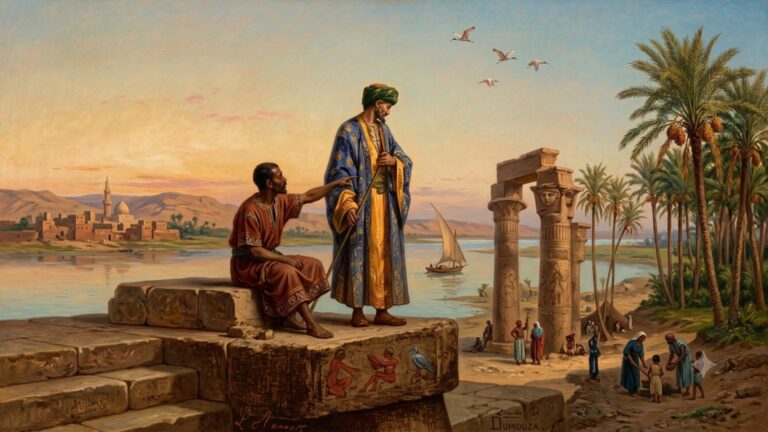
Historically, the Ancient Egyptians revered Chrysocolla as a “wise stone,” believing it could reconcile the mind and heart during difficult negotiations. Additionally, Native American tribes in the Southwestern United States utilized the stone for healing and as a talisman to increase the body’s resistance to physical hardship. In modern times, the mineral has become a symbol of “The Goddess” energy, frequently used in empowerment workshops for women. Moreover, jewelry designers utilize its striking blue-green patterns to create organic, earthy pieces that reflect the beauty of the natural world.

III. Holistic Properties & Healing Benefits of Chrysocolla
Chrysocolla provides comprehensive holistic benefits by acting as a powerful frequency for emotional stabilization and the reclamation of personal power. It functions as a bridge between the heart and the throat, ensuring that communication remains rooted in love and truth.
- Physical Level: Practitioners believe it benefits the thyroid and adrenals, while also utilizing it to soothe throat infections and support a healthy pregnancy and labor.
- Mental Level: The stone alleviates the mental stress of change, helping the user to accept new situations with a calm and flexible mind.
- Emotional Level: It acts as a powerful antidote to guilt and heartbreak, drawing out negative emotions and replacing them with a sense of inner strength and self-worth.
- Spiritual Level: It facilitates a connection to the Earth’s consciousness, encouraging the user to speak on behalf of the planet and the natural world.
Metaphysically, the stone’s Microcrystalline Structure reflects an energy of “oneness,” helping the user to integrate disparate parts of their personality into a cohesive whole. Furthermore, the Vibrant Copper Content of Chrysocolla is spiritually interpreted as a conductor of high-speed spiritual communication. Because the stone possesses a Low Mohs Hardness, it is energetically used to symbolize the power of “vulnerability” and the strength found in being soft. Additionally, the Orthorhombic Alignment provides a directional flow of energy, while the Water Content within the mineral acts as a literal “emotional sponge” that absorbs and neutralizes negativity.
IV. Care and Use of Chrysocolla
Proper care for Chrysocolla involves protecting its delicate surface and maintaining its hydration levels. Owners must handle the stone with extreme care to avoid scratching or dehydrating the mineral, which can lead to cracking.
Clearing and Cleansing:
- Smudging: Pass the stone through the smoke of lavender or white sage to neutralize emotional imprints without exposing the stone to moisture or friction.
- Moonlight Cleansing: Place Chrysocolla in the light of a Crescent Moon to align it with the growing, creative energies of the lunar cycle.
- Selenite Clearing: Rest the stone on a Selenite slab for six hours; this dry method safely draws out stagnant energy without reacting with the copper content of the stone.

Charging:
- Water Charging: Place the stone near a bowl of spring water (not in it) to allow it to absorb the “essence” of the water element, which revitalizes its cooling frequency.
- Sound Charging: Use a high-frequency tuning fork or a brass singing bowl to “reset” the stone’s vibration through sonic resonance.
- Leaf Charging: Place the stone on a large, vibrant green leaf for several hours to recharge its connection to the Earth and the Heart Chakra.
V. History of Chrysocolla
The history of Chrysocolla reveals a stone that has always occupied the intersection of utility and spirituality. For instance, the “Eilat Stone,” a national treasure of Israel, represents a unique geological mix found only in the mines of the Timna Valley, famously associated with King Solomon. Similarly, the stone played a vital role in the jewelry of the Inca Empire, where it represented the spirit of the sea. Furthermore, the stone remains a central tool in modern lithotherapy for those recovering from “burnout.” This enduring legacy confirms that Chrysocolla is a stone of profound historical utility and lasting emotional resonance.
VI. Crystallography of Chrysocolla
| Crystal System | Orthorhombic: Occurring in microcrystalline masses; distinct crystals are exceptionally rare. |
| Botryoidal Habit | The mineral grows in rounded, “grape-like” clusters, representing a protective and containing energy. |
| Phyllosilicate Base | A sheet-silicate structure that allows the stone to “absorb” and store emotional information. |
| Refractive Index | 1.460 – 1.570: A low to moderate index that contributes to its soft, matte to vitreous appearance. |
| Birefringence | Not Applicable: Usually measured in the “Gem Silica” variety; provides a soft, diffused light output. |
| Optical Character | Biaxial Negative: Reflects a multi-dimensional energy flow that supports complex emotional healing. |
| Specific Gravity | 1.90 – 2.40: A lightweight density that corresponds with the “Water” element and emotional fluidity. |
| Porosity | High: The stone’s ability to absorb external oils and liquids symbolizes its role as an energetic filter. |
| Fracture Type | Conchoidal to Uneven: Breaks with irregular surfaces, signifying the raw and unpolished truth. |
| Lattice Structure | Hydrated Copper Silicate: A complex framework that links the cooling energy of water with the conductibility of copper. |
Sources & Credits
Sources
- Mindat.org, Hudson Institute of Mineralogy. Chrysocolla Mineral Data, Chemical Properties, and Localities
- The Smithsonian Institution. The Copper Minerals: Chrysocolla and Malachite in the Southwest
- The Gemological Institute of America (GIA). Chrysocolla and Gem Silica: Quality and Rarity
- “The Curious Lore of Precious Stones” by George Frederick Kunz (1913). Historical documentation of Eilat Stone and Solomon’s mines (Source for Section II and V).
- “The Book of Stones” by Robert Simmons & Naisha Ahsian. The use of Chrysocolla for empowerment and throat chakra healing (Source for Section III and IV).
- National Institutes of Health (NIH). Traditional medicine uses of copper-based minerals in ancient cultures (Historical context for Section III).
- Arizona Geological Survey. Mining History of Chrysocolla in the American Southwest (Source for Fact and Location sections).