Table of Contents: Green Aventurine
“Green Aventurine”
Pronunciation: av-en-choo-reen
General use: Attracting financial success, harmonizing the emotional body, and shielding against environmental pollutants and “psychic vampirism.”
Location: Most commercial deposits are found in India (specifically Karnataka and Tamil Nadu), with additional sources in Brazil, Russia, Austria, and Tanzania.
Time Period: Named in the 18th century after “aventurescence,” a term derived from the Italian a ventura (by chance), originally referring to a type of Italian glass discovered accidentally.
Quick Facts
| Varieties | Green Aventurine, Blue Aventurine, Red/Peach Aventurine, Yellow Aventurine, Grey Aventurine |
| Chakra Alignment | Heart Chakra |
| Affirmation | I welcome abundance into my life and move forward with confidence and optimism. |
| Vibration Number | Number 3 |
| Element | Earth and Water |
| Planet | Venus |
| Zodiac Sign | Aries and Leo |
| Birthstone | August (Alternative/Mystical) |
| Metaphysical Realm | Emotional, Physical, and Spiritual |
| Benefits | Prosperity, Vitality, Emotional Stability, Decisiveness, Heart Healing, Good Luck |
| Cleansing | Sunlight, Smudging, or Running Water. Generally safe for most cleansing methods. |
| Mineral Class | Silicate (Quartz variety) |
| Chemical Formula | $SiO_{2}$ with inclusions of Fuchsite |
| Crystal System | Trigonal |
| Mohs Hardness | 6.5 to 7 |
| Primary Color | Light to Dark Forest Green with shimmering specks |
| Transparency | Translucent to Opaque |
| Lustre | Vitreous to Silky |
| Refractive Index | 1.544 to 1.553 |
| Specific Gravity | 2.64 to 2.69 |

ART: Artisans highly value Green Aventurine for its “aventurescence,” a glittering effect caused by tiny platy inclusions of green Fuchsite mica that shimmer when the stone is rotated under a light source.

HIDDEN TRUTH: While often confused with Jade due to its color, Green Aventurine is a much more common quartz variety; however, its shimmering inclusions make it unique in the mineral kingdom as a natural “glitter” stone.
FACT: Green Aventurine is widely considered the luckiest of all crystals, particularly in manifestations involving wealth, competitions, or games of chance.
Did you know?
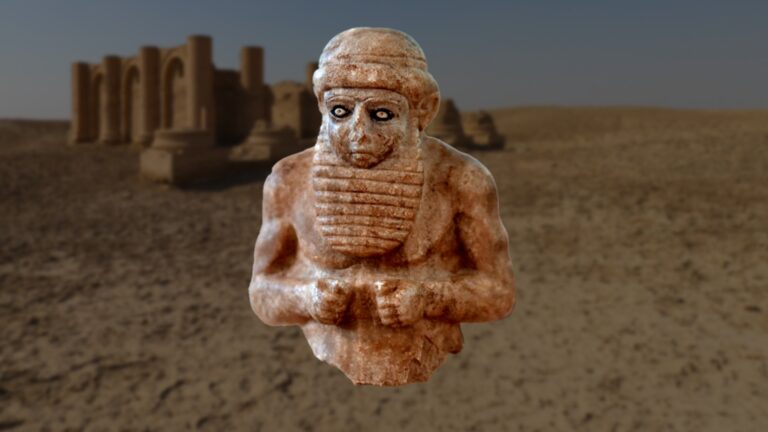
Did you know that ancient Tibetans used to decorate their statues with Green Aventurine, placing the stone in the eyes of the figures to increase the “visionary powers” and the symbolic light of the deity?
I. Geological Overview of Green Aventurine
Green Aventurine is a form of quartzite characterized by its translucency and the presence of platy mineral inclusions that produce a shimmering or glistening effect. This optical phenomenon, known as aventurescence, is most commonly caused by trace amounts of Fuchsite mica, which provides the stone with its signature green palette. It forms through the metamorphic process of quartz-rich sedimentary rocks, where heat and pressure recrystallize the silica and align the mica inclusions. Unlike many other green stones, Aventurine is remarkably durable and holds a high polish, making it a favorite for both industrial lapidary use and fine ornamental carvings.
II. Traditional Applications of Green Aventurine
Historically, Green Aventurine was used by early humans to create sharp, durable tools and arrowheads due to its toughness and predictable fracture patterns. In the 18th century, it became a popular material for “aventurine glass” imitations, though the natural stone remained a staple for royal court jewelry and decorative snuff boxes. In modern holistic practice, it is the primary choice for “wealth altars” and is frequently carried by entrepreneurs and those seeking a promotion. Because of its ability to diffuse electromagnetic smog, it is also commonly placed near computers and electronic devices in modern office spaces.

III. Holistic Properties & Healing Benefits of Green Aventurine
Green Aventurine provides comprehensive holistic benefits by acting as a powerful frequency for emotional growth and physical revitalization. It functions as a heart-centered healer that dissolves negative emotions and thoughts, allowing the user to experience a renewed sense of optimism and hope.
- Physical Level: It is believed to benefit the thymus gland and connective tissue, while supporting the circulatory system and helping to balance blood pressure and stimulate the metabolism.
- Mental Level: It reinforces leadership qualities and decisiveness, helping the user to persevere through challenges without succumbing to the stress of responsibility.
- Emotional Level: It acts as a comforter and heart protector, neutralizing emotional pain and helping to dissolve the patterns that lead to unhealthy or stagnant relationships.
- Spiritual Level: It serves as a bridge to the plant kingdom, encouraging a deeper connection to devic realms and the regenerative energy of the natural world.
Metaphysically, the stone’s Trigonal System reflects an energy of organized expansion and the steady manifestation of dreams into reality. Furthermore, the Mica Inclusions of Green Aventurine are spiritually interpreted as “mirrors” that reflect away negativity while drawing in the light of luck. Because the stone possesses a Vitreous to Waxy Lustre, it is energetically used to “smooth out” the friction in difficult relationships. Additionally, its Association with Venus serves as a beacon for love and harmony, while the Microcrystalline Lattice acts as a stable container for the user’s long-term financial goals.
IV. Care and Use of Green Aventurine
Proper care for Green Aventurine involves recognizing its durability while maintaining its energetic receptivity to new opportunities. To maintain the integrity and energy of your specimen, ensure it is cleansed regularly to remove the emotional “static” it absorbs during its protective work.
- Sunlight Charging: Place the stone in direct morning sunlight for two hours to revitalize its solar connection and boost its manifestation properties.
- Water Cleansing: Because of its high silica content, Green Aventurine can be safely rinsed under cool running water to physically and energetically clear the surface.
- Electronic Shielding: Tape a small tumbled piece of Green Aventurine to your cell phone or place a cluster between yourself and your computer monitor to mitigate EMF emissions.
- Manifestation Grid: Place a large piece of Green Aventurine in the center of a crystal grid in the “Wealth Corner” (the far left corner from the entrance) of your home to attract prosperity.

V. History of Green Aventurine
The history of Green Aventurine is a story of serendipity and the human desire to capture the beauty of nature in art. While the mineral itself was used by ancient cultures for millennia, its modern name was only established after the discovery of “Aventurine Glass” in Venice, which accidentally mimicked the stone’s natural sparkle. Since that time, the stone has traveled from the workshops of Italian glassblowers to the sacred sites of Tibet and the modern gem markets of India. Its legacy as a stone of “good fortune” has remained consistent across cultures, making it one of the most widely used and respected members of the quartz family today.
VI. Crystallography of Green Aventurine
| Crystal System | Trigonal: A microcrystalline variety of Quartz; distinct crystals are almost never found. |
| Aventurescence | An optical phenomenon caused by light reflecting off platy inclusions of Fuchsite mica. |
| Mica Content | The presence of Chromium-rich Muscovite (Fuchsite) creates the vibrant green color signature. |
| Refractive Index | 1.544 – 1.553: A moderate index that ensures the “sparkle” of the inclusions is visible and bright. |
| Birefringence | 0.009: Low double refraction that provides a steady and focused energetic output. |
| Optical Character | Uniaxial Positive: A trait inherited from the Quartz host that reflects an upward flow of energy. |
| Specific Gravity | 2.64 – 2.69: A density that aligns with the Earth element, promoting a sense of physical stability. |
| Fracture Type | Conchoidal to Uneven: Breaks with irregular surfaces, signifying the raw and honest nature of growth. |
| Lattice Structure | Framework Silicate: A robust 3D network of silica tetrahedra that provides high physical durability. |
| Transparency | Translucent: Allows light to penetrate the surface and illuminate the inner mica “stars.” |
Sources & Credits
Sources
- Mindat.org, Hudson Institute of Mineralogy. Aventurine Mineral Data, Optical Phenomena, and Global Localities
- The Gemological Institute of America (GIA). Quartz Varieties: Identifying Aventurine and the Cause of Aventurescence
- The Smithsonian Institution. The Geology of Metamorphic Quartz: From Quartzite to Aventurine
- “The Book of Stones” by Robert Simmons & Naisha Ahsian. The use of Green Aventurine for luck, abundance, and heart-healing (Source for Section III and IV).
- American Mineralogist. The Mineralogy of Fuchsite Inclusions in Aventurine Quartz (Scientific verification of color mechanics).
- “Love is in the Earth” by Melody. Metaphysical properties of Green Aventurine for growth and decisive action (Source for Section III).