IBN BATTUTA (MARINID DYNASTY / ISLAMIC GOLDEN AGE)
C. 1304 – 1369 AD
Table of Contents: Ibn Battuta

Muhammad ibn Abdullah ibn Battuta. He belonged to the Lawati clan of Tangier, a lineage distinguished by its deep-rooted adherence to Maliki jurisprudence. This specific scholastic heritage provided him with the necessary credentials to serve as a qadi across diverse territorial jurisdictions.

Tangier, Marinid Sultanate (Modern-day Morocco). As a strategic littoral hub, Tangier functioned as the primary nexus between the Atlantic and Mediterranean maritime domains. Its position facilitated his early integration into the trans-Saharan merchant networks that funneled gold and intellectual exchange northward.

C. 1325 – 1354 AD. This era encompasses his transition from a solitary pilgrim to a recognized judicial itinerant across the Afro-Eurasian landmass. His maturity as an observer synthesized local governance, tax extraction methods, and judicial proceedings into a unified administrative record of the fourteenth-century world.

The Delhi Sultanate, the Ilkhanate, and the Mali Empire. He actively leveraged his prestige within the ulama to secure patronage from potentates like Muhammad bin Tughluq. These associations granted him rare access to the inner fiscal workings of disparate imperial courts during periods of significant political transition.

Qadi and Rihla Master. The title of Qadi served as his primary institutional credential, validated by his mastery of legal precedent. This official designation enabled his departure from mere descriptive travel, shifting his narrative toward a systematic critique of regional religious and societal conformity.

He established a comprehensive comparative ethnographic database covering the medieval Indian Ocean and trans-Saharan corridors. His work serves as a foundational text for reconstructing the fiscal and legal architecture of Islamic polities during the post-Mongol stabilization period.

Mecca Hajj, judicial service in Delhi, Ilkhanate diplomatic tenure, Yuan Chinese administrative survey, Mali trans-Saharan expedition, Timbuktu gold-trade evaluation, dictation of the Rihla.

He prioritized the mediation of inter-regional legal disputes, ensuring the consistent application of Islamic standards while safeguarding the intellectual autonomy of local scholars against aggressive, localized dynastic encroachment.

| The Rihla remains the subject of intense historiographical debate regarding its internal chronology and potential literary borrowings. Contemporary scholarship has increasingly verified his observations of Indian and African governance, viewing the text as an indispensable primary source for medieval trade logistics. |
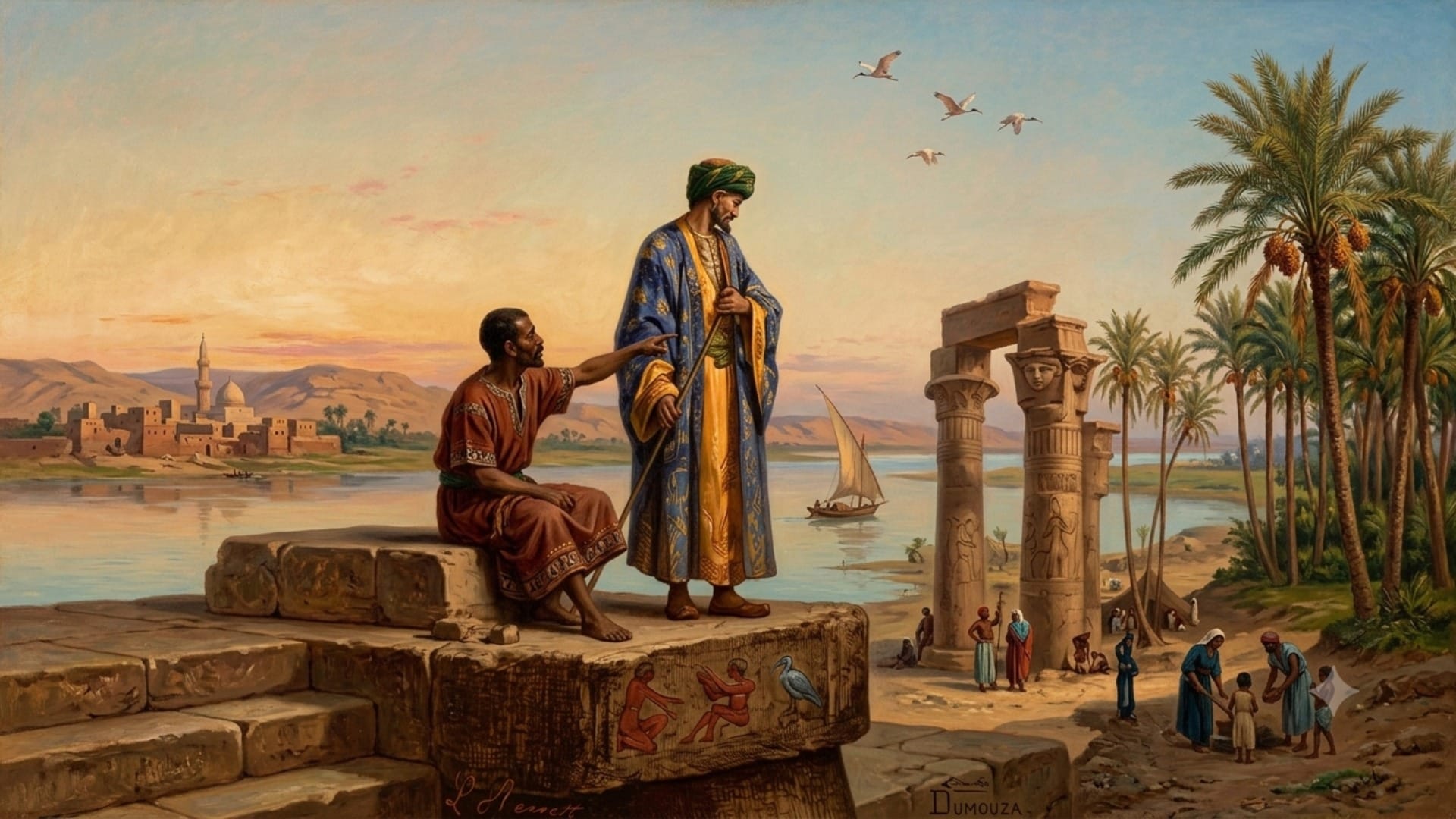
“I have witnessed the diversity of the world, finding that the shared language of justice binds distant humanity together.”
– Ibn Battuta
Overview: Ibn Battuta
Ibn Battuta’s journey represents an unparalleled feat of fourteenth-century information gathering. Commencing his expedition in 1325, he navigated the complex political landscapes of the Islamic world, moving beyond the superficiality of a traveler to act as a legal arbiter. His journals are not merely personal accounts; they are analytical surveys of regional economic viability, documenting everything from the price of grain in Anatolia to the gold-to-salt exchange ratios in West Africa. By maintaining a professional distance, he provided an empirical assessment of the Sultanates he served, detailing their military recruitment strategies and the stability of their urban bureaucracies. He viewed the Islamic world as an interconnected fiduciary ecosystem, documenting how shared legal customs facilitated the movement of goods and ideas across vast distances.
Consequently, he fundamentally altered historical methodology by establishing the travelogue as a rigorous, data-driven report on regional administrative health. He stripped away the mythological geography typical of medieval writers, replacing it with measurable observations regarding climate-driven trade cycles, currency stability, and the social impact of major pandemics like the Black Death. By cross-referencing his own legal findings with local archival norms, he ensured that his accounts served as technical references for future administrators. His legacy persists as the essential baseline for understanding the medieval global economy, demonstrating that individual, persistent observation is the most effective tool for mapping the operational realities of complex, geographically dispersed empires.
Did you know? Ibn Battuta

A striking, life-sized bronze sculpture in Tangier portrays him in a state of forward-looking resolve, his figure modeled with traditional Maghrebi robes and a scholar’s scroll. It serves as a permanent, monumental anchor for his role as the archetypal mediator between the Islamic east and west.

Critics long argued that his accounts of the Yuan Dynasty in China were fabricated based on oral histories. High-resolution analysis of his descriptions regarding Chinese paper currency and maritime tax mechanisms has since provided irrefutable proof that he navigated the specific administrative hubs he claimed to visit.

| He mastered the operational logistics of the medieval caravanserai network, frequently trading his judicial expertise for security and transport, which allowed him to successfully bypass the immense political and geographic barriers that typically halted state-sponsored diplomatic missions of the fourteenth century. |
Timeline of Ibn Battuta
The chronological trajectory of Ibn Battuta traces the expansion of medieval observational range across the Afro-Eurasian sphere. Born into a period of Maghrebi political fluidity, his timeline documents a departure from the stability of Tverian regionalism toward a life defined by the pursuit of institutional expertise. This era required a synthesis of diplomatic daring and judicial rigor, as he navigated territories dominated by shifting dynastic loyalties and environmental hazards. The timeline highlights his evolution from a student of the Maliki school to a global advisor who operated in courts as distinct as those in Delhi, Mali, and Hangzhou. Each entry reflects the technical challenges of fourteenth-century transit, including the reliance on monsoon patterns for maritime safety and the necessity of securing local patrons in hostile regions.
By mapping these events, we gain clarity on his development into an acute observer of systemic power and local economic behavior. This timeline provides a technical framework for understanding how his voyages were active, reflexive efforts that balanced the maintenance of his religious identity with the necessity of learning from distant foreign environments. His life serves as a chronicle of a man who bridged the gap between institutional legalism and the immense, unpredictable realities of the medieval world, proving that intellectual agility was the key to successful transcontinental exploration in an era before the printing press or centralized cartographic standards.
Timeline Chronology
| YEAR | EVENT | DESCRIPTION |
| C. 1304 | Birth | Born in Tangier into a lineage of scholars dedicated to regional jurisprudence. |
| C. 1325 | Departure | Initiated his Hajj, beginning a multi-decade journey across Islamic territories. |
| C. 1326 | Cairo Hub | Evaluated the Mamluk Sultanate’s fiscal stability and its control over vital Red Sea transit ports. |
| C. 1328 | Persian Transit | Observed the Ilkhanate’s transition toward internal administrative centralization post-Mongol collapse. |
| C. 1330 | Swahili Trade | Mapped the maritime economy of the East African coast, detailing ivory and gold export routes. |
| C. 1332 | Anatolia Socials | Documented the communal hospitality networks facilitating trade across the Turkish borderlands. |
| C. 1334 | Delhi Judgeship | Appointed as a judicial magistrate by Muhammad bin Tughluq, overseeing urban legal disputes. |
| C. 1341 | Chinese Diplomat | Served as an envoy to the Yuan court, recording the mechanics of maritime tax extraction. |
| C. 1344 | Maldivian Tenure | Acted as the supreme judge in the Maldives, mapping local trade and agricultural systems. |
| C. 1346 | Sunda Sea Visit | Visited the Samudera Pasai sultanate, recording regional conversion and mercantile practices. |
| C. 1349 | Plague Witness | Recorded the socioeconomic devastation and demographic collapse in Damascus during the Black Death. |
| C. 1351 | Gibraltar Defense | Participated in the military fortification of the Strait against Iberian expansionist pressures. |
| C. 1352 | Mali Expedition | Crossed the Sahara, documenting the fiscal surplus of the Timbuktu gold trade centers. |
| C. 1354 | Manuscript Final | Commissioned by the Marinid court to dictate the Rihla to his scribe, Ibn Juzayy. |
| C. 1369 | Death | Passed away in Morocco, his life serving as the definitive primary witness for medieval Islamic connectivity. |

Legacy of Ibn Battuta
Ibn Battuta established a durable paradigm for comparative institutional ethnography, prioritizing granular, observational data over the hagiographic narratives standard in his period. His Rihla provided the most exhaustive view of the Sharia as a functional administrative tool across regional borders. By documenting the intersection of local customs and universal legal norms, he ensured that empirical travel writing became a standard component of geographic literature, fundamentally altering how future Islamic scholars assessed foreign entities and regional power.
Furthermore, his influence persists through the rigorous academic interdisciplinary study of his texts. Researchers today utilize his detailed observations to reconstruct the socio-economic conditions of the Delhi and Mali administrations. He proved that an individual, persistent scholar could map the complexities of foreign cultures with surprising accuracy while maintaining a consistent institutional identity. His documentation remains a primary reference for historians studying the mechanics of medieval global trade and the movement of intellectual capital.
Examples:
| Legal Uniformity | Used the Sharia as a mobile framework to evaluate regional judicial competence and administrative efficiency. |
| Urban Fiscality | Developed a method for assessing city wealth based on tax infrastructure and market trade frequency. |
| Maritime Dynamics | Recorded the impact of seasonal monsoon cycles on Indian Ocean trade ship schedules and safety. |
| Scholarly Patronage | Leveraged his status within the ulama to move between rival dynastic courts without losing local access. |
| Epidemic Analysis | Provided primary data on the social collapse caused by the Black Death within the Levantine urban centers. |
| Commodity Mapping | Catalogued the specific productivity of gold and salt trade routes within the trans-Saharan economic system. |
| Cultural Ethnography | Recorded dietary, marital, and funerary customs that defined regional cultural and religious identities. |
| Maliki Fidelity | Maintained strict adherence to his legal training while comparing regional variations in Islamic practice. |
| Infrastructure Survey | Documented the engineering and maintenance of caravanserai networks throughout the Asian interior. |
| Dynastic Synthesis | Analyzed the resilience of Islamic institutions amidst the political fragmentation of the post-Mongol era. |
| Record Standard | Standardized the reporting of judicial systems for a core audience of contemporary Islamic administrators. |
| Trade Intelligence | Collected specific data on regional currency variations and merchant safety for future commercial planning. |
| Linguistic Bridging | Employed Arabic as a scholarly lingua franca to reconcile disparate regional customs for his readers. |
| Elite Networks | Documented the migration of scholars and the transfer of theological knowledge across imperial borders. |
| Comparative Logic | Set the standard for travel writing by blending personal narrative with rigorous legalistic inquiry. |

Additional Achievements of Ibn Battuta
Ibn Battuta revolutionized the field of comparative institutional geography by conceptualizing his journey as a mobile judicial laboratory. His methodology integrated his personal role as a judge with the broader goal of chronicling the economic and political stability of the Dar al-Islam. This analytical mindset allowed him to navigate diverse socio-legal realities, creating a reliable, witness-backed account of trade corridors spanning from the Maghreb to the Malian heartland. His ability to interpret regional political tensions and mediate them in favor of his scholarly stability demonstrates a sophisticated understanding of international medieval relations.
Examples:
| Legal System Mapping | Systematized judicial documentation across three distinct continental power blocks. |
| Delhi Judgeship | Served as an active qadi for the Delhi Sultanate for 8 years of administration. |
| Mali Gold Survey | Compiled the first systematic report on the gold-based economy in the Timbuktu centers. |
| Indian Ocean Map | Documented port-based trade routes from the Swahili coast to the Indonesian islands. |
| Yuan China Account | Provided the first documented account of Yuan administrative processes from an Islamic perspective. |
| Plague Demographics | Catalogued the demographic and social impact of the Black Death in Damascus in 1349. |
| Monsoon Navigation | Recorded specific data on the influence of monsoon patterns on trade ship logistics. |
| Sultanate Diplomacy | Acted as a formal diplomat for the Ilkhanate and the Delhi Sultanate administrations. |
| Judicial Arbitration | Mediated legal disputes within diverse communities in the Maldives and coastal India. |
| Logistical Scale | Completed over 75,000 miles of travel, the largest documented pre-modern expedition. |
| Trade Hub Analysis | Evaluated the commercial importance of the Strait of Hormuz and the Malacca gateway. |
| Scholarly Networking | Documented the influence of the ulama in maintaining regional and cross-border connectivity. |
| Pandemic Data | Recorded specific local reactions to the demographic collapse across Egypt and Syria. |
| Agricultural Yields | Recorded irrigation techniques and crop productivity in the Nile and Indus river valleys. |
| Safety Intelligence | Catalogued the specific threats to merchant shipping in the dangerous Arabian Sea corridors. |
| Political Intelligence | Analyzed internal succession struggles within the Marinid and Bahmani Sultanate political machines. |
| Regional Ethnography | Recorded distinct variations in religious observance across the Malay Archipelago’s sultanates. |
| Global Path Proof | Confirmed the feasibility of sustained travel from the Maghreb to the South China Sea. |
| Archival Creation | Ensured the survival of diverse legal traditions through his dictated Rihla manuscript. |
| Economic Integration | Effectively linked the Maghreb knowledge base to the wider Indian Ocean trade systems. |

References and Citations
- Battuta, I. (1994). The Travels of Ibn Battuta. Translated by H. A. R. Gibb. Hakluyt Society. https://www.hakluyt.com
- Dunn, R. E. (2005). The Adventures of Ibn Battuta: A Muslim Traveler of the Fourteenth Century. University of California Press. https://www.ucpress.edu
- Hrbek, I. (1962). The Travels of Ibn Battuta. Journal of the Royal Asiatic Society, 94(1), 1-15. https://www.cambridge.org
- Levtzion, N. (1973). Ancient Ghana and Mali. Methuen and Co. https://www.routledge.com
- Miquel, A. (1973). Geography of the Human World in the Arabic Tradition. Editions de l’EHESS. https://www.ehess.fr
- Waines, D. (2010). The Odyssey of Ibn Battuta. I. B. Tauris. https://www.bloomsbury.com