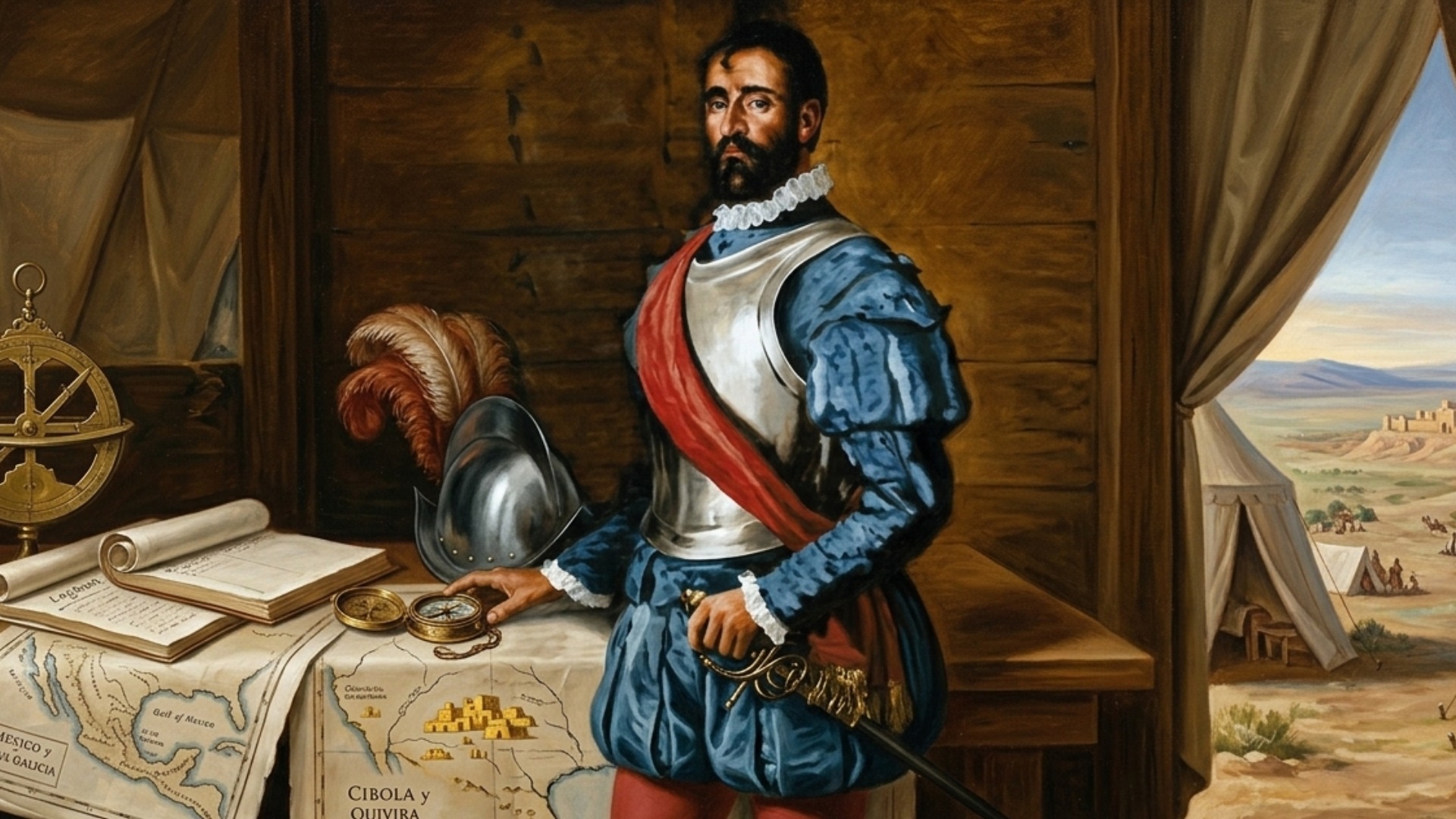
ÁLVAR NÚÑEZ CABEZA DE VACA (SPANISH EMPIRE)
C. 1490 – C. 1559
Table of Contents: Álvar Núñez Cabeza de Vaca

Álvar Núñez Cabeza de Vaca. His maternal surname originated from an Andalusian hidalgo lineage. Consequently, this family designation honored an ancestral military guide who marked a strategic mountain pass with a cow skull during the historic Christian triumph against Islamic forces at Las Navas de Tolosa in the year 1212.

Jerez de la Frontera, Province of Cádiz (Modern-day Andalusia, Spain). This strategic city functioned as a vital agricultural hub near the major maritime networks of Seville and Sanlúcar de Barrameda. Therefore, its location positioned the young noble within a dynamic theater of transatlantic expansion and transatlantic commercial exploration.

1527 – 1545. During these decades, he transitioned from a royal treasurer on the catastrophic Narváez expedition into an overland explorer across the modern American Southwest. Subsequently, he exercised administrative authority as the appointed Governor of Rio de la Plata in South America, where he synthesized his ethnological methodologies.

The Spanish Royal Crown, House of Medina Sidonia, Council of the Indies. His early career integrated him deeply into the prominent military campaigns of King Charles V throughout Europe. However, his later advocacy for indigenous populations led to severe political friction with local colonial factions, resulting in his ultimate arrest and political exile.

Royal Treasurer and Proto-Anthropologist. This operational status was first officially bestowed through a royal patent issued by Emperor Charles V in 1527. Crucially, modern academic historiographers honor this designation because his detailed narrative marked a ground-breaking shift away from imperial mythology toward empirical, systematic ethnography.

He pioneered systematic ethnographic observation by documenting the specific social structures, linguistic groups, and resource networks of indigenous communities. Consequently, his foundational texts established a revolutionary comparative baseline for early modern global anthropological disciplines.

Appointment as Royal Treasurer of the Narváez Expedition in 1527, Shipwreck on Galveston Island in 1528, Eight Years of Transcontinental Overland Exploration across Texas and Mexico, Reconnection with Spanish Forces near Culiacán in 1536, Publication of La Relación in 1542, Appointment as Adelantado of Río de la Plata in 1540, Discovery of Iguazu Falls in 1541.

He preserved accurate cross-cultural memory by documenting indigenous languages without imperial prejudice, while actively defending native civil liberties against predatory colonial enslavement networks.

| His written testimonies triggered centuries of intense geopolitical and geographic debate regarding early North American territorial cartography. Ultimately, modern archaeological excavations and archival discoveries have completely vindicated the empirical accuracy of his observations. |
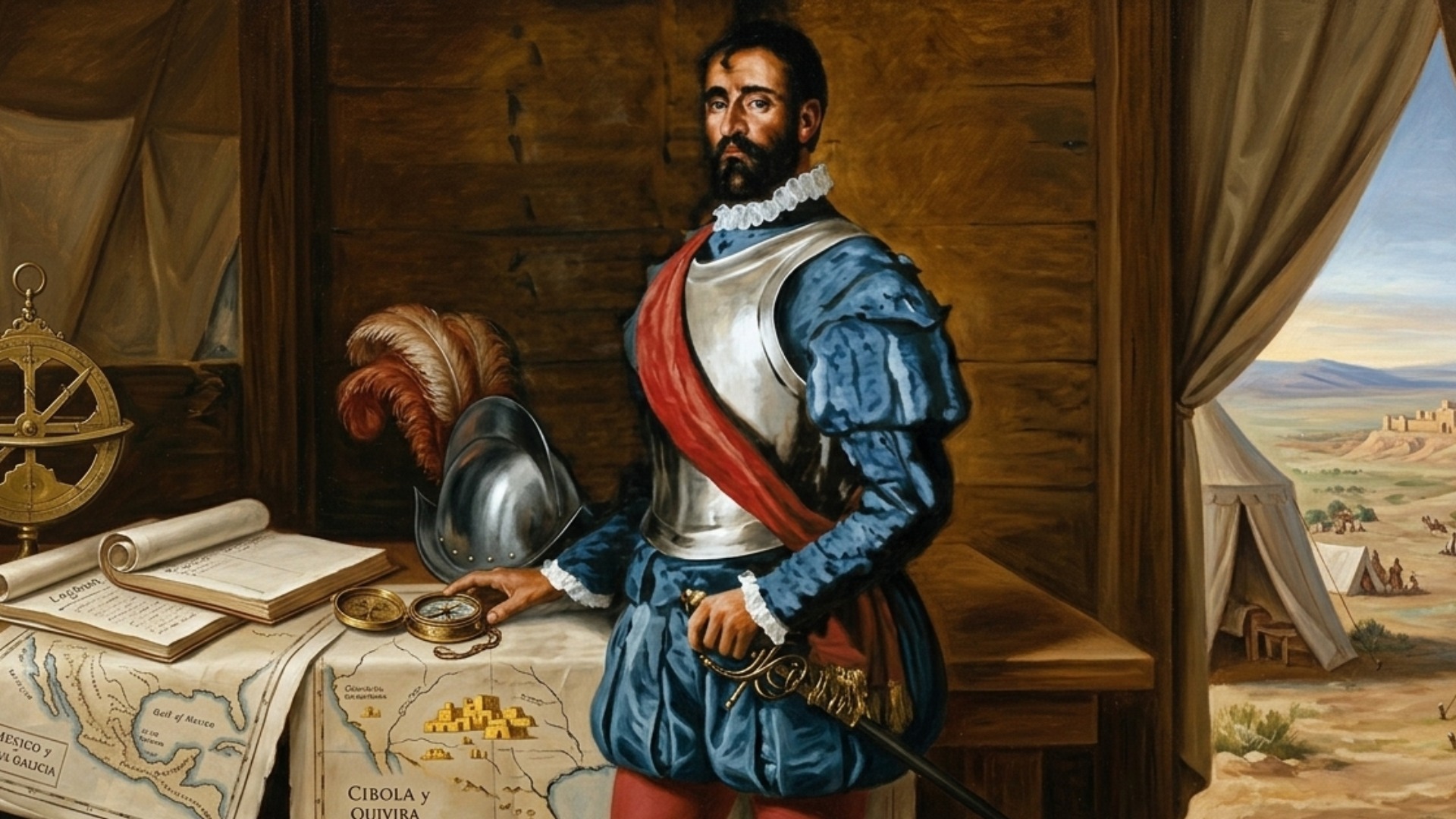
“Throughout all these lands, those who had verified wars with one another immediately made peace to come and receive us.”
– Álvar Núñez Cabeza de Vaca
Overview: Álvar Núñez Cabeza de Vaca
Álvar Núñez Cabeza de Vaca stands out as an exceptionally transformative figure within the complex annals of early transatlantic history. Born into minor Andalusian nobility, he initially sailed toward the Western Hemisphere to secure wealth and imperial prestige for the Spanish Crown. However, the total collapse of the 1527 Narváez expedition forced him onto a radically different trajectory of physical survival and cultural adaptation. Instead of acting as a traditional military conqueror, he found himself stripped of his European clothing, weapons, and status. This profound vulnerability compelled him to integrate directly into the daily lives of the diverse indigenous communities inhabiting the modern Gulf Coast and Southwestern United States.
Through this involuntary immersion, he evolved into an unprecedented recorder of early American life and geography. He utilized direct personal observation and rigorous cross-examination of native testimonies to construct his landmark text, La Relación. This document avoided the fanciful myth-making common among his contemporary explorers. Instead, he carefully detailed the specific hunting techniques, seasonal migrations, and linguistic boundaries of over twenty distinct native groups. His remarkable capacity to survive as a trader and a ritual healer reshaped his entire worldview. As a direct result, his written legacy permanently transformed how European intellectuals conceptualized the human geography of the New World.
Did you know? Álvar Núñez Cabeza de Vaca
A celebrated real-world bronze monument honoring his historical journey stands permanently within the grounds of Hermann Park in Houston, Texas. This detailed sculpture, modeled by the Spanish artist Pilar Cortella, captures his enduring physical legacy within modern public memory.

For decades, early critics dismissed his accounts of performing successful surgical extractions and ritual healings as complete fabrications. However, modern medical anthropology recognizes that his techniques combined basic European field surgery with indigenous psychosomatic traditions, confirming his absolute empirical honesty.
| To survive as an authorized intertribal merchant, he traveled completely barefoot and naked across thousands of miles of unknown wilderness. This demanding role allowed him to transport valuable sea-snails, shells, and mineral pigments across hostile territory, acting as a crucial diplomatic envoy between warring nations. |
Timeline of Álvar Núñez Cabeza de Vaca
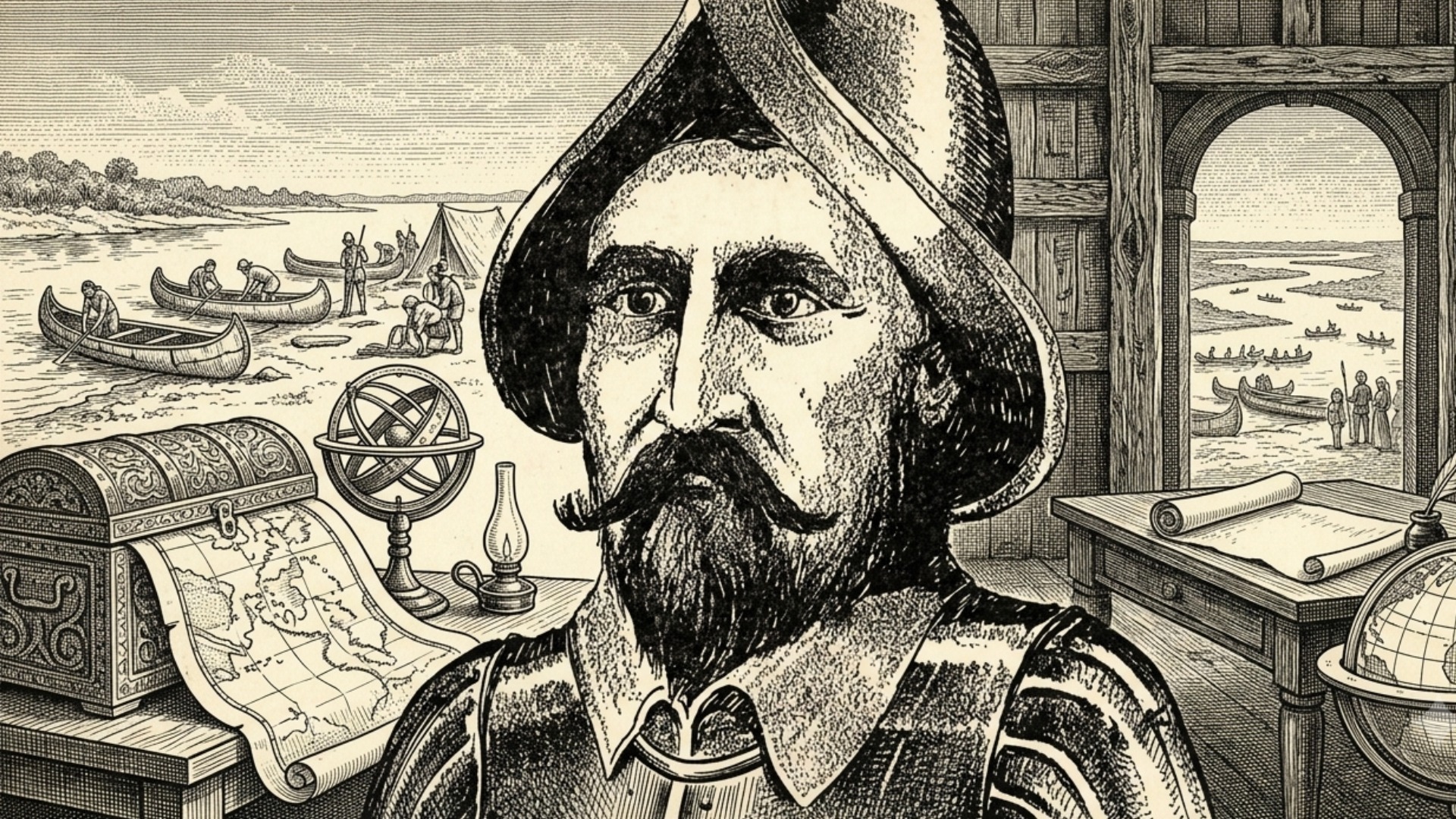
The early life of this explorer unfolded within the context of changing military dynamics in Mediterranean Europe. Following the early passing of his parents, he entered the formal service of the powerful Duke of Medina Sidonia. This strategic association prepared him for severe military trials, including the bloody Battle of Ravenna in 1512. In that Italian engagement, he suffered serious wounds while defending the royal standard. These formative experiences instilled a deep sense of administrative duty and tactical resilience. These exact traits served him well when he later sought royal recognition at the court of Valladolid.
His middle and later years saw a massive shift from standard military operations to an unprecedented journey of survival. After receiving his royal commission, he sailed for Florida, where bad leadership and disease destroyed the expedition. Stranded on the Texas coast, his group dwindled down to just four survivors. For nearly a decade, he walked across vast stretches of unknown territory before reaching Mexico City. Upon returning to Europe, he captured these experiences in writing, creating a document that remains a masterpiece of early colonial literature.
Timeline Chronology
| YEAR | EVENT | DESCRIPTION |
| 1490 | Noble Birth | He is born into an influential hidalgo household within Jerez de la Frontera, Spain. |
| 1512 | Battle of Ravenna | He fights bravely in Italy and sustains major wounds while serving the Spanish Crown. |
| 1520 | Comuneros Revolt | He actively defends royal imperial interests against domestic rebels within the Iberian Peninsula. |
| 1527 | Royal Commission | Emperor Charles V names him royal treasurer for the ambitious Panfilo de Narváez expedition. |
| 1528 | Florida Landing | The fleet arrives near Tampa Bay, but administrative failures isolate the inland landing party. |
| 1528 | Galveston Shipwreck | A desperate makeshift raft runs aground on Galveston Island, initiating years of captivity. |
| 1530 | Intertribal Trader | He adopts an independent role as an indigenous merchant to secure physical survival. |
| 1532 | Survivor Reunion | He reunites with three remaining survivors, including the African explorer named Estevanico. |
| 1534 | Shamanic Healing | He begins performing widely celebrated medical treatments, which guarantees safe passage westward. |
| 1535 | Chihuahuan Traverse | The four travelers cross the rugged interior of northern Mexico via indigenous trade trails. |
| 1536 | Colonial Reconnection | He encounters predatory Spanish slave hunters near the remote Sinaloa River settlement. |
| 1537 | Return to Spain | He arrives back in Lisbon to advocate for humane native administrative policies. |
| 1540 | Adelantado Appointment | The crown appoints him governor of the vast, unmapped Río de la Plata province. |
| 1541 | Iguazu Discovery | He leads an overland march from Brazil and discovers the massive Iguazu Falls. |
| 1544 | Colonial Mutiny | Enraged local factions arrest him due to his strict defense of native labor rights. |
Legacy of Álvar Núñez Cabeza de Vaca
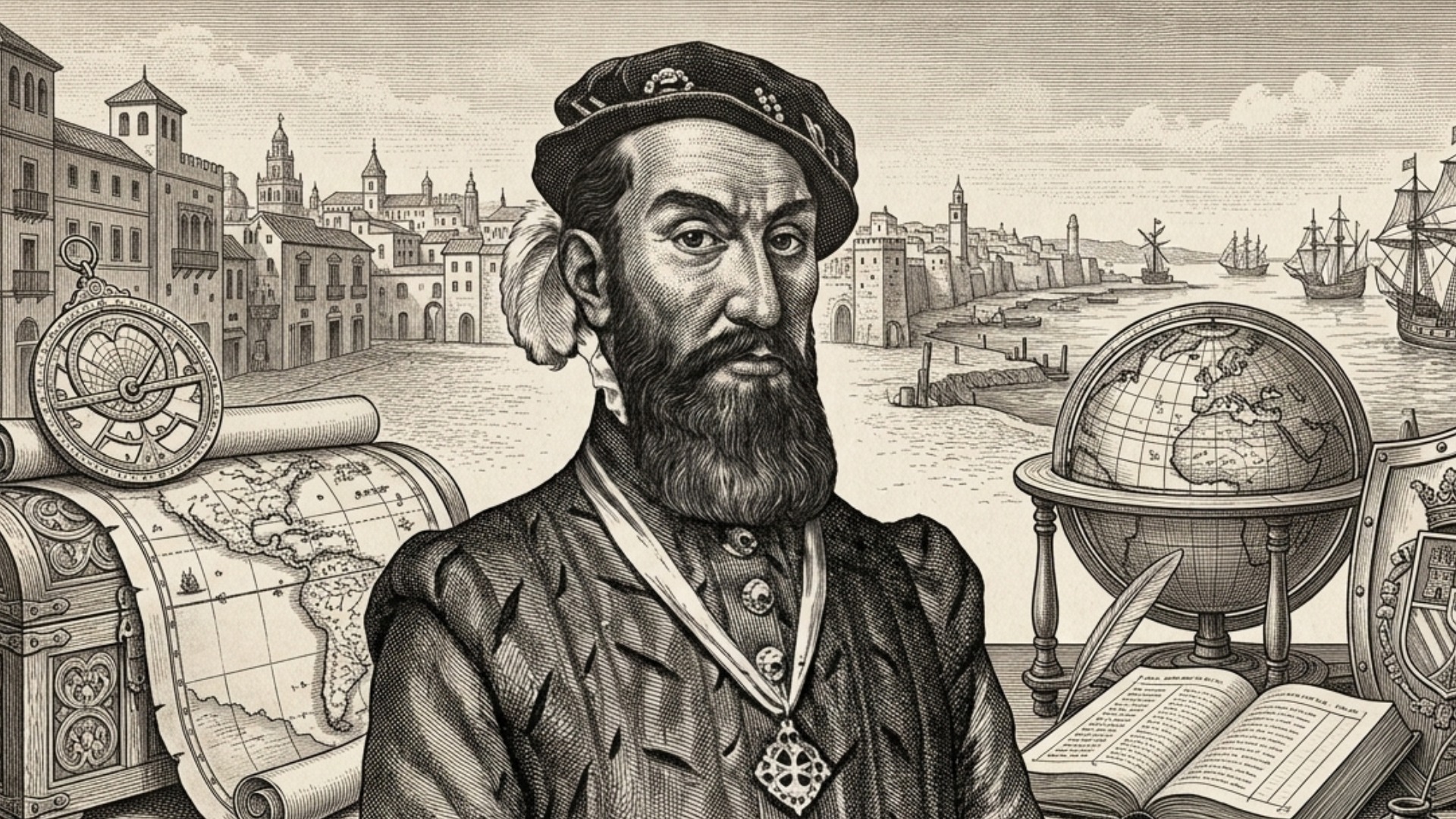
The enduring impact of this explorer completely reshaped the academic landscape of transatlantic historiography. By choosing to record the unvarnished realities of indigenous life, he provided subsequent generations with an irreplaceable window into a lost world. His writings directly influenced early global debates regarding human rights, colonial ethics, and international law. Furthermore, his unique journey proved that empathy and deep observation were far more powerful than military conquest. Today, scholars across multiple disciplines recognize his work as the true beginning of North American anthropology.
Accomplishments:
| Empirical Ethnography | He abandoned European preconceptions to record the precise cultural customs and social structures of indigenous communities. |
| Linguistic Preservation | His text preserved the first written records of specific, extinct native languages across the Gulf region. |
| Comparative Cartography | He mapped the complex transcontinental river systems and ecological zones of the uncharted American Southwest. |
| Surgical Documentation | He recorded the earliest known successful extraction of an arrow from a human torso in North America. |
| Humanitarian Advocacy | He directly challenged the legal framework of indigenous enslavement through formal appeals to the Spanish Crown. |
| Cross-Cultural Mediation | He successfully brokered peace treaties between warring indigenous factions by utilizing shared diplomatic protocols. |
| Economic Mapping | He detailed the extensive pre-Columbian trade routes involving bison hides, turquoise, and marine shells. |
| Ecological Recording | His journals provided the first written descriptions of the American bison to reach European intellectuals. |
| Administrative Reform | As governor, he enacted strict regulations prohibiting Spanish colonists from exploiting native populations. |
| Proto-Anthropology | He established a participatory observation model by living directly as a member of indigenous families. |
| Literary Innovation | His publication transformed the standard conquistador narrative genre into a profound study of human resilience. |
| Geopolitical Restraint | He consistently refused to use military violence to subdue native settlements during his travels. |
| Transatlantic Diplomacy | He successfully integrated indigenous leadership frameworks into the formal administrative records of the empire. |
| Nutritional Recording | His texts provided invaluable descriptions of native foodways, including pecan harvesting and prickly pear processing. |
| Demographic Mapping | He recorded the exact population densities of seasonal communities prior to major European epidemic disruptions. |
| Intercultural Ethics | He demonstrated that European and indigenous individuals could coexist through mutual economic and social dependency. |
| Legal Reform Testimony | His extensive legal depositions directly influenced the compilation of the protective New Laws of 1542. |
| Epidemiological Observation | He documented the immediate, devastating impacts of Old World diseases on vulnerable native populations. |
| Religious Adaptation | He utilized universal spiritual concepts to bridge the deep ideological divide between European and native beliefs. |
| Enduring Historiography | His narrative remains the cornerstone primary source for studying pre-contact populations in North America. |
References and Citations
- Adorno, R., & Pautz, P. C. (1999). Álvar Núñez Cabeza de Vaca: His Account, His Life, and the Expedition of Pánfilo de Narváez. University of Nebraska Press. https://nebraskapress.unl.edu
- Chipman, D. E. (2012). Álvar Núñez Cabeza de Vaca: The Great Pedestrian of North and South America. Texas State Historical Association. https://www.tshaonline.org
- Krieger, A. D. (2002). We Came Naked and Barefoot: The Journey of Cabeza de Vaca across North America. University of Texas Press. https://utpress.utexas.edu
- Núñez Cabeza de Vaca, Á. (1542). La relación que dio Aluar nuñez cabeça de vaca de lo acaescido en las Indias. Zamora Press. https://mavmatrix.uta.edu/specialcollections_yucatanandhonduras/2/
- Favata, M. A., & Fernández, J. B. (1993). The Account: Álvar Núñez Cabeza de Vaca’s Relación. Arte Público Press. https://artepublicopress.com
- Molloy, S. (1987). Alterity and the Narrative Self in Cabeza de Vaca’s Relación. Revista de Estudios Hispánicos, 21(2), 1-15. https://journals.openedition.org/corpusarchivos/1682
“Throughout all these lands, those who had verified wars with one another immediately made peace to come and receive us.”
– Álvar Núñez Cabeza de Vaca