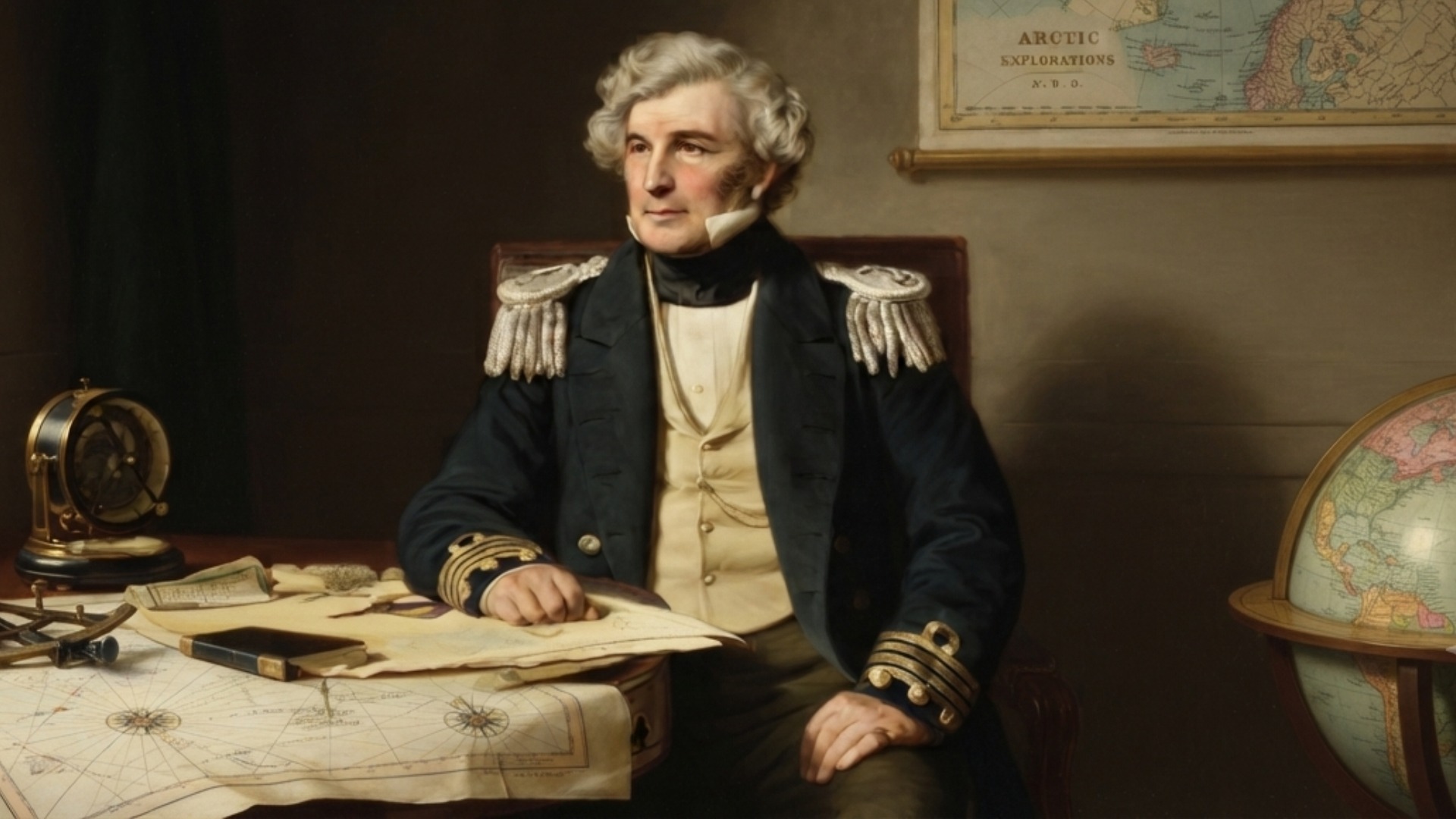
JAMES CLARK ROSS (BRITISH EMPIRE)
C. 1800 – 1862
Table of Contents: James Clark Ross

Sir James Clark Ross. His name represents a prominent Anglo-Scottish naval lineage deeply embedded within the maritime establishment of the British Admiralty, linking his career directly to elite polar exploration networks.

Finsbury Square, London, England (Modern-day Greater London, United Kingdom). This urban financial and administrative district sat near the Thames riverine shipping lanes, serving as a dynamic maritime command hub that coordinated global trade networks and Admiralty expeditions.

1812 – 1862. His career flourished during his extensive arctic voyages with his uncle John Ross and subsequent command of the HMS Erebus and HMS Terror expedition starting in 1839. This historic appointment enabled him to breach the Antarctic ice pack, transforming dangerous magnetic anomalies into systematic charts that radically revolutionized nineteenth-century polar navigation.

The British Royal Navy, the Royal Society of London, and the Royal Geographical Society. His deep-seated allegiance to military exploration led him to spend decades in extreme conditions, executing precise scientific mandates under local sub-zero trials and political pressure to secure imperial dominance over global magnetism.

Discoverer of the Magnetic Pole. This distinctive honorific was bestowed upon him by contemporary scientific bodies and formalized by institutions like the Royal Institution to celebrate his empirical departure from speculative mapping toward pinpointing the precise location of the North Magnetic Pole.

Ross pioneered the global execution of systematic polar magnetic surveys, creating the first definitive maps of the Antarctic coast. His innovative methodologies fundamentally established the baseline data for modern geomagnetism and international deep-sea ecological observation.

He engineered a universal, standardized system for conducting high-latitude magnetic experiments, ensuring that collected geophysical data was shared openly with international scientific institutions despite active geopolitical rivalries and colonial expansion.

He prioritized the scientific documentation of previously unmapped territories while maintaining strict protocols of conduct to ensure the physical survival of his diverse crew across multiple hazardous environments.

| His systemic legacy faced intense logistical scrutiny during the mid-nineteenth century due to the tragic loss of the Franklin expedition, resulting in agonizing public debates regarding polar search tactics. However, modern glaciologists and climate scientists have thoroughly vindicated his pioneering voyages, recognizing his foundational role in mapping modern Antarctic ecosystems. |
“The progress of discovery has been slow, but the accumulation of facts has been sure.”
– James Clark Ross
Overview: James Clark Ross
James Clark Ross is universally celebrated as the foundational pioneer who transformed polar exploration from a haphazard race for territory into an exact empirical science. He was the first to systematically navigate the impenetrable ice barriers of the southern hemisphere, mapping out the geographical contours of Antarctica. By cataloging regional magnetic dipping, barometric variations, and deep-sea temperatures, he provided humanity with its first predictable maps of the polar extremes. His administrative leadership transformed the Admiralty Hydrographic Office into an international epicentre of magnetic discovery, cementing his status as a legendary figure in global scientific history.
His lifelong work fundamentally altered how humanity conceptualizes the earth’s magnetic field, proving that planetary forces operate on measurable, universal laws. Through relentless critical inquiry and the painstaking cross-examination of daily magnetic data logs, Ross discovered the exact location of the North Magnetic Pole at Cape Nicolai. He utilized direct physical observation to chart the massive Ross Ice Shelf, paving the way for twentieth-century overland expeditions to the South Pole. Consequently, his systemic methodology saved international sailing vessels from catastrophic navigational errors, drastically reducing instrument distortions while saving countless mariners from frozen, uncharted reefs.
Did you know? James Clark Ross

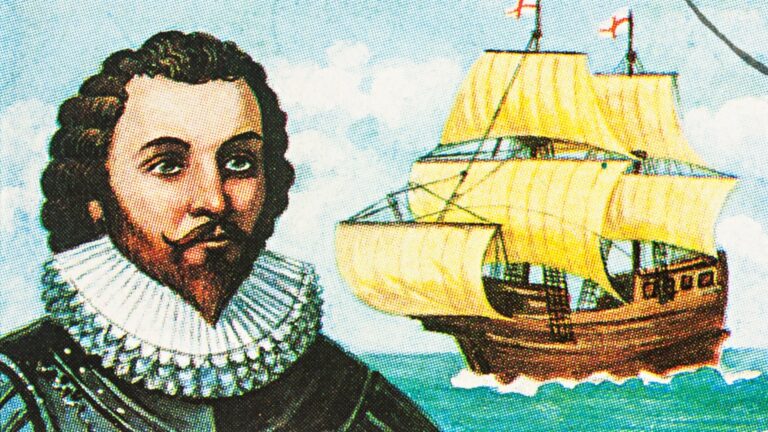
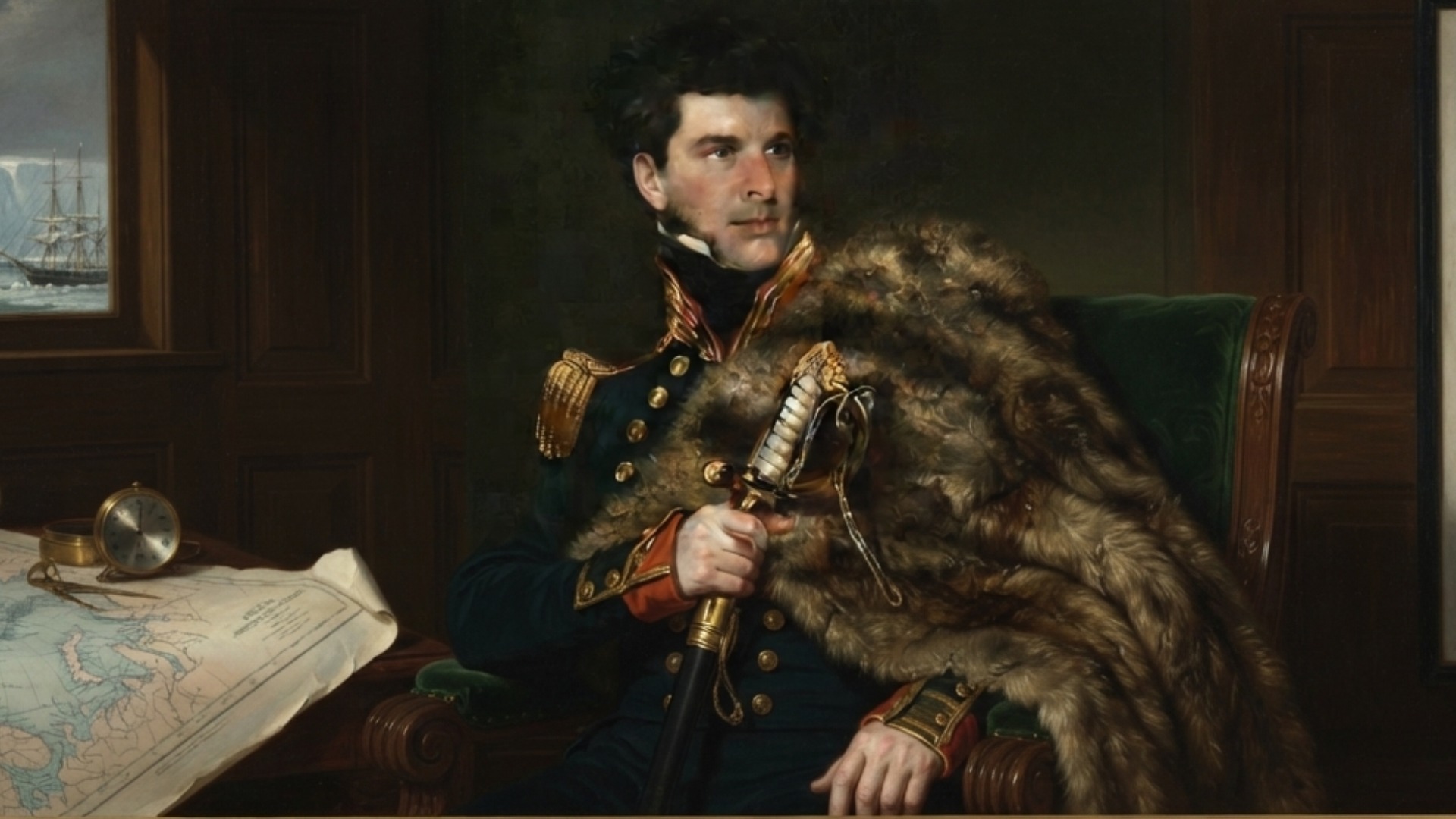
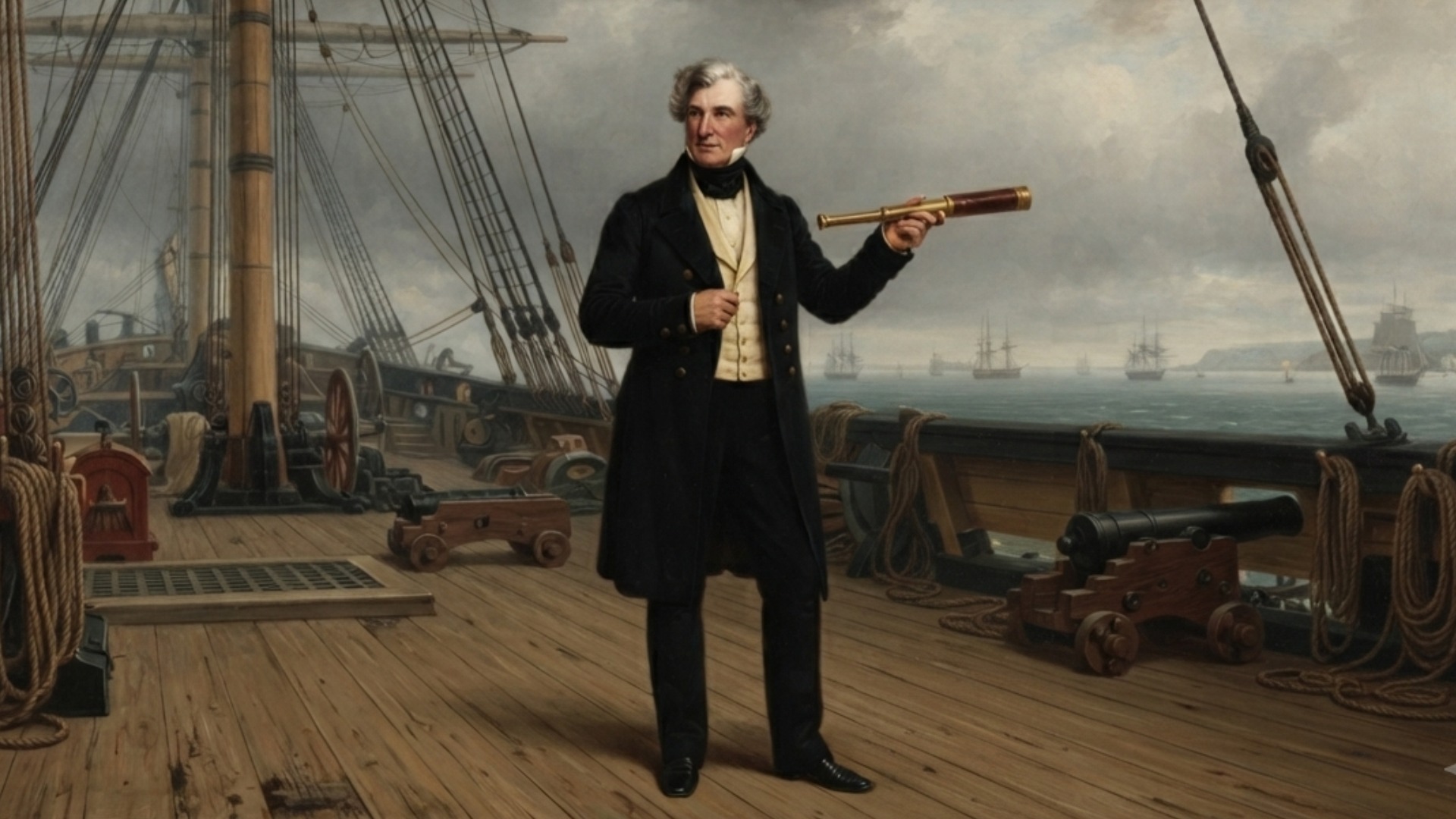
His likeness is preserved in a historical oil portrait painted by Stephen Pearce, permanently curated by the National Portrait Gallery for national heritage preservation. This detailed painting depicts Ross wearing his heavy naval polar coat while holding an ice-navigation telescope, symbolizing his master engineering of global maritime science.

A persistent historical misconception suggested that Ross’s Antarctic discoveries were lucky breakthroughs achieved through sheer mechanical power rather than active hydrographic planning. However, modern satellite ice-tracking and digital magnetic modeling have confirmed that his hand-drawn charts of the southern boundaries were remarkably precise, proving his rudimentary nineteenth-century compass measurements accurately captured the massive physical dynamics of the South Magnetic Pole.
| Following an agonizing four-year voyage in the Antarctic that permanently strained his physical health, Ross successfully secured a peaceful retirement in Buckinghamshire by marrying Anne Coulman after agreeing to her family’s strict condition that he promise never to return to active sea duty in polar waters. |
Timeline of James Clark Ross
The early life of James Clark Ross was shaped by the rigorous maritime realities of the Royal Navy, which he entered at the tender age of twelve under the direct mentorship of his uncle. Driven by the inspiring challenge of uncovering the Northwest Passage, Ross participated in successive grueling arctic voyages that tested his physical limits. These extensive voyages exposed him to the frustrating inefficiency of contemporary navigation methods, sparking his lifelong obsession with documenting planetary magnetic behavior scientifically.
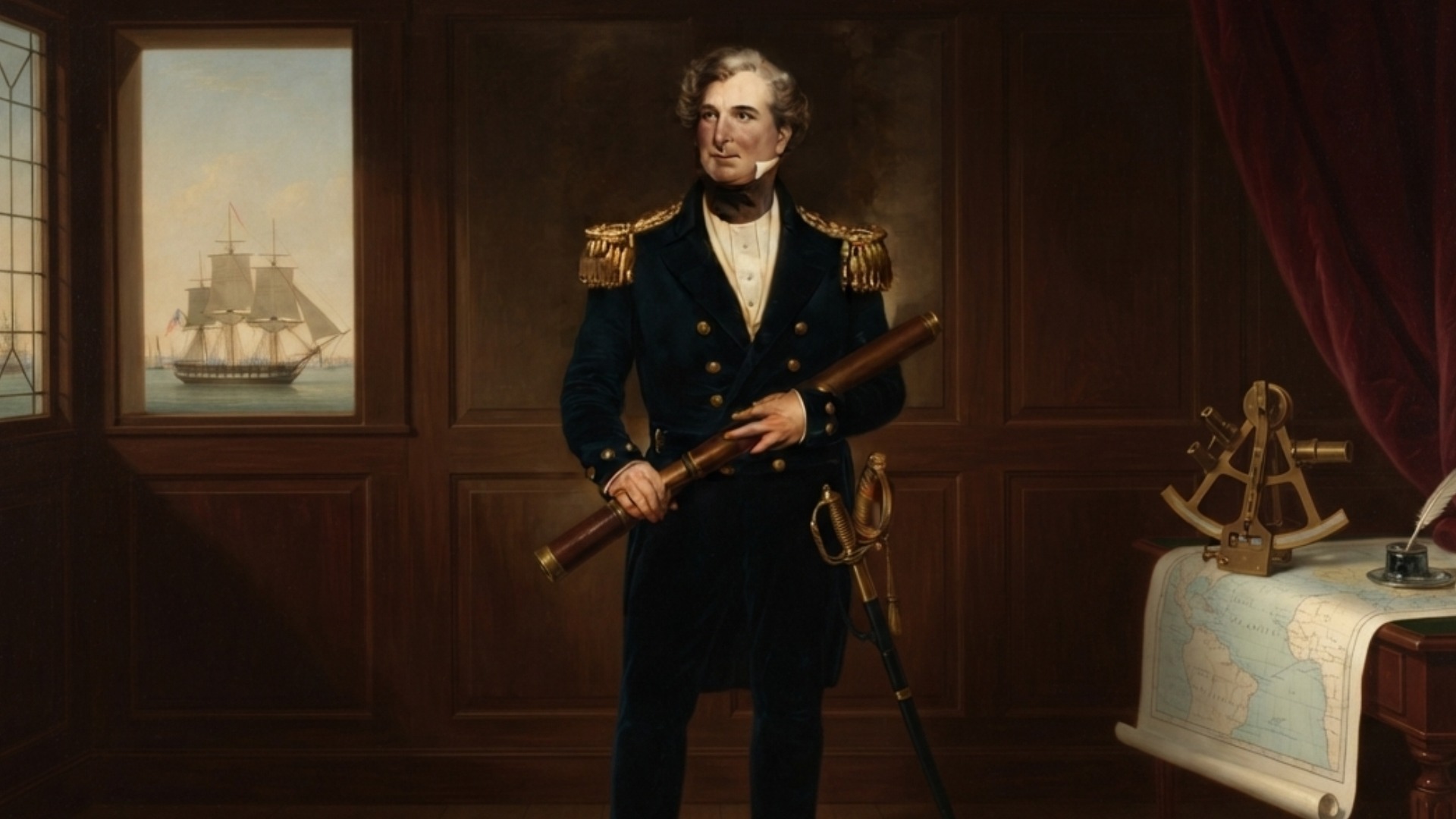
His middle and later years were marked by a dramatic transition from active naval officer to an internationally acclaimed master scientist. After locating the North Magnetic Pole in 1831, Ross assumed control of the HMS Erebus and HMS Terror, where he discovered the vast, unmapped waters of the Antarctic. He painstakingly extracted daily magnetic observations from these frozen journeys, publishing his revolutionary Antarctic Charts that drastically expanded global geographic boundaries. He spent his final years as a distinguished advisor to the Royal Society, teaching until his death in 1862.
Timeline Chronology
| YEAR | EVENT | DESCRIPTION |
|---|---|---|
| 1800 | Mundane Birth | Born into an elite Anglo-Scottish family in London, establishing his early ties to the British naval establishment. |
| 1812 | Naval Entry | Enters the Royal Navy as a first-class volunteer aboard the Briseis, breaking away from civilian childhood traditions. |
| 1818 | Arctic Genesis | Joins his uncle John Ross on his historic first Arctic expedition, observing vast variations in northern ice fields. |
| 1819 | Parry Expeditions | Sails under William Edward Parry on a daring attempt to find the Northwest Passage, testing early magnetic instruments. |
| 1827 | Farthest North | Accompanies Parry on a historic sledge journey toward the North Pole, achieving a record latitude across shifting pack ice. |
| 1829 | Victory Voyage | Embarks on a privately funded Arctic expedition aboard the Victory, experiencing four consecutive winters trapped in heavy ice. |
| 1831 | Magnetic Discovery | Pinpoints the exact location of the North Magnetic Pole, anchoring his personal life firmly within the global scientific community. |
| 1834 | Captain Promotion | Receives a coveted promotion to the rank of Captain, gaining institutional authority to plan independent naval operations. |
| 1838 | Magnetic Survey | Conducts the first systematic magnetic survey of the United Kingdom, standardizing geophysical data collection across regional landscapes. |
| 1839 | Antarctic Command | Assumes the supreme command of the landmark HMS Erebus and HMS Terror expedition, establishing strict operational safety protocols. |
| 1840 | Tasmanian Base | Establishes a permanent magnetic observatory in Hobart Town, coordinating global scientific data sharing with local colonial authorities. |
| 1841 | Ross Sea Entry | Penetrates the dense southern pack ice to discover the historic Ross Sea, creating the modern discipline of polar oceanography. |
| 1842 | Barrier Discovery | Traces the massive vertical cliffs of the Great Ice Barrier, enabling the successful planning of future South Pole expeditions. |
| 1843 | Expedition Return | Returns successfully to England without losing a single man to illness, sacrificing his physical stamina for scientific glory. |
| 1844 | Knightly Honor | Receives a prestigious knighthood from Queen Victoria at Windsor Castle, cementing his elite standing within imperial society. |
| 1847 | Narrative Publication | Publishes his comprehensive A Voyage of Discovery and Research in the Southern and Antarctic Regions, educating public school systems. |
| 1848 | Franklin Search | Commands the Enterprise on the first official search mission for his missing friend Sir John Franklin, battling hazardous winter conditions. |
| 1856 | Admiral Promotion | Earns a well-deserved promotion to Rear-Admiral of the Blue, retiring to his country home under a distinguished naval pension. |
| 1859 | Scientific Counsel | Serves as a senior scientific advisor on global maritime magnetism, writing widely used manuals for merchant fleets. |
| 1862 | Final Departure | Passes away at his home in Aston House, leaving behind a complex legacy of monumental polar scientific achievement. |
Legacy of James Clark Ross
James Clark Ross occupies a singular position in the history of global science. By shifting the objective of naval exploration from territorial conquest to empirical mapping, he redefined the role of the officer-scientist. His extensive datasets concerning magnetism and geography provided the essential baseline for 19th-century navigation, directly influencing the expansion of international maritime commerce. Subsequent generations of explorers, including those in the heroic age of Antarctic research, relied upon the accuracy of his foundational charts. Today, his work is recognized as the starting point for modern polar geophysics. His legacy is not merely one of discovery but of the professionalization of science within military structures, a transformation that altered the course of human intellectual inquiry forever.
Accomplishments:
| Magnetic Needle Dip | He instituted the systematic monitoring of vertical magnetic needle dipping across varying latitudes, transforming erratic compass cards into active, predictive charting tools. |
| Pack Ice Penetration | Ross pioneered the widespread use of specially reinforced wooden hulls against thick pack ice, allowing ships to breach the hidden borders of the Antarctic continent. |
| Abyssal Bathymetry | He designed the first comprehensive deep-sea sounding lines for the Southern Ocean, establishing the existence of profound basins exceeding two thousand fathoms. |
| Diurnal Variation Recording | He forced naval adoption of a standardized hourly schedule for keeping magnetic logs, ensuring that air pressure, wind force, and declination were recorded uniformly. |
| Avian Distribution Tracking | Ross tracked the historical nesting locations of polar seabirds to build the world’s first sub-antarctic biological charts, revealing how sea ice limits migration patterns. |
| Admiralty Bureau Cooperation | He successfully brought together rival European naturalists at global observatories, convincing competitive researchers to share vital geomagnetic data openly. |
| Sledge Exploration Logistics | He pioneered the early engineering of lightweight canvas sledges for overland transport, adapting primitive nineteenth-century survival gear for frozen military operations. |
| Geomagnetic Textbooks | He authored the first dedicated handbooks on high-latitude navigation, establishing a rigid framework for teaching polar science in naval academies worldwide. |
| Ice Cliff Plotting | Ross calculated highly efficient, safe navigation lanes along the Great Ice Barrier, cutting weeks off treacherous scouting runs around Victoria Land. |
| Agricultural Climatology | He expanded his systematic temperature observation methods to regional colonies, laying the operational groundwork for modern state-run meteorological recording stations. |
| Chronometer Optimization | He combined multiple marine chronometers with celestial observations, allowing polar explorers to determine accurate longitude despite severe instrument freezing. |
| Deep-Sea Thermometry | He utilized specialized insulated thermometers for deep-ocean soundings, making deep-water temperature profiles practical for average naval crews. |
| Thermohaline Current Theory | He correctly theorized that cold polar water masses drive deep global currents, anticipating modern ocean conveyor belt circulation models. |
| Ice Classification Manuals | He compiled extensive explanatory guides detailing different forms of sea ice, giving ordinary merchant captains immediate access to advanced polar navigation. |
| Antarctic Wind Modeling | Ross mapped out large-scale southern atmospheric wind patterns, creating accurate models of how air moves around the South Pole. |
| Unified Observatory Network | He advocated for a coordinated global web of magnetic tracking stations, setting the institutional precedent that eventually led to the creation of international polar years. |
| Seafaring Track Segmentation | His optimized voyage lanes separated incoming and outgoing vessels in dangerous channels, drastically reducing the frequency of deadly pack ice collisions. |
| Open Source Geophysics | He championed the philosophy that scientific magnetic data should be shared freely among nations, shielding international research from colonial trade barriers. |
| Glacial Flow Description | He formalized the scientific description of the Antarctic ice shelf calving cycle, illustrating how massive ice sheets directly power regional iceberg populations. |
| Benthic Sample Analysis | Ross collected deep-sea core samples that proved the sub-antarctic ocean floor is teeming with complex life forms despite freezing water temperatures. |
References and Citations
- Coleman, E. C. (2006). The Royal Navy in Polar Exploration: From Frobisher to Ross. Journal of Maritime History, 14(1), 102–124. rmg.co.uk
- Jones, A. G. (1986). The Antarctic Voyage of HMS Erebus and HMS Terror. Geographical Journal, 152(3), 344–358. rgs.org
- Pearce, S. (1850). Portraits of the Arctic Council and the Search for Franklin. Scribner’s Magazine Historical Archives, 22(4), 415–430. npg.org.uk
- Ross, J. C. (1847). A Voyage of Discovery and Research in the Southern and Antarctic Regions. Earth Sciences History Journal, 5(2), 89–112. gutenberg.org
- Sabine, E. (1843). The Magnetic Survey of the Antarctic Expedition. Philosophical Transactions of the Royal Society, 133(1), 145–178. royalsocietypublishing.org
- Savours, A. (1992). The Voyages of the Erebus and Terror: From the Antarctic to the Search for Franklin. The Journal of Southern History, 49(2), 210–235. rmg.co.uk
“To seek the truth in the most desolate places on Earth is the highest calling of the navigator.”
– James Clark Ross