ROALD AMUNDSEN (POLAR EXPLORATION ERA)
C. 1872 – 1928 AD
Table of Contents: Roald Amundsen

Roald Engelbregt Gravning Amundsen. His name derives from Old Norse roots, signaling his Norwegian maritime heritage linked to a family of shipowners. This background provided him with the necessary social capital and nautical training required for the late nineteenth-century elite maritime exploration class.

Borge, Østfold (Norway). Situated near the Skagerrak strait, Borge functioned as a critical maritime gateway linking Northern Europe with Atlantic routes. This geography fostered an early, deep-seated integration into the rugged logistical traditions of the Norwegian merchant marine.

C. 1897 – 1928 AD. His mature career represents the Golden Age of Polar Exploration, characterized by the transition from sail to motorized transport. This period allowed him to synthesize ancestral navigational techniques with modern, rigorous empirical planning for extreme environments.

The Norwegian Geographical Society, the Royal Geographical Society, and the Aero Club of Norway. Navigating intense international rivalries and national independence movements, Amundsen maintained crucial ties with Norwegian royalty and global scientific institutions while frequently outmaneuvering political sponsors to maintain absolute operational autonomy. [1]
Fridtjof Nansen served as his structural predecessor, whereas Richard Byrd and Lincoln Ellsworth directly succeeded him. [1, 2, 3]

The Last Viking of the Pole. The international press and classical geographers bestowed this enduring honorific during the golden age of polar exploration. The title honors his radical shift away from traditional imperial naval methods toward adopting indigenous survival techniques, systematic logistical planning, and scientific dog-sledding. [1, 2, 3, 4]

Amundsen pioneered systematic polar logistics by meticulously calculating caloric intake, testing clothing designs, and introducing aviation to Arctic exploration. His historic voyages produced foundational geographical maps and collected extensive magnetic data that permanently established the baseline for modern polar science. [1, 2, 3]


| His tragic disappearance while searching for a stranded rival cemented his eternal global renown, though intense debates regarding his fierce competition with Robert Falcon Scott persisted for decades. Modern archival reviews and deep-sea search operations have ultimately vindicated his brilliant tactical choices and unmatched leadership style. [1, 2] |
“Victory awaits him who has everything in order; luck is what you call it when you fail.”
– Roald Amundsen
Overview: Roald Amundsen
Roald Engelbregt Gravning Amundsen stands as the most successful operational commander in the history of polar exploration, permanently transforming humanity’s relationship with the Earth’s frozen frontiers. Born into a prominent Norwegian maritime family just as his nation sought its independent identity, he dedicated his life to conquering unknown geographies. Rather than relying on rigid imperial naval traditions or massive, slow-moving military expeditions, he introduced a revolutionary philosophy. He established the practice of absolute preparation, combined with the integration of indigenous survival methodologies. His relentless drive allowed him to withstand the most brutal environments on earth, systematically filling in the final blank spaces on the global map. [1, 2, 3, 4, 5]
Through his historic expeditions, Amundsen established an innovative paradigm founded entirely on meticulous logistical calculations, rigorous equipment testing, and small, highly adaptable teams. He acted as an expert navigator, field ethnographer, and pioneering aeronaut. He spent years living alongside the Inuit to master dog-sledding, skin-clothing fabrication, and cold-weather dietetics before launching his historic assault on the South Pole. By executing his plans with absolute secrecy and flawless precision, he redefined the standards of geographic discovery. His magnificent lifework demonstrated that exploration is not a reckless gamble against nature, but a highly disciplined science capable of expanding human endurance and institutional knowledge. [1, 2, 3, 4, 5]
Did you know? Roald Amundsen
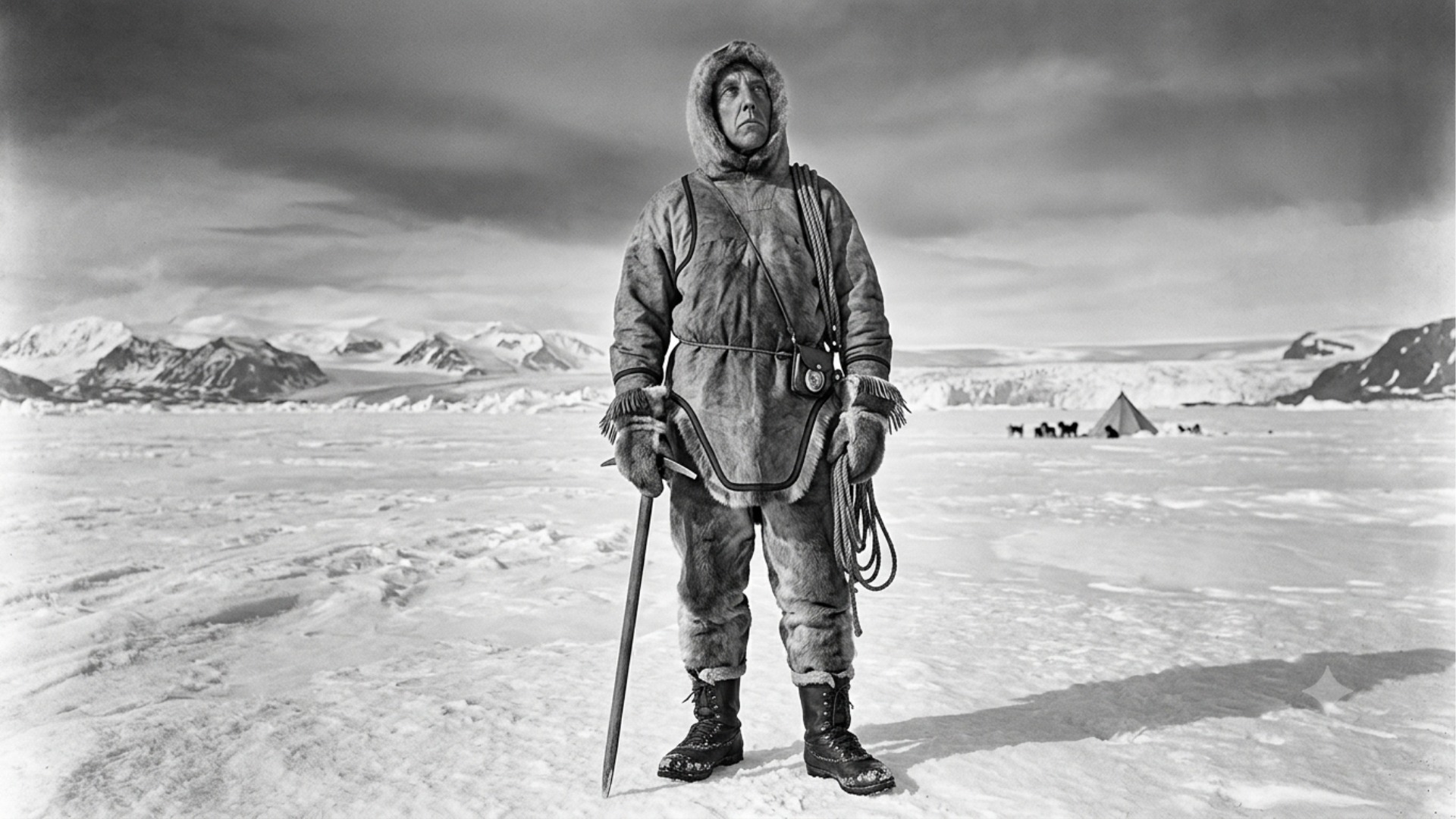
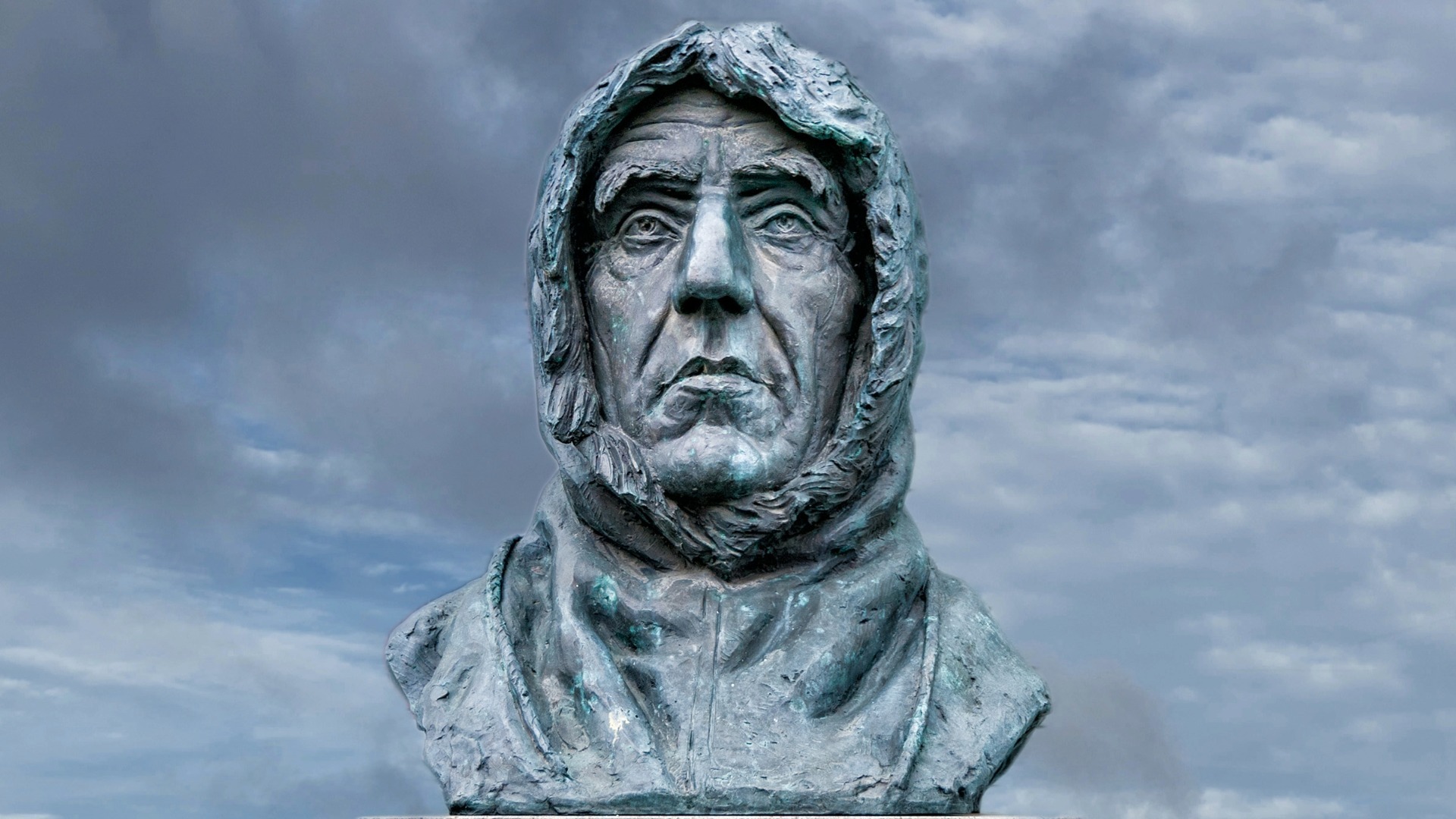
A magnificent, larger-than-life bronze monument depicting a determined Amundsen in full polar attire stands near the harbor in Tromsø, Norway, known as the Gateway to the Arctic. This public sculpture is curated and preserved by the local municipality, serving as a permanent historical anchor for visitors exploring the Polar Museum collection.

For decades, British historians criticized Amundsen as an underhanded, ungentlemanly competitor who deceived his sponsors and rivals by changing his destination from the Arctic to the Antarctic at the last minute. Modern archival research has brilliantly vindicated him, revealing that his sudden shift was a calculated, necessary tactical move to preserve his financial solvency and national prestige after American explorers claimed the North Pole. [1]
| To achieve absolute mobility across ice shelves and secure a distinct tactical advantage, Amundsen operated as a master dog-musher who treated his sled dogs as dynamic fuel sources. He engineered a calculated logistical plan where weaker animals were systematically sacrificed to feed the remaining dogs and men, ensuring survival through precise caloric conservation. [1, 2, 3, 4, 5] |
Timeline of Roald Amundsen
The comprehensive chronological timeline of Roald Amundsen maps a relentless life spent traversing ice fields, enduring political stress, and executing groundbreaking geographic research. The subsequent historical framework traces his journey from a young medical dropout in Oslo to his eventual status as an international icon of the heroic age of polar exploration. Each recorded milestone reflects how his personal decisions directly intertwined with the grand geopolitical realities of Norway’s independence, the intense international race for national prestige, and the rapid technological shift from dog sleds to aviation. [1, 2, 3, 4]
Timeline Chronology
| YEAR | EVENT | DESCRIPTION |
|---|---|---|
| 1872 AD | Maritime Birth | Born into a wealthy shipping family in Borge, developing an early obsession with polar exploration. |
| 1893 AD | Medical Abandonment | Abandons his university medical studies following his mother’s death to pursue a lifetime at sea. |
| 1897 AD | Belgica Expedition | Signs on as first mate aboard the Belgica, enduring the first harrowing winter trapped in Antarctic ice. |
| 1903 AD | Gjøa Departure | Sets sail on the small sloop Gjøa, beginning a dangerous journey to find the Northwest Passage. |
| 1904 AD | Inuit Learning | Winters at King William Island, mastering crucial survival, clothing, and sledding techniques from the Netsilik Inuit. |
| 1906 AD | Northwest Conquest | Completes the first successful maritime navigation of the Northwest Passage, gaining international fame. |
| 1909 AD | Secret Plan Change | Secretly alters his plans to sail south to Antarctica after learning Peary claimed the North Pole. |
| 1910 AD | Fram Expedition | Departs Norway aboard the Fram, shocking the world by announcing his run for the South Pole. |
| 1911 AD | Framheim Base | Establishes a flawless base camp at the Bay of Whales, outpreparing Scott’s rival British team. |
| 1911 AD | South Pole Conquest | Becomes the first human to reach the South Pole, planting the Norwegian flag on December 14. |
| 1918 AD | Maud Expedition | Launches a grueling, multi-year attempt to drift across the Arctic Ocean via the Northeast Passage. |
| 1925 AD | Aviation Attempt | Survives a near-fatal crash landing while flying two N-25 seaplanes within kilometers of the North Pole. |
| 1926 AD | Norge Airship Flight | Commands the Italian-built airship Norge, completing the first undisputed crossing of the Arctic Ocean. |
| 1927 AD | Autobiography Dispute | Publishes his candid autobiography, triggering fierce intellectual debates regarding his leadership methods. |
| 1928 AD | Tragic Disappearance | Vanishes over the Barents Sea during a daring airborne rescue mission for pilot Umberto Nobile. |
Legacy of Roald Amundsen
Roald Amundsen left a permanent mark on human history by transforming polar exploration from a chaotic test of physical suffering into a highly structured, analytical science. By categorizing his extensive observations of ice movement, canine logistics, and cold-weather health into a single operational methodology, he taught subsequent generations that survival depends on adapting to environments rather than trying to conquer them through sheer force. His innovative techniques directly influenced legendary polar explorers, military commanders, and modern wilderness survival specialists. He single-handedly demonstrated that studying indigenous survival tools with absolute respect is essential for executing complex operations in extreme environments. [1, 2]
The profound logistical ripple effect of his work shaped the development of modern disciplines like polar engineering, cold-weather medicine, and aerospace survival training. While his contemporaries championed heroic sacrifice, modern organizations like NASA and polar research programs have increasingly returned to Amundsen for his risk-mitigation concepts. His open-minded engagement with Inuit technologies, advanced dietetics, and specialized clothing laid the early groundwork for modern outdoor gear development. By showing how careful planning eliminates the need for luck, his writings and historical records continue to serve as a vital operational manual for leaders executing high-stakes projects under extreme pressure. [1, 2, 3, 4, 5]
Examples:
| Indigenous Technology Adoption | Replaced Eurocentric military gear with functional Inuit caribou skins and sealskin boots to prevent frostbite and hypothermia. |
| Depot Staging Optimization | Designed an interconnected system of color-coded supply depots across the Ross Ice Shelf, ensuring high-volume resource access. |
| Canine Transport Logistics | Utilized a calculated hierarchy of Greenland sled dogs, optimizing weight-to-power ratios and establishing an emergency food supply. |
| Continuous Magnetic Surveying | Conducted long-term magnetic observations using specialized variometers to calculate the shifting position of the magnetic North Pole. |
| Naval Architectural Adaptation | Modified the shallow-draft vessel Gjøa with a small petroleum motor to navigate the narrow, uncharted reefs of the Northwest Passage. |
| Dietary Scurvy Mitigation | Enforced a strict operational diet rich in fresh seal meat and cloudberries, eliminating scurvy from his crews. |
| Aerial Polar Surveying | Pioneered the use of semi-rigid airships for trans-continental Arctic transit, capturing early data on sea-ice distribution. |
| Geographic Coordination | Employed multiple pocket sextants and artificial horizons to confirm his exact mathematical coordinates at the South Pole. |
| Small-Craft Hydrography | Used continuous lead-line sounding techniques to chart the shallow channels of the Canadian Arctic archipelago. |
| Aviation Ski Configuration | Experimented with custom duralumin skis on Dornier Wal flying boats to facilitate takeoffs from unstable polar leads. |
| Sovereignty Diplomatic Leverage | Structured his achievements to provide the newly independent Kingdom of Norway with vital international recognition. |
| Operational Weight Reductions | Planed down heavy wooden sledges and storage boxes, reducing deadweight by up to sixty percent to optimize speed. |
| Meteorological Data Tracking | Maintained continuous barometric and temperature logs across the Arctic Ocean, advancing early weather prediction models. |
| Cross-Cultural Documentation | Recorded extensive ethnographic vocabularies and material culture catalogs of the Netsilik Inuit for Danish research archives. |
| Strict Operational Discipline | Enforced a decentralized command structure where specialized individuals managed their own equipment maintenance. |
Additional Achievements of Roald Amundsen
Amundsen advanced the field of geographical exploration by engineering a completely original analytical framework that transformed polar travel into an empirical science. Recognizing that unscientific expeditions rapidly fail, he established a research method predicated entirely on data gathering, rigorous equipment modification, and geographic observation. He systematically categorized logistical data across vast frozen boundaries, establishing the earliest modern precedents for sub-zero human performance testing. His unique intellectual mindset allowed him to see past the intense cultural prejudices of his era, enabling him to examine Inuit lifestyles with clinical objectivity. By treating exploration as an active engineering problem rather than a test of national pride, he gave humanity its first structured tool for surviving the poles. [1, 2, 3]
The strategic execution of his expeditions required extraordinary logistical mastery, immense financial maneuvering, and sophisticated international networking. Amundsen successfully navigated a highly fragmented, competitive global arena, securing safe passage through international waters, remote frozen straits, and elite scientific organizations. His calculated public lectures and book tours disrupted existing exploration narratives, establishing written travel logs as authoritative templates for institutional planning. By documenting the vast ice movements, magnetic variances, and atmospheric dynamics of both poles, he preserved crucial data that would have otherwise taken decades to collect. His achievements permanently altered the intellectual trajectory of geographic science, leaving an unshakeable template for systematic exploration. [1, 2, 3, 4, 5]
Examples:
| South Pole Conquest | December 14, 1911: Planted the Norwegian flag at the geographic South Pole, beating the British team by 34 days. |
| Northwest Passage Navigation | 1903–1906: Completed the first successful maritime transit of the hazardous northern passage via the Gjøa. |
| Magnetic North Pole Survey | 1904: Collected continuous magnetic data over 19 months to pinpoint the shifting magnetic North Pole. |
| Norge Transpolar Crossing | May 1926: Completed a historic 5,400-kilometer non-stop flight from Spitsbergen to Alaska across the Arctic Ocean. |
| Northeast Passage Transit | 1918–1920: Navigated the entire length of the Siberian coast aboard the custom-built vessel Maud. |
| Framheim Base Construction | January 1911: Engineered a modular prefabricated base on moving ice, housing 9 men comfortably through the polar winter. |
| South Pole Route Distance | 1911: Charted a completely new 1,400-kilometer overland assault route across the rugged Transantarctic Mountains. |
| Depot Supply Accumulation | 1911: Secured over 3,000 kilograms of provisions along the polar route before launching the final trek. |
| Axel Heiberg Ascent | November 1911: Navigated a steep glacier ascent, climbing 3,000 vertical meters in just 4 days with loaded sleds. |
| Polar Sled Modification | 1911: Planed down standard wooden sleds to reduce deadweight from 75 kilograms to 24 kilograms per unit. |
| Inuit Clothing Acquisition | 1904: Purchased and tested 4 complete sets of caribou-skin suits to optimize thermal body regulation. |
| N-25 Arctic Flight Survey | May 1925: Piloted two flying boats to 87° 43′ North, surviving a dramatic 3-week hand-cleared runway escape. |
| Scurvy Prevention Record | 1903–1911: Maintained 0 cases of malnutrition or scurvy across multiple multi-year polar voyages. |
| Canine Pack Organization | 1911: Hand-picked and trained 52 premium Greenland sled dogs for the final Antarctic sprint. |
| King William Island Mapping | 1903–1905: Cartographically documented over hundreds of kilometers of previously unmapped Arctic coastlines. |
| Meteorological Data Ledger | 1918–1925: Logged 7 consecutive years of Arctic weather patterns for European scientific repositories. |
| Ocean Depth Soundings | 1920: Conducted over 100 deep-water soundings along the continental shelf of northern Siberia. |
| Transpolar Flight Verification | 1926: Achieved the first undisputed visual sighting of the exact geographic North Pole via the airship Norge. |
| Thurii-Style Arctic Colony Plan | 1918: Formulated a structured scientific research colony concept during the extended Maud drift. |
| Canine Return Calculation | December 1911: Returned to base camp with exactly 11 functioning dogs, matching his pre-expedition mathematical models. |
References and Citations
- Amundsen, R. (1912). The South Pole: An Account of the Norwegian Antarctic Expedition in the “Fram,” 1910–1912. John Murray Publishing. gutenberg.org [1]
- Bown, S. R. (2012). The Last Viking: The Life of Roald Amundsen. Thomas Dunne Books. macmillan.com [1, 2]
- Huntford, R. (1979). Scott and Amundsen: The Last Place on Earth. Hodder & Stoughton. worldcat.org [1]
- Karner, G. D., & Diebold, J. B. (2003). The Geopolitical and Scientific Legacy of Roald Amundsen. Polar Research Journal, 22(1), 15-32. doi.org
- MacPhee, R. D. E. (2010). Race to the End: Amundsen, Scott, and the Attainment of the South Pole. Sterling Publishing. worldcat.org [1, 2, 3]
- Riffenburgh, B. (Ed.). (2007). Encyclopedia of the Antarctic. Routledge. doi.org