Table of Contents: Definition – Ostracon
“Ostracon “
Term: Ostracon (plural: Ostraca)
Pronunciation: /ˈɒstrəkɒn/ (OSS-truh-kon)
Part of Speech: Noun
Ostracon Definition:
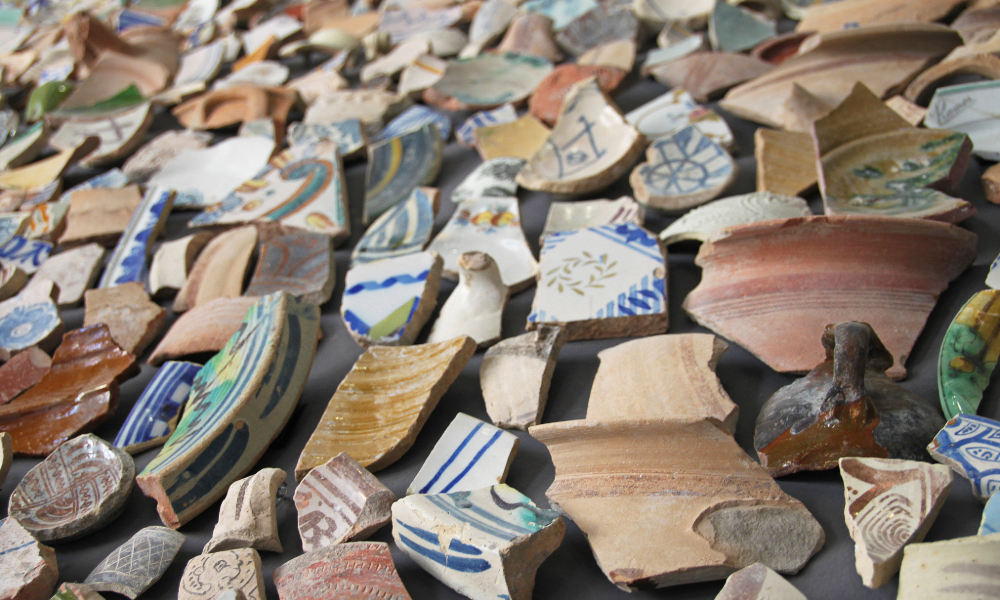
An ostracon is a fragment of pottery (sherds) or a flake of stone, typically limestone, that has been inscribed with writing. In the ancient world, particularly in Egypt and Greece, ostraca served as readily available and inexpensive materials for everyday writing, such as notes, receipts, lists, practice exercises, and even informal or satirical messages. Their abundance at archaeological sites provides invaluable insights into the daily lives, literacy levels, and administrative practices of ancient populations.
Origin of the Word “Ostracon”:
The term “ostracon” (ὄστρακον) comes directly from the ancient Greek word meaning “shell” or “potsherd.” The Greeks used broken pottery fragments extensively as a writing surface due to their availability and low cost.
Examples:
General Use: “The archaeologist carefully brushed the dirt from the inscribed ostracon.”
Historical Context: “Ostraca from ancient Egypt provide a wealth of information about the lives of ordinary people.”
Archaeological Context: “Large quantities of ostraca have been found at sites like Deir el-Medina in Egypt and in the Athenian Agora.”
Literacy Context: “The presence of ostraca with practice alphabets suggests a degree of literacy beyond the elite.”
Political Context: “In ancient Athens, ostraca were used in the process of ostracism, where citizens would write the name of an individual they wished to exile.”
Vocabulary and Language Resources
Related Terms
- Sherd: A fragment of broken pottery.
- Limestone Flake: A small, flat piece of limestone used for writing.
- Inscription: Writing that is carved or scratched onto a surface.
- Ostracism: In ancient Athens, a procedure where citizens could vote to exile an individual for ten years by writing their name on an ostracon.
- Papyrus: A more expensive writing material made from the papyrus plant.
- Vellum: Writing material made from animal skin, more durable and costly than papyrus.
Etymology
From ancient Greek ὄστρακον (óstrakon), meaning “shell,” “potsherd.”
Synonyms
Inscribed sherd, inscribed flake.
Thesaurus
Fragment, piece, shard, writing tablet (informal).

Ostracon Historical & Cultural Context:
The use of ostraca as a writing material was widespread in the ancient Mediterranean world, particularly in Egypt where both pottery sherds and readily available limestone flakes provided ample surfaces. In Greece, broken pottery was the more common medium. Ostraca have been found containing a vast array of texts, from simple lists of goods and personal notes to literary excerpts and even satirical drawings. The sheer volume of ostraca discovered at certain sites, such as the workmen’s village of Deir el-Medina in Egypt, offers unparalleled insights into the daily lives, economic transactions, and social interactions of ordinary people who might not have left traces in more formal records written on papyrus or stone. The Athenian practice of ostracism, where citizens voted on ostraca to exile individuals deemed a threat to democracy, is a particularly well-known example of their political use.
Principles or Key Aspects of the Word Ostracon:
- Inexpensive Material: Utilizing readily available broken pottery or stone.
- Everyday Use: Employed for informal writing and record-keeping.
- Diverse Content: Ranging from simple notes to more complex texts and drawings.
- Abundance at Sites: Found in large quantities, providing a rich source of information.
- Political Significance: Used in specific civic processes like Athenian ostracism.
Ethical Considerations for Ostracon:
- Handling and Conservation: Fragile nature requires careful handling and preservation.
- Interpretation of Informal Texts: Understanding the context and potential biases in everyday writings.
- Provenance: Establishing the find spot to understand the social and historical context.
Relevance to Ancient Worlds
Ostraca are invaluable for understanding:
- Daily Life: Providing glimpses into the routines and concerns of ordinary people.
- Literacy Levels: Indicating the extent to which writing was practiced beyond the elite.
- Economic Activity: Recording transactions, receipts, and lists of goods.
- Administrative Practices: Revealing informal record-keeping and communication.
- Political Processes: Documenting practices like Athenian ostracism.
Art2Fact Society Nuance
For the Art2Fact Society, ostraca offer a tangible connection to the everyday expressions and informal communication of the ancient world. The immediacy and often personal nature of the inscriptions on these humble fragments can inspire contemporary artists to explore unconventional materials and to capture the fleeting moments and personal narratives of their own time. By studying the diverse content and contexts of ancient ostraca, the Society can find parallels in modern forms of informal writing and communication, fostering creative explorations within the “ancient revival project” that bridge the personal and the historical through the power of the written word on unexpected surfaces.