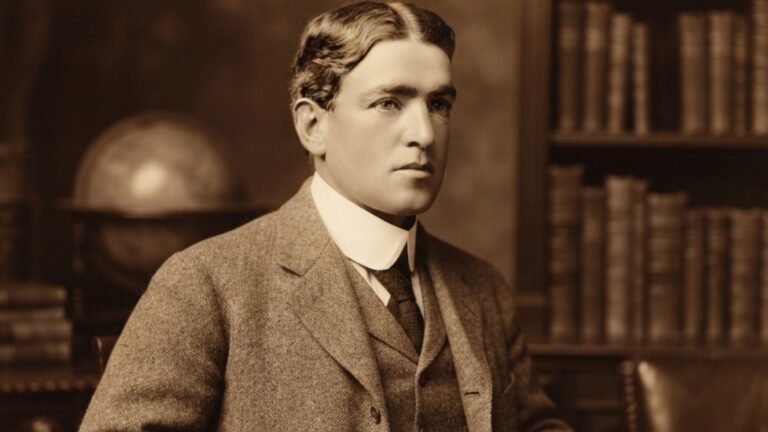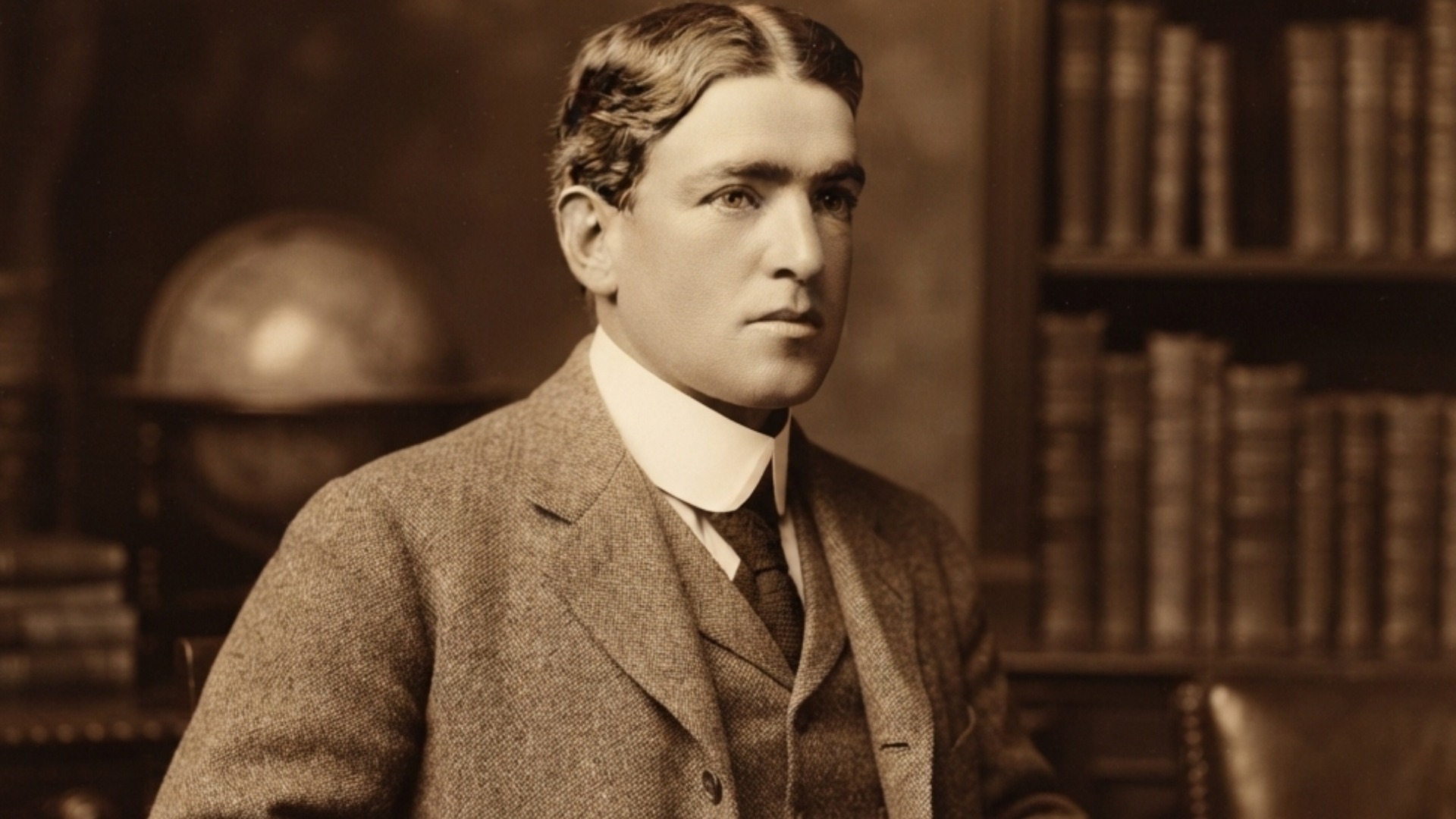
ERNEST SHACKLETON (EDWARDIAN ERA / BRITISH EMPIRE)
C. 1874 – 1922
Table of Contents: Ernest Shackleton

The Discovery Expedition, The Nimrod Expedition, Reaching Farthest South Latitude, The Imperial Trans-Antarctic Expedition, The Destruction of the Endurance, The Open-Boat Voyage of the James Caird, The Final Journey of the Quest.

He preserved the historical memory of his crew by recording their experiences without class prejudice and defended the systemic civil liberties of his men against rigid, outdated military hierarchies that would have abandoned lower-ranking sailors to frozen graves.

| Following his sudden death, his long-term renown underwent intense academic debates regarding the actual scientific utility of his geographically unfulfilled expeditions. However, the dramatic 2022 deep-sea discovery of the Endurance shipwreck ultimately vindicated his historical accounts by revealing the vessel perfectly preserved in the Weddell Sea. |

Sir Ernest Henry Shackleton. Derived from Anglo-Saxon linguistic roots denoting a settlement near a tongue of land, the family name established its prominence within the landed gentry of Yorkshire before transitioning to Ireland. According to the biographical records of Wikipedia, this specific lineage descended from an English Quaker family that established an influential school in Ballitore, placing them firmly within the educated professional elite of the British Empire.

Kilkea House, County Kildare, Ireland (Modern-day County Kildare, Republic of Ireland). This agricultural hinterland sat within the complex geopolitical framework of the nineteenth-century British-Irish union, acting as an economic zone deeply tied to imperial military networks. Consequently, the region served as a dynamic cultural crossroad where ancestral Anglo-Irish identity intersected with the globalized institutional pathways of the maritime empire.

1901 – 1922. This era spanned his mature career from his initial deployment on the National Antarctic Expedition to his final voyage aboard the Quest. Throughout this timeframe, his administrative and operational output restructured the methodologies of polar navigation, transforming physical logistical failures into foundational blueprints for modern crisis management and survival strategy.

The Royal Geographical Society, the Merchant Navy, and the Royal Naval Reserve. These institutions integrated him directly into London’s prominent imperial centers, where global exploration served as an instrument of state prestige. Despite facing institutional pushback from traditional naval elites, his operational survival methods ultimately reshaped the strategic priorities of these elite geographical networks.

Master Mariner and Imperial Explorer. Historically, the British Board of Trade bestowed his master mariner status following rigorous examinations in systematic navigation, while King Edward VII later institutionalized his societal title through knighthood. This dual recognition honored a groundbreaking shift away from haphazard romantic exploration toward a structured, empirical methodology prioritizing human preservation over empty geographic conquest.

Shackleton pioneered systematic group survival methodologies that fundamentally revolutionized how human expeditions navigate high-stakes, isolated global environments. His meticulously logged empirical observations regarding pack ice dynamics and psychological group cohesion established the baseline for modern institutional leadership studies worldwide.
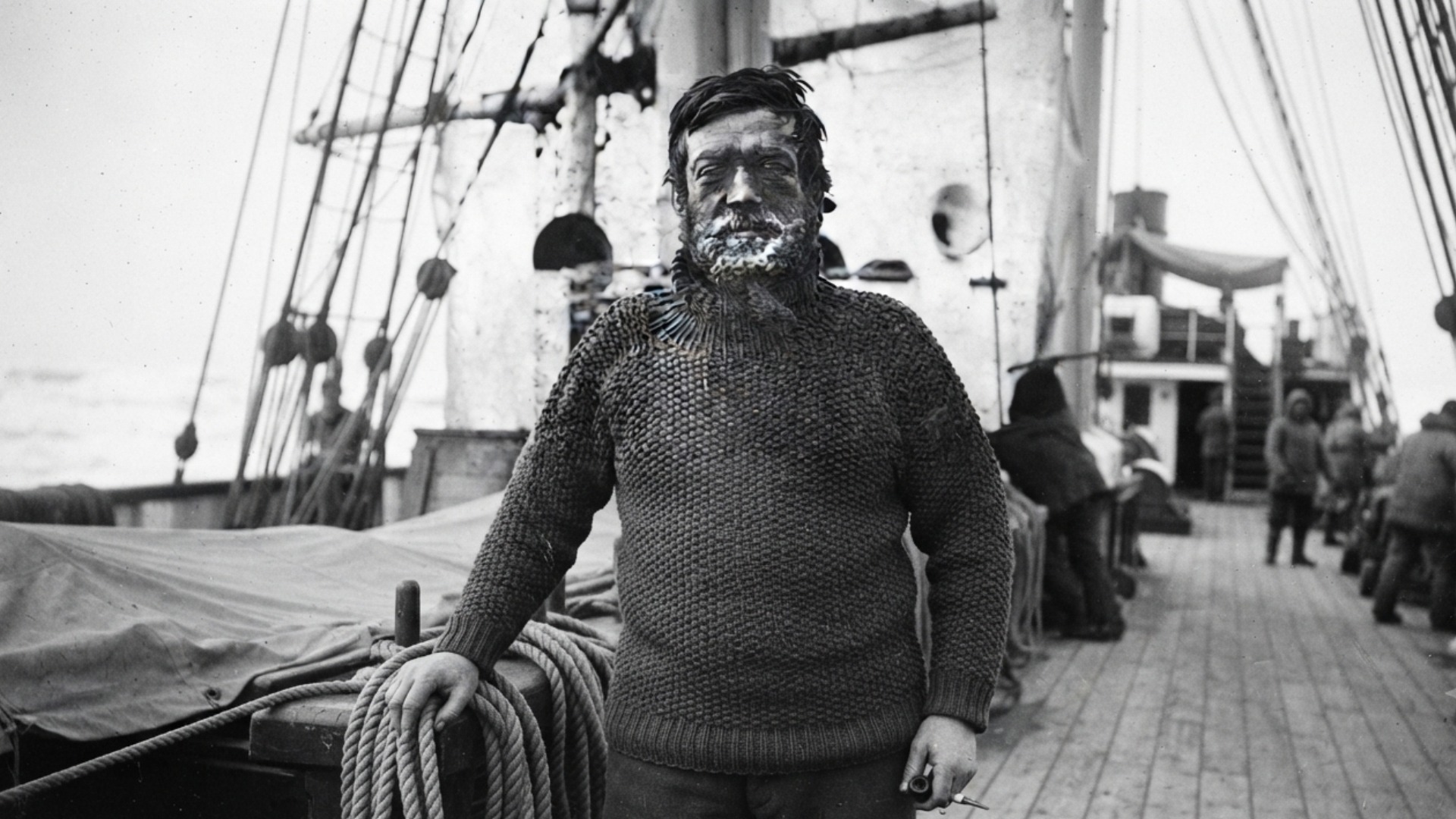
“By endurance we conquer.”
– Ernest Shackleton
Overview: Ernest Shackleton
Ernest Shackleton remains immortalized as the quintessential leader of the Heroic Age of Antarctic Exploration, primarily recognized for his unparalleled capacity to sustain human life under lethal conditions. He was the first to implement a collective survival ethos that transcended the rigid naval hierarchies of his era, turning a shipwreck into a masterclass of psychological fortitude. His expeditions, most notably the 1914–1917 Endurance voyage, moved beyond simple territorial mapping. He prioritized the preservation of his men over the geopolitical prestige of reaching the geographic South Pole, thereby setting a radical new precedent for expedition management that remains studied in business schools worldwide today.
His life work fundamentally transformed how humanity conceptualizes leadership during systemic collapse. Through direct personal observation and a constant cross-examination of his crew’s mental and physical health, he demonstrated that institutional success depends entirely on the stability of the individual human unit. Shackleton eschewed the Victorian notion of the heroic, solitary explorer, replacing it with a democratic model of survival. By meticulously documenting every failure and triumph, he provided a blueprint for critical inquiry that forces us to reconcile imperial ambition with the undeniable realities of the natural world, forever altering the standards for scientific and exploratory ventures. He proved that true leadership is defined not by the achievement of external goals, but by the ability to maintain hope, agency, and sanity within the most impossible, unforgiving circumstances imaginable. His legacy functions as a vital, enduring testament to the power of human spirit against the sheer, indifferent force of nature, confirming his status as the most sophisticated architect of team survival in history.
Did you know? Ernest Shackleton

A monumental bronze statue executed by the renowned sculptor Charles Sargeant Jagger stands prominently displayed on the external facade of the Royal Geographical Society headquarters in South Kensington, London. This classical monument captures the explorer in full polar gear, gazing outward to symbolize his perpetual defiance of the global elements.

A persistent historical misconception suggested that Shackleton failed as a systematic navigator because his expeditions routinely fell short of their ultimate geographic destinations. However, modern historical research using modern satellite analysis confirms his early retreat decisions were mathematically flawless calculations that prevented absolute starvation, thereby vindicating his analytical methodology over emotional pride.

| To secure essential financial backing for his expensive polar voyages, Shackleton effectively functioned as a high-impact traveling performance artist by delivering hundreds of dramatic, highly technical public lectures accompanied by magic lantern slides across the globe. |
Timeline of Ernest Shackleton
The early life of Ernest Shackleton unfolded within a changing global landscape marked by the industrial expansion of the late Victorian era. Born into an educated Anglo-Irish household, his formative years were shaped by his father’s medical practice and a subsequent family relocation to the bustling imperial capital of London. Rather than following the traditional academic paths laid out by the elite school systems of Dulwich College, he demonstrated an insatiable desire for practical global adventure, choosing to enlist in the merchant marine at the tender age of sixteen.
This early immersion in the grueling, highly structured world of commercial sailing ships provided him with a foundational education in practical seamanship, international logistics, and human psychology. He quickly rose through the professional ranks, mastering the complex mathematical arts of celestial navigation and maritime law across the world’s oceans. By the time he reached adulthood, he had successfully secured his credentials as a certified master mariner, a status that positioned him uniquely to enter the emerging, high-stakes arena of state-sponsored polar exploration.
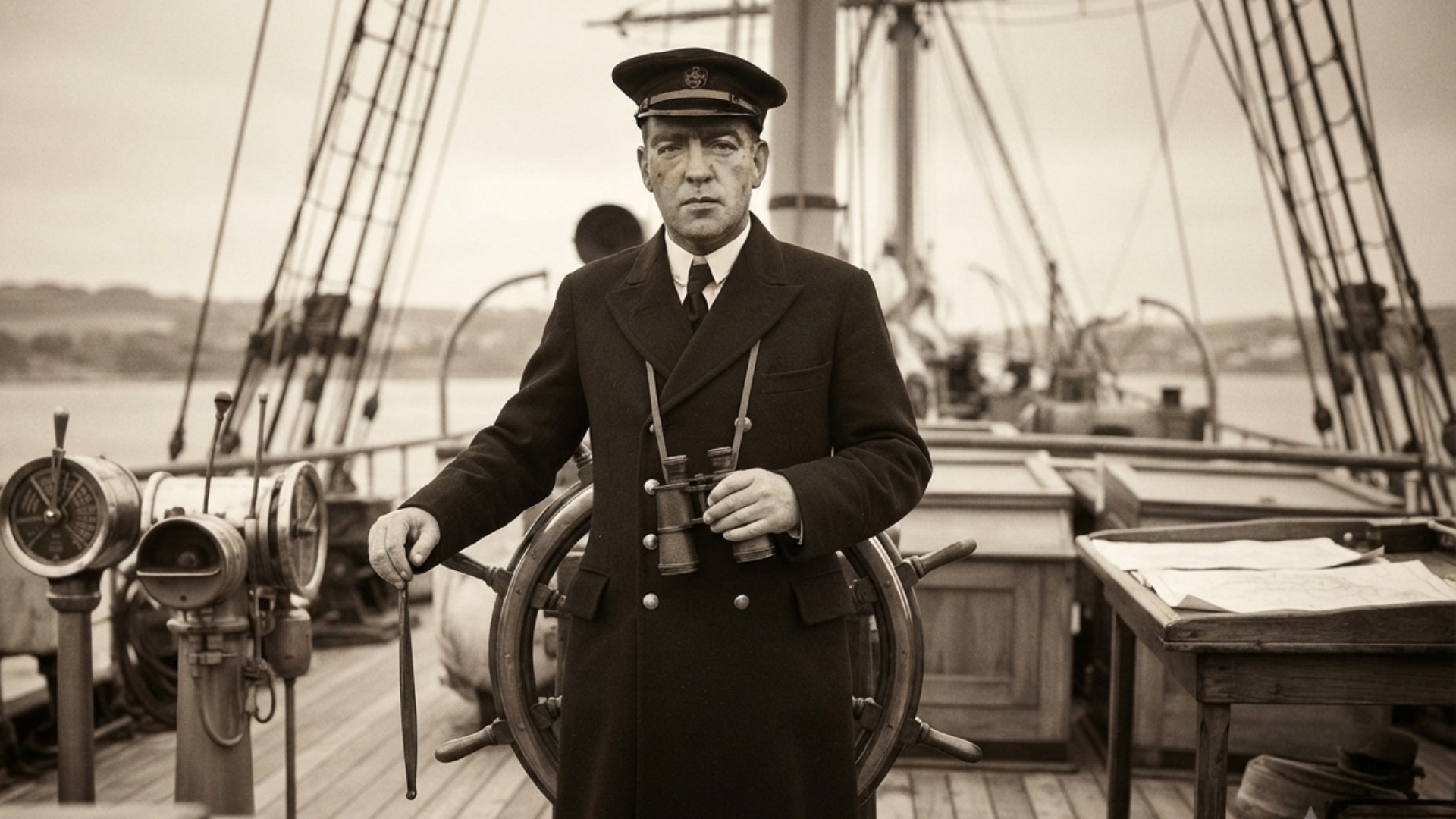
His entire lifetime became an exhausting balancing act between the stark, frozen realities of the Antarctic continent and the volatile financial markets of Edwardian London. After establishing his physical resilience during Captain Robert Falcon Scott’s pioneering Discovery Expedition, Shackleton spent his remaining years organizing independent voyages that pushed the boundaries of human endurance. His public life was characterized by relentless fundraising campaigns, complex corporate negotiations, and constant engagements with geographic societies to secure expensive operational assets.
Despite facing repeated financial failures, physical exhaustion, and intense institutional rivalries, his unwavering commitment to his men never faltered. His final voyage aboard the Quest symbolized this unyielding drive, ending dramatically with his fatal heart attack in the sub-Antarctic waters of South Georgia. He left behind a rich historical legacy that completely discarded traditional Victorian ideals of tragic martyrdom, replacing them with a modern, practical philosophy of collaborative survival that continues to inspire global institutions today.
Timeline Chronology
| YEAR | EVENT | DESCRIPTION |
|---|---|---|
| 1874 | Birth in Kildare | Born into an Anglo-Irish family, initializing his life within the complex social hierarchies of late-nineteenth-century Ireland. |
| 1884 | Relocation to London | His family moves to the imperial capital, exposing him to global commerce and diverse maritime influences. |
| 1890 | Enlistment in Merchant Navy | Rejects traditional university education to join the commercial fleet, gaining essential operational experience at sea. |
| 1898 | Master Mariner Certification | Achieves the elite maritime rank, validating his advanced technical skills in global navigation and leadership. |
| 1901 | The Discovery Expedition | Joins Captain Robert Falcon Scott’s historic voyage, marking his official entry into systemic polar research. |
| 1903 | Involuntary Medical Evacuation | Sent home early due to severe respiratory illness, fueling his personal desire to lead an independent voyage. |
| 1907 | Launching the Nimrod Voyage | Organizes his first independent expedition, utilizing innovative logistical methods to tackle the Antarctic interior. |
| 1909 | Farthest South Record | Reaches within ninety-seven miles of the South Pole before executing a calculated retreat to preserve his crew. |
| 1909 | Conferral of Knighthood | King Edward VII invests him as a knight, cementing his status within the imperial scientific establishment. |
| 1910 | Global Lecture Campaign | Embarks on extensive international tours, presenting empirical geographical data to secure future expeditionary funds. |
| 1912 | Titanic Inquiry Expert Testimony | Utilizes his deep maritime knowledge to advise British authorities on ice safety and lifeboat regulations. |
| 1914 | The Endurance Departure | Leads the Imperial Trans-Antarctic Expedition, aiming to achieve the first complete land crossing of Antarctica. |
| 1915 | The Endurance Trapped | Heavy pack ice permanently traps his vessel in the Weddell Sea, shifting the mission to survival. |
| 1915 | Destruction of the Vessel | The extreme pressure of the ice crushes the ship, forcing his crew onto unstable ice floes. |
| 1916 | The Elephant Island Escape | Navigates salvaged wooden lifeboats across treacherous freezing seas to reach a remote, uninhabited island sanctuary. |
| 1916 | Voyage of the James Caird | Executes an epic eight-hundred-mile open-boat journey across the violent ocean to secure emergency rescue. |
| 1916 | South Georgia Alpine Crossing | Completes a grueling, sleepless trek across uncharted mountain peaks to reach a functional whaling station. |
| 1917 | Absolute Rescue Achieved | Successfully extracts every single crew member from Elephant Island without a single loss of human life. |
| 1918 | First World War Service | Deployed to northern Russia to advise British military forces on specialized cold-weather logistics and operations. |
| 1921 | The Quest Expedition | Departs on his final scientific voyage, aiming to circumnavigate the sub-Antarctic islands using advanced technology. |
Legacy of Ernest Shackleton
The long-term impact of Ernest Shackleton altered the course of human institutional knowledge by reframing failure as a powerful engine for methodological innovation. His historical accounts dismantled the rigid Victorian paradigm of the tragic hero, proving instead that flexible leadership and absolute group loyalty possess far greater institutional value than blind geographic conquest. Throughout the late twentieth and early twenty-first centuries, his specific survival strategies migrated out of traditional maritime archives. They became foundational components within global business schools, military academies, and space exploration programs. By demonstrating how human systems can remain perfectly functional during absolute isolation, his operational philosophy permanently reshaped how modern organizations train leaders to manage unpredictable, systemic global crises today.
Accomplishments:
| Psychological Cohesion Paradigm | Mandated egalitarian operational routines during the Endurance ice drift, forcing scientific specialists like geologist James Wordie to execute basic tasks alongside deckhands, preventing tribalism and structural hierarchy collapse under extreme isolation. |
| Calculated Retreat Methodology | Aborted the 1909 Nimrod southern march at 88°23′S, calculating that the remaining ninety-seven miles would cause absolute starvation, discarding Victorian self-sacrifice narratives for modern, data-driven operational management metrics. |
| Open-Ocean Small-Boat Navigation | Engineered the eight-hundred-mile transit of the twenty-two-foot James Caird across the Drake Passage using Captain Frank Worsley’s highly constrained, three-shot sextant readings under near-total cloud cover to target South Georgia Island. |
| Sub-Antarctic Alpine Mapping | Executed the first overland transit of the glaciated South Georgia interior alongside Tom Crean and Worsley, conquering the steep, uncharted cols of the Trident Ridge and sliding down into the Crean Glacier using basic hemp ropes according to the UK Antarctic Place-names Committee. |
| Dietary Scurvy Mitigation | Instituted an empirical dietary regime during the wintering on the Weddell Sea pack ice that mandated the consumption of fresh, undercooked seal meat and penguin livers, preventing nutritional degradation long before vitamin C biochemistry was formally codified. |
| Maritime Crisis Management | Devised a dynamic three-stage evacuation framework following the loss of the Endurance, partitioning resources across the salvaged lifeboats (James Caird, Dudley Docker, and Stancomb Wills) to execute the hazardous open-water escape to Elephant Island. |
| Visual Historical Documentation | Subsidized and integrated Frank Hurley’s heavy pagoda-camera glass plate photography into daily routines, leveraging visual preservation as both a psychological anchor for the marooned crew and an absolute empirical archive for future geographic validation. |
| Cold-Weather Military Logistics | Formulated specialized sub-zero survival and equipment protocols for the British North Russia Intervention force at Murmansk in 1918, transferring polar maritime sledge-loading and thermal clothing systems directly into modern military planning. |
| Democratic Resource Allocation | Implemented a blind lottery system using basic playing cards and numbered tokens to distribute elite gear, such as high-grade Jaeger wool sleeping bags, ensuring absolute parity in physiological protection across all ranks. |
| Ecosystem Data Collection | Maintained unbroken oceanographic, barometric, and meteorological logs during the ten-month drift of the Endurance, producing a baseline dataset that modern climatologists utilize to measure historical sea-ice trends in the Weddell Sea. |
| Expert Risk Consultation | Provided authoritative testimony during the 1912 British Wreck Commissioner’s Inquiry regarding the Titanic, where he argued that standard North Atlantic speed parameters were fundamentally flawed and that ships must proactively slow down when approaching reported ice fields. |
| Corporate Sponsoring Architecture | Reconstructed expedition financing by selling advance media publication rights, commercial product endorsements, and school-district lecture subscriptions, establishing the economic template for large-scale, privately funded scientific research. |
| Sub-Zero Animal Sledging | Evaluated and adapted Siberian ponies and early motorized Arrol-Johnston sledges during the Nimrod voyage, documenting mechanical and biological failure points that directly informed later sub-zero freight methodologies. |
| Egalitarian Salvage Architecture | Supervised the strict purging of non-essential personal property prior to walking the ice floes, enforcing a two-pound weight limit per person while forcing the preservation of Leonard Hussey’s banjo to sustain collective psychological resilience. |
| Multi-Tiered International Rescue | Organized four successive international relief voyages using vessels from diverse nations, ultimately deploying the Chilean navy tug Yelcho under Pilot Luis Pardo to penetrate the heavy winter pack ice surrounding Elephant Island. |
References and Citations
- Alexander, C. (1998). The Endurance: Shackleton’s Legendary Antarctic Expedition. Alfred A. Knopf. worldcat.org
- Huntford, R. (1985). Shackleton. Hodder & Stoughton. worldcat.org
- Mill, H. R. (1923). The Life of Sir Ernest Shackleton. William Heinemann. nature.com
- Shackleton, E. H. (1911). The Heart of the Antarctic: Being the Story of the British Antarctic Expedition 1907-1909. William Heinemann. archive.org
- Shackleton, E. H. (1919). South: The Story of Shackleton’s Last Expedition 1914-1917. Macmillan. archive.org
- Smith, M. (2014). Shackleton: By Endurance We Conquer. Oneworld Publications. worldcat.org
“DIFFICULTIES ARE JUST THINGS TO BE OVERCOME, AFTER ALL”
– Ernest Shackleton