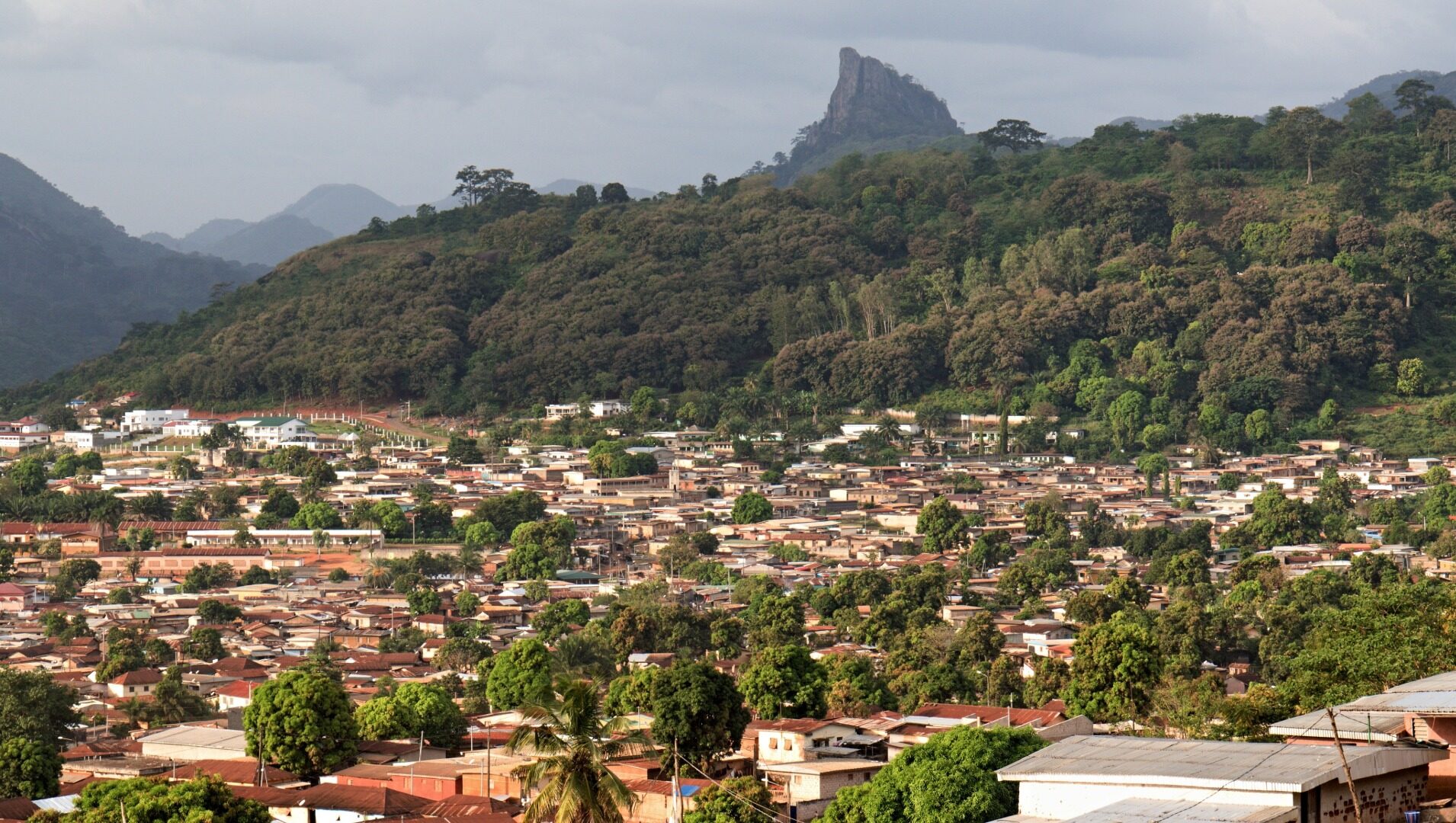
Table of Contents: Ivory Coast
- Overview: Ivory Coast
- Landscapes and Geography
- Geography Examples
- Culture and People
- Culture Examples
- Economy and Industry
- Economic Examples
- Nature and Conservation
- Nature Examples
- Material Culture & Infrastructure of Ivory Coast
- Quick Facts
- Civilizations of Ivory Coast
- Civilizations and Societies
- Civilization Examples
- Landmarks and Archeological Sites
- Landmarks Examples
- Artifacts & Tools
- Artifact Examples
- Traditions & Religion
- Tradition Examples
- Philosophical Systems & Social Rhythms in Ivory Coast
- Quick Facts
- Timeline of Ivory Coast
- Timeline of Ivory Coast
- Timeline of Ivory Coast (Cont.)
- Sources & Credits for Ivory Coast
Akan chiefdoms, Gyaaman empire, Kong trading networks, Baoulé tribal groups, and colonial French administrative districts and provinces.

The Ivory Coast’s diverse heritage includes the prominent Akan, Mande, Kru, Gur, Baoulé, and Bété cultural groups

Atlantic lagoon southern coastlines, tropical rainforest interior zones, central savanna plateaus, and northern mountainous border forest ridges.
Abidjan economic powerhouse, Yamoussoukro political capital, Grand-Bassam coastal heritage port, Bouaké trade hub, and Man mountain city.

Terracotta funerary statuary figures, bronze gold weighing devices, hand-woven Kente cloth, carved ceremonial masks, and traditional clay vessels.

French language administration, Dioula trade communication, Baoulé tribal dialect, Bété linguistic groups, and diverse regional Niger-Congo ethnic tongues.

Indigenous ancestral spiritual faiths, Islamic mosque communities, Catholic mission parishes, Protestant congregations, and syncretic movements for national unity.

Felix Houphouët-Boigny political founder, Samori Touré resistance leader, contemporary Ivorian icons, regional innovators, and traditional tribal council chiefs.

Our Lady of Peace Basilica, Grand-Bassam historic district, Comoé biosphere reserve, Taï rainforest park, and northern Sudanese mosques.
Overview: Ivory Coast
The Ivory Coast acts as a vital, pulsating heart of West African cultural exchange, serving as a geographic and historical crossroads where deep, ancestral Sudano-Sahelian legacies fluidly blend with the rapid, ambitious modernization efforts of a contemporary sovereign state. By masterfully balancing the raw, expansive beauty of its southern coastal lagoon systems with the dense, mysterious mystery of its vast inland rainforests, the nation cultivates a distinct geopolitical significance as a regional leader in both international trade and diplomatic cooperation.
Consequently, the country strategically utilizes its diverse, multi-faceted ethnic foundation to drive internal political stability and actively promote robust pan-African collaboration across numerous industrial and social sectors. This proactive, visionary approach ensures the Ivorian state remains highly competitive on the global stage while simultaneously nurturing a deeply rooted sense of national pride that honors its complex, pre-colonial origins and secures a prosperous, sovereign future for every citizen within its borders.
Geography
Landscapes and Geography
Ivorian topography exhibits a diverse, undulating progression from the moist, low-lying Atlantic coastal lagoons to the elevated, weathered northern savanna plains that stretch toward the horizon. This significant geographical variety inherently supports wide-ranging human activity, as the thick, impenetrable tropical rainforests found in the southwest contrast sharply with the drier, seasonal grasslands that define the northern Sahelian transition zones.
Furthermore, these distinct, climate-driven geological environments provide the essential, raw materials necessary for the nation’s primary industrial and artisanal pursuits. The abundance of highly arable land and strategic, life-giving riverine networks, such as the sprawling Bandama and Sassandra rivers, facilitates massive agricultural output while simultaneously shaping the historical settlement patterns of the diverse, resilient populations that have inhabited these rich, fertile territories since the earliest days of human antiquity.
Geography Examples
- Atlantic Ocean coastal lagoon systems
- Taï National Park primary rainforests
- Bandama River central savanna basin
- Comoé River northern drainage plains
- Mount Nimba high altitude peaks
- Cavally River border vegetation zones
- Sassandra tropical river delta outlets
- Banco National Park urban forests
- Azagny National Park wetland areas
- Marahoué wildlife savanna plateau districts
Culture
Culture and People
Ivorian social structure relies heavily upon the dedicated, systematic preservation of ethnic heritage, where local community members emphasize the daily transmission of sacred ancestral knowledge through elaborate, dramatic storytelling and vibrant seasonal ceremonies. Because the national population integrates such diverse, rich linguistic groups like the Baoulé, the Senoufo, and the Dioula, the resulting, woven cultural fabric fosters a unique, inclusive atmosphere that actively celebrates varied historical experiences and shared human wisdom.
Moreover, this profound cultural resilience manifests clearly in the daily lives of everyday citizens through highly rhythmic, symbolic masquerade dances and skilled artistic output that effectively connects the ancient past with contemporary reality. Residents actively, passionately engage in complex, communal decision-making processes, ensuring that traditional values regarding sustainable land stewardship, family honor, and collective prosperity guide the evolution of their modern, rapidly urbanizing society toward a brighter, more cohesive future.
Culture Examples
- Matrilineal kinship systems defining inheritance and property rights among the Akan-speaking ethnic communities.
- Initiation school pedagogies transmitting medicinal, historical, and spiritual knowledge to younger generations through rigorous social testing.
- Oral historian practices where specialized narrators maintain the verified genealogical records of tribal chiefs and village founders.
- Elaborate funerary rites ensuring the safe passage of spirits to the ancestral realm through communal mourning gatherings.
- Traditional judicial councils resolving interpersonal and land disputes based on established regional customary legal precedents and norms.
- Communal labor agreements requiring local residents to maintain shared infrastructure, such as paths, wells, and meeting structures.
- Ancestral spirit veneration ceremonies seeking guidance for agricultural cycles, birth events, and major tribal or political transitions.
- Intricate beadwork, textile pattern codes, and scarification marks signaling specific social status, age group, and regional origin.
- Traditional music ensembles using complex percussion and polyphonic vocal techniques to mark seasonal transitions and tribal gatherings.
- Village-based cooperative social clubs functioning as mutual aid societies for members facing financial or personal hardship challenges.
Economy
Economy and Industry
The Ivorian economy operates as a remarkably robust, high-performance engine of West African growth, driven primarily by the massive, consistent export of high-quality cocoa beans and diverse, processed agricultural products. By investing heavily in modern, state-of-the-art maritime port infrastructure and specialized, large-scale agro-industrial processing plants, the state captures significant financial value within the highly competitive, international commodity supply chains that connect the region to global markets.
Additionally, the nation consciously prioritizes industrial diversification by fostering rapid growth in the burgeoning manufacturing and telecommunications sectors to support its expanding, young urban workforce. This strategic focus on technological integration and efficient, data-driven resource management strengthens the domestic market, providing the necessary stability to attract long-term foreign investments while simultaneously enhancing the standard of living for populations residing in both rural plantation areas and central commercial hubs.
Economic Examples
- Global cocoa bean export shipments
- Coffee plantation processing refinery units
- Palm oil industrial production facilities
- Deep water maritime port terminals
- Textile garment manufacturing factory zones
- Rubber production and extraction factories
- Solar energy power grid installations
- Sustainable timber export harvest yards
- Digital communication infrastructure network hubs
- Regional railway transport connection systems
Nature
Nature and Conservation
Conservation efforts in Ivory Coast prioritize the active, large-scale restoration of degraded rainforest ecosystems and the permanent protection of critical biodiversity hotspots. Governmental agencies collaborate closely with international environmental partners to enforce rigorous, strict regulations against illegal logging, ensuring that the country’s unique, irreplaceable flora and fauna thrive within significantly expanded, protected national park boundaries that serve as vital lungs for the region.
Furthermore, the state aggressively promotes sustainable agricultural practices that encourage forest-friendly crop cultivation, effectively balancing essential human economic needs with the imperative of global climate change mitigation. By successfully integrating ecotourism into its broader, long-term national development agenda, the nation secures consistent funding for detailed ecological monitoring, demonstrating that environmental stewardship serves as a fundamental, non-negotiable requirement for the lasting, future prosperity of its diverse, natural landscape.
Nature Examples
- Taï primary rainforest biosphere zone
- Comoé National Park wildlife habitat
- Azagny wetland biodiversity sanctuary area
- Banco forest urban canopy protection
- Marine sanctuary reef conservation sites
- Endangered primate nesting territory zones
- Coastal dune vegetation habitat plots
- Sustainable reforestation nursery tree projects
- Wetland lagoon avian sanctuary basins
- Mountainous border region ecosystem corridors
Senoufo rhythm pounders represent monumental wooden sculptures utilized in initiation rituals connecting physical life with the ancestral spirit realm.
The Yamoussoukro Basilica holds records as the worlds largest church structure, architecturally inspired by St. Peters in Rome.
Ivory Coast maintains global leadership in cocoa production, serving as a critical pillar for economic prosperity and national development.
Material Culture & Infrastructure of Ivory Coast
Ivorian infrastructure reflects a highly sophisticated, multi-layered synthesis of traditional, climate-responsive design and modern structural engineering, especially in its prominent, iconic civic buildings. Because the territory frequently experiences intense tropical heat, engineers consistently incorporate complex, passive cooling techniques, such as shaded inner courtyards and elevated roofing designs, to maintain internal comfort while minimizing reliance on energy-intensive mechanical cooling systems.

Moreover, the seamless integration of raw, indigenous materials like sun-dried brick and local hardwood into contemporary construction projects reinforces a distinct national architectural identity that honors the deep past. This approach creates a durable, functional built environment that remains remarkably resilient against harsh environmental stressors, ensuring that historical, culturally significant structures coexist effectively with new, large-scale commercial and political developments across the entire nation.
Quick Facts
| Buildings & Archeology | Sudanese mosques represent the pinnacle of ancient load-bearing mud masonry construction for large communal religious sites. |
| Art and Architecture | Modernist civic buildings demonstrate the fusion of concrete structural strength and artistic regional cultural design motifs. |
| Natural Resources | Rainforest hardwood timber supplies the essential premium material used for sculpting monumental decorative and functional objects. |
| Trade Routes | Sudanic caravan paths established vital commercial corridors for importing exotic luxury goods into northern inland cities. |
| Urban Engineering | Abidjan bridge systems utilize massive structural spans to connect densely populated lagoon quarters and business districts. |
| Agriculture & Flora | Cocoa plantation terrace layouts optimize tropical terrain for crop cultivation while effectively preventing catastrophic soil erosion. |
| Pottery & Ceramics | Terracotta funerary vessels showcase the vibrant colors and detailed artistic narratives of Ivorian burial craft history. |
| Metallurgy | Bronze casting foundry techniques enabled the creation of monumental ceremonial figures through the skilled heat management. |
| Glassmaking | Coastal sand refinement processes allow for the production of glass objects through sophisticated control of minerals. |
| Military and Warfare | Colonial fort bastion designs incorporated innovative stone walls to resist the destructive power of modern artillery. |
| Textile Arts | Kente silk weaving loom technology supports the rapid growth of luxury garment production during annual festivals. |
| Numismatics | CFA franc currency standardizes international trade and establishes the financial credibility of the powerful Ivorian republic. |
| Maritime & Riverine | Sassandra naval wharf zones utilize modular prefabrication techniques to assemble massive transport fleets with unprecedented structural speed. |
Civilizations of Ivory Coast
The Ivory Coast features a remarkably deep, complex, and layered history of human development, emerging from the prehistoric Stone Age settlements that first utilized the fertile river valleys for early, experimental agricultural endeavors. These foundational, primitive societies successfully established the crucial, enduring patterns of communal human interaction, strategic resource sharing, and seasonal migration that would eventually define the sociocultural landscape of the region for many thousands of years.
Civilizations
Civilizations and Societies
Building upon these early foundations, the subsequent, dramatic rise of the Gyaaman and Kong Empires signaled a significant shift toward highly organized, centralized state governance and bureaucratic management. These powerful, expansive empires implemented sophisticated administrative protocols, established vast, interconnected networks for both trans-Saharan and maritime trade, and fostered a golden period of intense artistic, scientific, and theological intellectual inquiry that radiated outward across the broader West African savanna-forest intersection.
Finally, the later, transformative periods of ethnic federation and intense colonial encounters further refined the national character, effectively merging traditional, indigenous power bases with modern democratic institutional frameworks and legal systems. This complex, historical succession highlights the status of the Ivory Coast as a dynamic, persistent crucible of human innovation, where ancient tribal wisdom and modern governmental governance constantly interact to shape a resilient, unified society capable of navigating the multifaceted global challenges of the present era.
Civilization Examples
- Ehotilé indigenous coastal village clans
- Gyaaman empire centralized regional governance
- Kong empire Islamic scholarly centers
- Baoulé forest migration tribal groups
- Akan gold-trading chiefdom power bases
- Senoufo northern agrarian society units
- Dan mountain border highland communities
- French colonial administrative district zones
- Post-independence republic democratic states
- Modern urbanized regional cultural hubs
Landmarks
Landmarks and Archeological Sites
The Basilica of Our Lady of Peace in Yamoussoukro stands as the most evocative structural landmark in the country, showcasing an unparalleled, breathtaking synthesis of modern engineering and monumental religious ambition. The edifice serves as a permanent, central beacon for national unity, drawing thousands of devout visitors who admire its sprawling, polished marble corridors, its soaring, vaulted dome, and its precise, harmonious integration into the lush, central Ivorian savanna landscape.
In parallel, the Grand-Bassam historic district offers a crucial, tangible record of the colonial era, painstakingly preserved through active, ongoing international conservation efforts. As a former, thriving maritime capital, the district contains numerous well-maintained colonial villas, grand administrative buildings, and vibrant local shops that allow modern observers to study the functional urban planning, architectural aesthetics, and daily life of a significant, historical port city that once linked the interior to the wider world.
Landmarks Examples
- Basilica of Our Lady of Peace dome structure
- Grand-Bassam colonial district ruins site
- Comoé National Park ancient forest landmark
- Taï primary rainforest ecological monument
- Ahouakro megalith stone formation park
- Kong Grand Mosque mud architecture site
- Abidjan St Paul cathedral monument
- Yamoussoukro presidential palace edifice
- Sassandra colonial governor palace ruins
- Man city eighteen mountains landmark
Artifacts
Artifacts & Tools
The Senoufo wood carvings are particularly renowned throughout the world for their exquisite, meticulous technical precision and their profound, critical role in ritualistic life, embodying the intersection of aesthetic beauty and deep spiritual purpose. Master artisans utilize their deep, hereditary knowledge of timber properties to craft elaborate masks, sacred rhythm pounders, and anthropomorphic figures that accurately reflect the complex social hierarchy and metaphysical beliefs characteristic of their specific, highly organized indigenous communities.
Complementing these wooden creations, the intricate, tiny Akan gold weights represent a high point in ancient metallurgy, specifically designed to manage commercial exchanges with absolute, mathematical accuracy and reliability. These artifacts, often shaped as geometric polygons, miniature animals, or symbolic proverbs, serve as a direct, fascinating window into the advanced mercantile intelligence and the high-level casting craftsmanship achieved by the pre-colonial elites who governed the territory with such precision and authority.
Artifact Examples
- Senoufo panther-man initiation dance masks
- Akan bronze trade gold weight sets
- Terracotta funerary ancestral figure statues
- Hand-woven Kente ceremonial silk garments
- Carved wooden Boloy dance rhythm pounders
- Zaouli masked performance costume sets
- Traditional clay cooking and storage vessels
- Ornamental iron jewelry and copper adornments
- Ancestral spirit communication divination shells
- Carved wooden balafon musical instrument frames
Traditions
Traditions & Religion
Community life in Ivory Coast centers on the active, consistent, and joyous performance of traditional rituals, such as the grand Abissa festival where public social reconciliation and ancestral gratitude take constant precedence. These seasonal, grand gatherings serve as the primary glue for local community unity, fostering an environment where traditional music, collective dance, and the sharing of complex culinary dishes reinforce the deep, historical bonds between individual families and their shared cultural identity.
Transitioning from these celebratory observances, the essential agricultural harvest rites highlight the sacred, existential connection between the population and the productive, generous forest land. By actively honoring the soil through public sacrifice and rhythmic praise, the communities ensure that traditional, sustainable knowledge regarding planting and land management persists across every single generation, providing the essential, moral, and practical framework that stabilizes the national spirit and ensures collective, long-term survival.
Tradition Examples
- N’zima Abissa carnival renewal festival
- Baoulé Goli masked sun processions
- Senufo Boloy panther dance rites
- Dan stilt walker community festivals
- Akan gold harvest thanksgiving rituals
- Guro Zaouli folklore dance events
- Traditional harvest grain abundance fairs
- Ancestral spirit invocation drumming ceremonies
- Seasonal mountain village bonfire rites
- Indigenous community wedding dance celebrations

Philosophical Systems & Social Rhythms in Ivory Coast
The Ivorian philosophical framework prioritizes the careful, deliberate maintenance of profound social harmony, where daily life is paced to ensure that collective communal welfare remains superior to the relentless speed of individual production. Citizens consistently dedicate significant time for shared, public dialogue, recognizing that the long-term strength of their society rests entirely upon the stability of personal relationships and the deep, abiding respect accorded to the elders who hold the hidden secrets of ancestral tradition.

Quick Facts
| Spirits & Deities | Nyamie supreme deities represent the foundational forces of nature and public authority within Ivorian society. |
| Mythology | Ancestral migration narratives provide the essential grounding historical myth of the origin of Ivorian civilization. |
| Traditions | Sunday communal family meals serve as the vital periodic anchor for maintaining social cohesion and heritage. |
| Science and Philosophy | Indigenous philosophical inquiry prioritizes the study of natural signs to improve the individual human condition. |
| Literature | Oral epic traditions express the complex moral and theological struggles of the historical human soul. |
| Music & Instruments | Balafon percussion mastery defines the pinnacle of musical expression during festive and esoteric ritual eras. |
| Medicine & Herbology | Traditional herbalist research pioneers the empirical study of natural plant remedies for human internal wellness. |
| Ancient Games | Awalé strategy board games demonstrate the power of the intellect over opponents in public competition. |
| Achievements | Architectural structural breakthroughs allow the construction of massive mud mosques in savanna city centers globally. |
| Astronomy | Celestial navigation research fundamentally challenges the established human understanding of our place in space today. |
| Jewelry & Adornment | Akan gold granulation techniques showcase the incredible ancient sophistication in crafting delicate high-value personal objects. |
| Social Structure | Age-grade cooperative groups organize the economy and protect the interests of local village and town. |
| Cuisine Roots | Tropical plant production remains the essential healthy dietary foundation connecting ancient and modern daily life. |
| Ancient Fauna | Forest elephant wildlife symbolizes the wild, rugged, and untamed nature of the Ivorian mountain regions. |
| Diplomacy | Empire ambassador exchanges established the foundational protocols for modern international diplomacy and strategic regional communication. |
| Nomadic Equipment | Caravan leather sandal footwear provides the necessary durability and comfort for long-distance desert march marches. |
Did you know? Ivory Coast
- Ivory Coast hosts the worlds largest church edifice, an architectural marvel that demonstrates how massive contemporary scale can be blended with traditional African design to support universal Health and wellness.
- The nation maintains an exceptional commitment to public Health and wellness, supported by a diet of fresh produce, active community movement, and a deep, historical cultural emphasis on shared, social meals.

Timeline of Ivory Coast
The history of Ivory Coast stems from the deepest, most foundational records of human existence, where early Neolithic populations first cultivated the fertile, tropical river basins during the fourth millennium BCE. These ancient, incredibly resourceful ancestors developed sophisticated agricultural systems and early, innovative metallurgy, successfully setting the necessary, permanent stage for the emergence of complex, centralized kingdoms that would eventually dominate the primary, regional trade networks for many subsequent centuries.

Transitioning toward the new, dynamic trajectories of the modern era, the nation experienced the significant impact of early colonial interaction, the vibrant, intellectual movement for democratic independence, and the steady, twenty-first-century consolidation of its sovereign, republican institutions. This historical evolution underscores a consistent, deep-seated trend of regional resilience, as the territory moved from fragmented, ancient chiefdoms toward a unified, internationally recognized power that continues to adapt its political and economic systems for a modern globalized world today.
Timeline of Ivory Coast
- 4000 BCE – Neolithic settlers establish the first permanent agricultural villages within the fertile forest plains of the coastal region.
- 3000 BCE – Early stone age tool manufacturing techniques improve, facilitating the creation of efficient agricultural implements and hunting weapons.
- 1500 BCE – Shell middens along the southern lagoon coasts indicate early human presence and reliance on marine dietary resources.
- 500 BCE – Iron age metallurgical knowledge arrives, allowing for the widespread creation of durable farming tools and weaponry systems.
- 800 CE – Sudanic caravan routes expand, connecting northern regions to the gold and salt trade networks of the Sahara.
- 1000 CE – Gyaaman Empire establishes centralized governance and administrative control over the northern and central trade route sectors.
- 1100 CE – Islamic scholarship spreads through northern commercial centers, fostering the development of literacy and complex administrative record keeping.
- 1300 CE – Kong Empire rises to power, consolidating authority over trade nodes and fostering a period of regional stability.
- 1450 CE – European maritime explorers arrive off the coast, initiating the long process of coastal trade and regional interaction.
- 1600 CE – Baoulé and Agni groups migrate southward, establishing new chiefdoms and reorganizing the political landscape of the interior.
- 1843 CE – French treaties with coastal kings place regions like Grand-Bassam under a formal European-led administrative protectorate status.
- 1893 CE – Ivory Coast is officially declared a French colony, marking the formal integration into the French West Africa.
- 1908 CE – Abidjan is founded, quickly becoming the primary economic and maritime hub for the expanding colonial agricultural enterprise.
- 1944 CE – African planters union forms to advocate for land rights and agricultural policy reforms within the colonial structure.
- 1958 CE – Ivory Coast becomes a republic within the French Community, gaining greater autonomy over internal governance and policy.
- 1960 CE – Independence is formally granted, and Felix Houphouët-Boigny becomes the first president of the sovereign Ivorian nation state.

Timeline of Ivory Coast (Cont.)
- 1983 CE – Yamoussoukro is declared the new political capital, symbolizing the shift toward interior unity and regional central development.
- 1990 CE – Multiparty democracy is introduced, opening the political system to diverse factions and ending the single-party political era.
- 1993 CE – President Houphouët-Boigny passes away, marking the end of a long political era and the beginning of change.
- 1999 CE – The first military coup occurs, disrupting the period of relative stability and triggering intense national political reflection.
- 2000 CE – New constitution is ratified by the population, establishing the legal framework for a revised democratic government structure.
- 2002 CE – Civil conflict erupts, dividing the nation between northern and southern regions and impacting the vital cocoa industry.
- 2004 CE – Ceasefire agreements are negotiated, aiming to restore national unity and stabilize the economy after period of conflict.
- 2011 CE – Post-election crisis concludes, leading to the inauguration of Alassane Ouattara and the restoration of presidential authority governance.
- 2012 CE – National recovery programs are launched, focusing on rebuilding infrastructure and fostering reconciliation among diverse ethnic community groups.
- 2015 CE – Strong economic growth is recorded, driven by massive investments in agricultural export and domestic manufacturing industrial sectors.
- 2018 CE – New constitutional amendments are adopted, aiming to refine the political system and strengthen national democratic institutional processes.
- 2020 CE – National elections take place amidst regional challenges, highlighting the ongoing commitment to maintain political stability and order.
- 2022 CE – Major infrastructure projects are completed, enhancing connectivity between coastal hubs and inland agricultural productive regions today.
- 2026 CE – Ivory Coast leads West African design, successfully balancing cultural heritage with rapid digital advancement and sustainable development.

Sources & Credits for Ivory Coast
Sources
- UNESCO World Heritage Centre. (2026). Properties inscribed on the World Heritage List: Côte d’Ivoire. Paris. Available at: https://whc.unesco.org/en/statesparties/ci
- Ministry of Culture and Francophonie. (2026). Conservation and Development of Ivorian Cultural Heritage. Abidjan. Available at: https://culture.gouv.ci/
- Ivorian National Institute of Statistics. (2026). Demographic and Socio-Economic Report. Abidjan. Available at: [suspicious link removed]
- University of Abidjan. (2026). Institute of Historical and Archaeological Research. Abidjan. Available at: https://www.univ-fhb.edu.ci/
- National Museum of Côte d’Ivoire. (2026). Traditional Arts and Cultural Artifacts Collection. Abidjan. Available at: https://www.museedescivilisations.ci/
- African Development Bank. (2026). Economic Outlook and Industrial Growth in West Africa. Abidjan. Available at: https://www.afdb.org/en
- French National Archives. (2026). Colonial Records and Historical Documents of West Africa. Paris. Available at: https://www.archivesnationales.culture.gouv.fr/
- University of Bouaké. (2026). Department of Sociology and Regional Studies. Bouaké. Available at: https://www.univ-bouake.ci/
- West African Economic and Monetary Union. (2026). Regional Trade and Infrastructure Development. Ouagadougou. Available at: https://www.uemoa.int/en
- Global Heritage Fund. (2026). Conservation Strategies for Archaeological Sites in Côte d’Ivoire. San Francisco. Available at: https://globalheritagefund.org/